21 September, 2026 | 6:26 PM


State to approach SC on High Court’s HYDRAA verdict
03-08-2026 12:00:00 AM
■ Preparations Underway to File Special Leave Petition in Supreme Court
■ State Government to Seek Clarity on HYDRAA’s Powers in Supreme Court
■ Supreme Court Verdict Could Bring Clarity on HYDRAA’s Powers
■ Opportunity to argue that HYDRAA is essential for protecting lakes, nalas, and government lands
metro india news I hyderabad
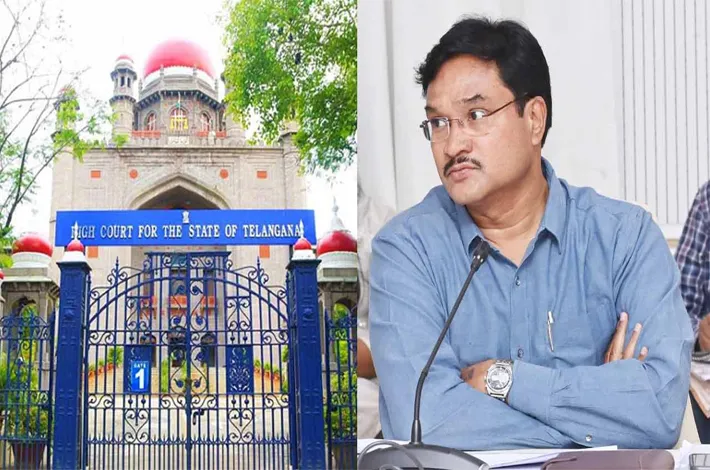
The Telangana Government decided to approach the Supreme Court to challenge the recent High Court verdict on Hyderabad Disaster Response and asset Protection Agency’s (HYDRAA) powers. The full copy of the judgment is already being thoroughly examined by the Law Department and the Advocate General’s office.
The state government, which has made the removal of illegal constructions, encroachments on lakes, nalas (stormwater drains), and government lands in Hyderabad a high-prestige programme, is now preparing for another crucial legal battle.
After discussions with senior legal experts on the legal aspects of the verdict, official sources say a Special Leave Petition (SLP) will be filed. Since its formation, HYDRAA has taken aggressive action against illegal constructions in Hyderabad. It identified and carried out large-scale demolitions of buildings constructed in Full Tank Level (FTL) areas and buffer zones of lakes, nalas, and government lands.
Actions were taken not only against ordinary people’s houses but also against constructions belonging to political leaders, businessmen, and prominent personalities, making HYDRAA a subject of nationwide discussion. While the government describes it as a programme to protect Hyderabad from future flood disasters, the opposition has criticised it as “bulldozer rule.”
Against this backdrop, several affected people approached the High Court challenging HYDRA’s actions. In their petitions, they stated that demolitions were being carried out without notices and without hearing their side, that HYDRA does not have independent powers to take such actions, and that due legal processes were not being followed. After hearing these issues, the High Court made certain key observations, following which the government has reportedly decided to knock on the doors of the Supreme Court.
Government’s arguments on the need for HYDRAA
The government is likely to place three main points before the Supreme Court. First, that HYDRA is not a newly created illegal body but merely a special mechanism to coordinate the existing powers of departments such as Revenue, GHMC, HMDA, Irrigation, Police, and others.
Alongside this, it will clarify that encroachments on lakes, nalas, and government lands cause severe flooding in Hyderabad every monsoon, completely disrupting city planning, and that protecting people’s lives and property is a constitutional duty of the government. It may also explain that environmental protection, conservation of public resources, and city safety are more important than individual interests, which is why HYDRAA became necessary for swift action. The impact of the High Court verdict is not limited to HYDRAA alone. It could also affect the powers of any special enforcement agencies the government may set up in the future.
Questions such as how much power government agencies should have, to what extent citizens’ property rights must be protected, and whether principles of natural justice (notices, hearings, appeals, etc.) are mandatory have become central to this case. While courts have repeatedly held that there is no doubt about the power to remove illegal constructions, the manner in which that power is exercised must be fully lawful. Therefore, the perspective the Supreme Court takes on the High Court’s observations has become a matter of nationwide interest.
Politically significant as well
HYDRAA has emerged as one of the prestige programmes of the Congress government. After coming to power, Chief Minister Revanth Reddy’s government strongly conveyed the message of “no compromise on illegal constructions.” Through HYDRAA’s actions, it has tried to create the impression that the government is taking tough decisions in administration.
However, the High Court verdict on this very issue and the government’s preparation for a legal battle in the Supreme Court have also gained political importance. If the Supreme Court upholds the government’s arguments, HYDRAA could gain greater legal strength. On the other hand, if it upholds the High Court verdict, the government may have to make changes in HYDRAA’s functioning. Legal circles believe that, if necessary, a situation could even arise where a special law has to be brought for HYDRAA.
A Supreme Court verdict will not only decide HYDRA’s future but could also set a legal standard for the powers of special agencies set up in other states for removing illegal constructions. It could also serve as a guideline on how the balance should be maintained between government administrative powers, environmental protection, urban development, and citizens’ rights.
Overall, the state government’s move to challenge the High Court verdict on HYDRAA in the Supreme Court is not merely an ordinary appeal. It is turning into a highly significant legal battle awaiting the verdict of the country’s highest court on several key issues, including the government’s administrative approach, Hyderabad’s future urban development, control of illegal constructions, protection of lakes and nalas, citizens’ rights, and the limits of government powers.