21 September, 2026 | 12:26 AM


Jaya Bachchan bats for her lot
21-09-2026 12:00:00 AM
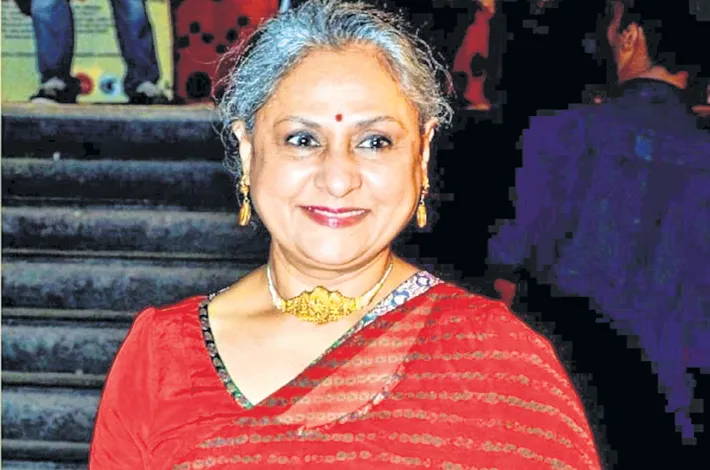
Veteran actress once discussed the need for meaningful characters and depth in roles offered to senior performers
Veteran actress Jaya Bachchan once got candid with filmmaker Karan Johar about the kind of roles offered to older women in Bollywood during her appearance on the popular chat show. During the discussion about whether women still get substantial roles as they grow older, Jaya Bachchan shared that she does not mind playing a small part, as long as her character has a purpose and contributes to the story.
Karan Johar said, “I think in Hollywood, there are still roles offered to women.” To this, Jaya reacted, saying, “Not really. I think you know what is important is that I do accept the fact that we are much older.” She went on to explain, “Yeah. So obviously maybe older people don’t have much to do in life. I don’t know. I mean, I think we are doing a lot more than our children really. Even if it’s a small role, it must have something. There should be a character. Some kind of depth.”
Karan pitched in, “Some reason for you to exist within the framework.” “I don’t mind a small role, but it has to contribute,” Jaya concluded .
Tracing ‘Didibhai’s’ iconic film journey
Talking about Jaya Bachchan’s career trajectory, she first appeared on screen as a teenager in Satyajit Ray’s Bengali film Mahanagar in 1963. In 1971, she made her Bollywood debut as an adult with Hrishikesh Mukherjee’s Guddi, in which she was seen as a schoolgirl infatuated with film star Dharmendra, who played himself in the drama.
After this, she went on to be a part of several noteworthy projects such as Uphaar (1971), Koshish (1972), Zanjeer (1973), Abhimaan (1973), Kora Kagaz (1974), Chupke Chupke (1975), Mili (1975), Sholay (1975), and Silsila (1981).
Jaya Bachchan took a 17-year-long break from films after Silsila, following her marriage to Amitabh Bachchan in 1973, to focus on her family. She returned to films in 1998 with Govind Nihalani’s critically acclaimed film Hazaar Chaurasi Ki Maa.