28 June, 2026 | 1:07 PM


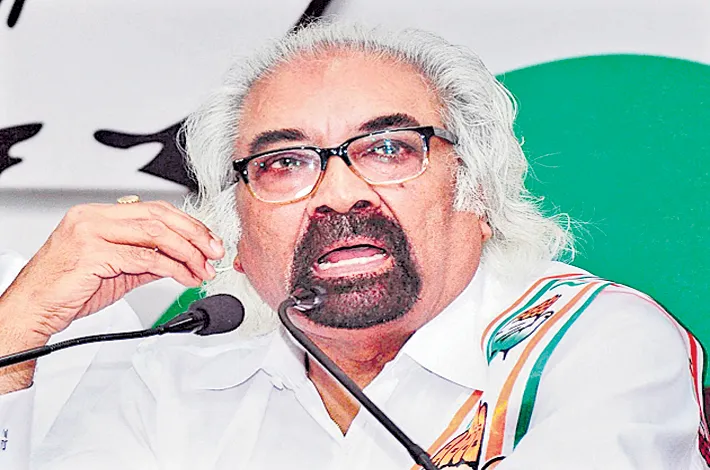
Sam Pitroda reflects on Nation-Building through technology
04-05-2026 12:11:25 AM
From Humble Roots to Telecom Revolution
V J M Divakar
In a candid and inspiring interview, veteran technocrat and policy thinker Sam Pitroda shared insights into his extraordinary journey from a small tribal village in Odisha to becoming the architect of India's telecom revolution. Speaking with Young Indian in Politics, Pitroda emphasized that true technological progress is not merely about tools or gadgets, but about solving real problems for people and forging national unity.
Born in 1942 in Titlagarh, a modest town in British India, Pitroda grew up amid the fervor of the independence movement. His family home featured portraits of Mahatma Gandhi, Jawaharlal Nehru, Sardar Patel, Subhas Chandra Bose, and Maulana Azad. Raised alongside siblings in a diverse neighborhood that included Muslim, Jain, Sikh, and tribal families living in harmony, Pitroda absorbed values of truth, trust, love, democracy, liberty, freedom, and justice—core Gandhian principles that would shape his worldview.
"Independence meant something very special to that generation," he recalled. His father, with only a fourth-grade education, felt empowered enough to send his children to English-medium schools despite limited resources. Pitroda and his brother were dispatched to a Gandhian school in Vallabh Vidyanagar, Gujarat—Sardamandir—near Sardar Patel's birthplace. The journey took days by train and bus, severing family contact for months in an era without phones. Yet, the discipline, early mornings, exercise, and simple living instilled a deep foundation of purpose and resilience.
Pitroda's path took him to the United States, where he built a successful career as an inventor and entrepreneur. However, a sense of duty to his homeland drew him back. He recounted accepting a symbolic salary of just ₹1 to work under Prime Minister Rajiv Gandhi, driven by the vision of leveraging technology for national transformation. "We were not just designing a product. We were building a nation," he stated emphatically.
In the 1980s, India had only about two million telephones for a population of 650 million. Pitroda led the establishment of the Centre for Development of Telematics (C-DOT), starting in a small rented setup. The team developed indigenous digital exchanges, training young engineers from IITs and other institutions. This effort democratized communication through widespread PCOs (public call offices), connecting remote villages and laying the groundwork for India's digital future.
The mission extended beyond telecom. Under Rajiv Gandhi's leadership, initiatives targeted literacy, immunization, water, milk production, and more. India, which produced no vaccines domestically at the time, became the world's largest producer. Polio was eradicated, and guinea worm disease was eliminated. "Technology is not about tools, it is about solving real problems for real people," Pitroda stressed.
He highlighted the human element: young professionals worked late nights with dedication, sometimes even convincing skeptical parents of their commitment. Couples formed and married within the ecosystem, fostering a vibrant community united by purpose. Pitroda met Rajiv Gandhi through personal connections, bonding over shared age and vision, which further fueled collaborative efforts across sectors.
Reflecting on challenges, Pitroda noted the skepticism they faced. Critics doubted India's ability to manufacture vaccines or build its own telecom infrastructure. Yet, political will combined with domain expertise and youthful talent turned the tide. He challenged today's generation: "If we could do it with nothing, imagine what you can do today." India now boasts over 1.2 billion phones and massive software exports, reaping seeds planted decades ago.
Pitroda expressed concern over the lack of storytelling about these foundational efforts. Busy with execution, pioneers rarely documented their struggles and triumphs. He urged young Indians to focus on local problem-solving at the district level, harnessing the country's vast talent pool. "Every district has a lot of young people. Are they really focused on solving local problems? If they all can take charge... India would be very different."
In a pointed observation, Pitroda noted India's strengths in human capacity and software talent but called for broader excellence in manufacturing and innovation. With 1.4 billion people, the nation must master semiconductors and other critical technologies rather than remain import-dependent in key areas.
The interview serves as both a historical recount and a motivational call. Pitroda's narrative underscores sacrifice, vision, and collective effort in nation-building. Unlike building a company, he explained, nation-building demands complex coordination, long-term thinking, and individuals willing to prioritize the greater good over personal gain—echoing the spirit of the independence movement.
As India positions itself as a global technology powerhouse amid AI, 5G, and beyond, Pitroda's experiences offer timeless lessons. His journey illustrates how individual commitment, backed by enlightened leadership, can transform aspirations into reality. For today's youth, the message is clear: embrace problem-solving, root decisions in enduring values, and recognize that technology's highest purpose lies in uplifting people and strengthening the nation.
Pitroda's story reminds us that India's progress stems not from imported solutions but from indigenous ingenuity and determination. In an era of rapid change, revisiting these roots could inspire the next wave of innovators ready to tackle contemporary challenges with the same resolve that connected a nation decades ago.