9 October, 2026 | 3:56 PM


Prehistoric burial sites discovered in Mulugu
03-04-2026 12:00:00 AM
Metro India News | mulugu / Hyderabad
A team from the Department of Heritage, Government of Telangana, has identified a large cluster of prehistoric burial sites in Motlagudem village of Mulugu district, shedding new light on early human settlements in the Godavari river basin.
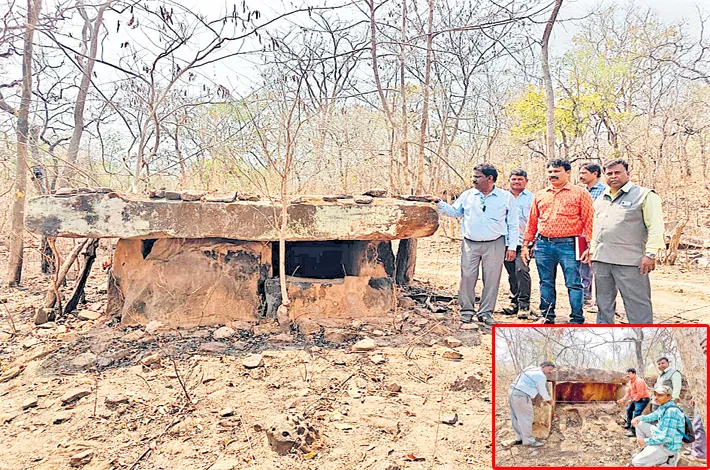
Acting on information provided by local residents and under the directions of Special Chief Secretary Jayesh Ranjan, a technical team led by Acharya Arjun Rao (Director), Dr. P. Nagaraju (Deputy Director), and A. Raju (OSD) conducted a field visit to the area.
The burial structures, locally known as “Rakasi Bandalu” (giant stones) and “Rakasi Guhalu” (giant caves), are located around 120 km from Warangal. These ancient dolmen burials, believed to date back to the Stone Age, confirm the presence of early human communities in the region and offer insights into their social and cultural practices.
Spread across nearly 100 acres in the Kappalayi Gutta region, the site is considered one of the largest clusters of dolmen burials in India. Each structure is built using massive sandstone slabs, with capstones weighing between 10 and 20 tonnes. The burials consist of four vertical slabs topped with a large stone, enclosing a chamber that contains a stone trough resembling a sarcophagus. A circular boundary wall surrounds each structure, indicating careful planning and construction.
Officials noted that the layout, with distances of 5 to 100 feet between burials, suggests an organized settlement pattern similar to an ancient township. Comparable burial traditions have been found across South India.
However, many of these structures have deteriorated over time or been disturbed by human activity, with stone slabs repurposed for construction and troughs used for livestock. Some sites have also turned into forested areas inhabited by wild animals.
The discovery underscores Telangana’s rich archaeological heritage and the need for urgent conservation of these historically significant sites.