16 July, 2026 | 7:12 PM


Bowenpally market turns waste into energy
03-04-2026 12:00:00 AM
HEMA SINGULURI | Hyderabad
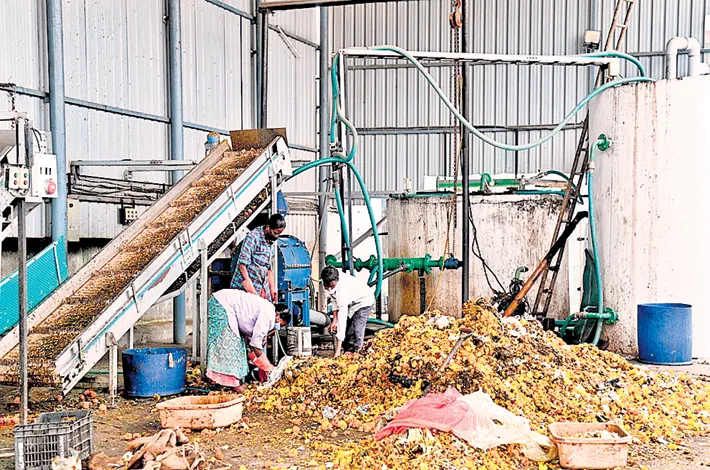
Vegetable waste at Bowenpally Market in Hyderabad is being transformed into a powerful resource, generating electricity for shops and streetlights while producing biogas to fuel a canteen that serves over 600 people every day. What began as a response to mounting garbage has evolved into a model of sustainability and community welfare.
According to Venkatesham, Selection Grade Secretary at Bowenpally Vegetable Market, the biogas initiative began in 2020 with a clear goal: to make waste useful. The aim was to reduce garbage accumulation, tackle foul odors, and cut down on rising LPG and electricity costs by converting organic waste into a productive resource. “Unlike traditional disposal methods that involve dumping or transporting waste, our system processes it on-site,” he explains.
The process involves segregation, shredding, and anaerobic digestion of organic matter in a biogas plant. This produces methane-rich gas used for cooking and powering streetlights, while the nutrient-rich slurry is repurposed as manure for agriculture, creating a closed-loop system.
The market typically generates about 10 tonnes of waste daily, though current averages have dipped to around seven tonnes due to operational variations, with the plant presently under repair. Despite this, the biogas produced meets a significant portion of the market’s internal energy needs, reducing reliance on LPG. Only biodegradable waste is used, with vendors actively segregating it, though challenges like plastic contamination remain.
Beyond environmental benefits, the initiative has had a strong social impact. Surplus biogas fuels the market canteen, which provides free breakfast to laborers, vendors, and nearby low-income residents—serving over 600 people each day. “This initiative not only improves food security but also promotes hygiene and cleanliness by reducing waste and emissions,” Venkatesham notes.
The Bowenpally model highlights how urban markets can turn waste management challenges into opportunities for sustainable energy and community support, offering a practical blueprint for cities aiming to combine environmental responsibility with social welfare.
This initiative not only improves food security but also promotes hygiene and cleanliness by reducing waste and emissions
Venkatesham