6 July, 2026 | 7:43 PM


PM apologises to women
19-04-2026 12:00:00 AM
metro india news I new delhi
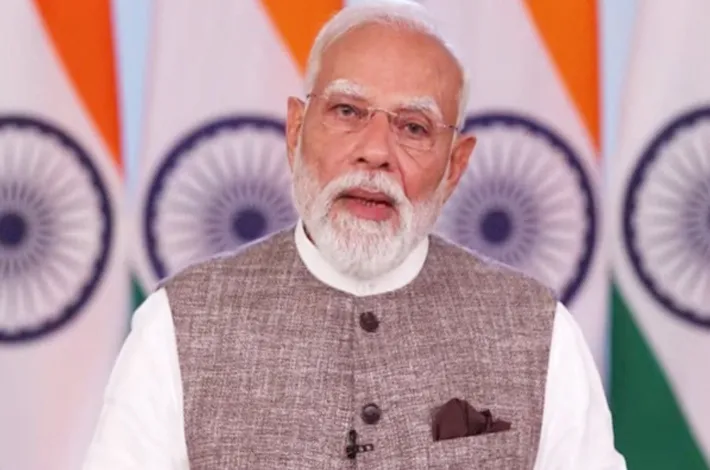
Prime Minister Narendra Modi on Saturday issued a public apology to the women of India following the failure of the Women’s Reservation Bill in the Lok Sabha, attributing the setback to what he termed as “selfish politics” by Opposition parties. The Prime Minister strongly criticised parties including the Congress, DMK, Trinamool Congress, and Samajwadi Party, accusing them of obstructing a historic opportunity to empower women and expand their representation in legislative bodies.
Addressing the nation, the Prime Minister expressed regret that the long-pending initiative aimed at ensuring greater political participation for women could not be passed, despite being, in his words, a sincere and timely effort. He described the proposed legislation as a crucial step towards strengthening “Naari Shakti” and enabling women to play a more decisive role in India’s development journey.
The bill, formally known as the Constitution (131st Amendment) Bill, sought to increase the number of Lok Sabha seats from 543 to 816 as part of a delimitation exercise based on the 2011 Census. This expansion was intended to facilitate the implementation of 33 per cent reservation for women in Parliament and state assemblies ahead of the 2029 general elections. However, the legislation failed to secure the required two thirds majority in the Lok Sabha, garnering 298 votes in favour and 230 against, falling short of the 352 votes needed for passage.
Prime Minister Modi alleged that the Opposition not only opposed the bill but also celebrated its defeat, calling it an affront to women’s dignity and aspirations. He stated that the actions of these parties had “snatched away” rights that women were entitled to receive after decades of delay. Emphasising the emotional and social impact, he remarked that women would remember this moment as a denial of justice.
The Prime Minister further accused Opposition parties of spreading misinformation regarding the delimitation process and attempting to create confusion among the public. He also targeted what he described as “dynastic parties,” suggesting that increased participation of women in politics could challenge their internal power structures, making them reluctant to support genuine empowerment measures.
Highlighting the broader implications, the Prime Minister noted that several states, including Tamil Nadu, Kerala, and West Bengal, had potentially lost an opportunity to increase their representation in Parliament due to the bill’s failure. He reiterated that the government’s objective was to ensure inclusive representation across regions while strengthening democratic participation.
Despite the setback, the Prime Minister asserted that the government remains committed to advancing women’s empowerment and will continue its efforts to secure rightful representation for women, who constitute nearly half of the country’s population. He described the initiative as a “great yajna” for the 21st century and assured that the government would not be deterred by the current outcome.
The development has intensified political tensions, with the issue of women’s reservation emerging as a central point of contention between the ruling alliance and the Opposition, setting the stage for continued debate in the lead up to future elections.
DMK moves Pvt bill
In a sharp political maneuver that has reignited debates on gender equality and federal balance, the Dravida Munnetra Kazhagam (DMK) on Saturday introduced a Constitution Amendment Bill as a Private Member’s initiative in the Rajya Sabha. The bill seeks to implement 33% reservation for women in the Lok Sabha and state legislative assemblies from the very next general elections, without any need for a fresh census, delimitation exercise, or increase in the existing strength of 543 seats in the Lower House.
DMK MP P. Wilson, who tabled the bill, described it as a direct and immediate step to empower women, bypassing the delays that have plagued the issue for years. “This reservation is not temporary; rather, it has been made permanent,” Wilson asserted while submitting the proposal. Accompanying the bill, the DMK submitted a notice under Rule 267 of the Rajya Sabha rules, urging the suspension of regular business to allow an urgent discussion on women’s reservation. However, reports indicate the Chairman declined to allow the immediate debate.
This move comes just a day after the BJP-led NDA government’s Constitution (131st Amendment) Bill, 2026, aimed at operationalizing the long-pending women’s quota, failed to secure the required two-thirds majority in the Lok Sabha on April 17. The government’s proposal, which linked the reservation to a post-census delimitation exercise and potential expansion of parliamentary seats, received around 298 votes in favor but fell short amid strong opposition from southern parties, including the DMK, and other INDIA bloc allies concerned about North-South representation imbalances.
The 2023 Nari Shakti Vandan Adhiniyam had already passed unanimously in both houses of Parliament, providing for one-third reservation for women. Still, its implementation was explicitly tied to the completion of the next census and subsequent delimitation of constituencies. Critics, particularly from southern states like Tamil Nadu, argue that this linkage punishes states successful in population control by potentially reducing their relative parliamentary strength in favor of more populous northern states. DMK chief and Tamil Nadu Chief Minister M.K. Stalin has been vocal on the issue, demanding immediate implementation of the women’s quota within the current framework. “We want the Women’s Reservation Bill to be implemented NOW,” Stalin stated following the Lok Sabha defeat, while reiterating concerns over delimitation’s fairness for southern states that have led in family planning initiatives.
Wilson’s bill directly addresses these apprehensions by proposing to activate the 33% quota permanently and immediately on the existing 543 Lok Sabha seats and corresponding state assemblies, without altering boundaries or total numbers. It also envisions rotation of reserved seats after future delimitations, while ensuring sub-quotas for SC/ST women within the reserved seats, aligning broadly with the 2023 Act’s spirit but decoupling it from contentious prerequisites. The development has sparked intense political reactions. DMK leaders framed it as a “masterstroke” that calls the BJP’s bluff on women’s empowerment. “If the BJP truly cares for women, it should support this,” Opposition leaders said, framing the bill as a test of commitment.
Congress and regional parties accuse the government of using women’s issues for electoral optics while advancing delimitation. BJP leaders plan protests, calling the Opposition “anti-woman.” Union ministers stress updated population data for fair representation, while Narendra Modi and Amit Shah have sought bipartisan support. Women hold only 14–15% of Lok Sabha seats.