26 September, 2026 | 12:55 AM


Kejriwal discharged, is the “conspiracy” theory real?
02-03-2026 12:00:00 AM
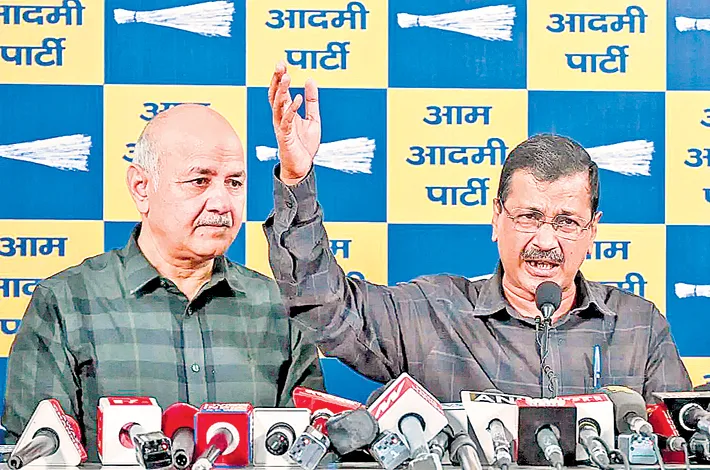
In a verdict that could reshape India's political landscape, a Delhi trial court on February 27, 2026, discharged Arvind Kejriwal, Manish Sisodia, and other leaders of the Aam Aadmi Party (AAP) in the high-profile excise policy case, popularly known as the liquor gate scam. The case, which had plagued the AAP for over four years, was seen as a pivotal factor in the party's downturn from a meteoric rise. Once a Delhi-centric political startup, the AAP had expanded into a national party, forming governments in two states. However, allegations of corruption struck at the heart of its honesty plank, leading to Kejriwal becoming the first sitting chief minister to be jailed for over 150 days and Sisodia for more than 500 days. The party's electoral fortunes suffered, with losses in subsequent polls.
Special CBI Court Judge Jitendra Singh not only discharged all 23 accused but systematically dismantled the CBI's case. He found no overarching conspiracy or criminal intent in the excise policy, stating that the prosecution failed to withstand judicial scrutiny. The judge criticized the CBI for constructing a narrative based on conjecture and surmise, labelling their approach as predetermined. He recommended a departmental inquiry against CBI officer Kuldeep Singh, whom he accused of framing the deputy excise commissioner as accused number one without any material evidence. This order, spanning over 600 pages, highlighted the absence of prima facie suspicion and described the foundation of the case as fundamentally weak.
The discharge halts the criminal trial at the lower court stage, providing political oxygen to the struggling AAP. However, the BJP insists this is not an acquittal, and the legal battle is far from over. The CBI has already approached the high court to challenge the verdict. BJP spokespersons pointed to past strong observations by the Delhi High Court and Supreme Court in related proceedings, questioning whether the relief will stand scrutiny.
They raised concerns about why the AAP government rolled back and altered the excise policy after irregularities were flagged, and why multiple phones and SIM cards were allegedly destroyed if everything was above board. A BJP leader argued, "Discharge is not a clean chit after trial; it's not innocence established judicially. Evidence was insufficient at this stage, but higher courts will decide." In the BJP's view, the absence of evidence stems from destruction: "Repeatedly, SIM cards and telephones were destroyed, and no trace was found."
They referenced the court's mention of a lack of evidence, suggesting it proves tampering. BJP questioned the policy changes, such as increasing commission from 6% to 12% and offering one-free-bottle schemes, and cited a CAG report estimating a Rs 22 crore loss to the public exchequer. He dismissed AAP's celebrations as premature, noting that when courts denied bail earlier, AAP questioned the judiciary, but now praises it. "If everything was right, why roll back the policy? Why destroy mobiles and pen drives?"
Adding a twist, the Congress entered the fray, questioning the timing of the discharge. They claimed the verdict was a predictable script written by the BJP to aid convenient allies ahead of Gujarat and Punjab elections. Congress leaders alleged that cases against AAP would vanish while those against Congress figures, like P. Chidambaram in the Aircel-Maxis deal, would accelerate. They dubbed it the BJP's playbook of vendetta, providing "temporary sanjeevani" to parties used against Congress. Congress spokesperson Pawan Khera, who once called AAP the "alcohol-affected party" and cited Rs 100 crore bribes used in Goa elections, now accused the BJP of orchestrating the relief.
Congress's attacks extended to mocking Kejriwal's tears as an opportunity to valorise Rahul Gandhi, who they portrayed as braver for not crying despite facing 32 cases. AAP supporters retorted by questioning why Rahul or Sonia Gandhi never went to jail like Kejriwal or Sisodia, accusing Congress of shamelessness. Historically, it was Congress that first demanded an investigation into the excise policy, labelling it the biggest liquor scam and endorsing corruption narratives. Now, with the discharge, they claim the verdict itself is BJP-scripted, highlighting their flip-flops from alliance partners to critics.