24 August, 2026 | 10:10 PM


Indian startups need pre-success funding
21-06-2026 12:00:00 AM
It has been 10 years since Startup India initiative was launched in year 2016 by the Government of India. Since then, few schemes were launched, incubation systems are setup, and certain tax incentives are provided. Currently, India has 2.25 lakh government registered Startups. Sector wise, AI & ML etc., are 20%, Ecommerce 15%, IT & ITES 15%, Fintech 10%, Health-tech 10%, Edtech 5%, Cleantech 5%, engineering 3%, Agritech 2%, and balance others. Additionally, there are 1.75 lakhs unorganized Startups undertaking small businesses, family businesses, professional services, and assembly units. This puts the number of total Startups in India at 4 lakhs of which about 45% are from non-metros.
Until now Startups have cumulatively mobilized $150 billion private funding. Through its Fund of Funds scheme, Government claims to have invested Rs. 10,000 crs. Through preferences and support systems, central and all state governments put together claim to have expended Rs. 15,000 crs. Thus, until now a total of Rs. 14,50,000 crs is invested. Indian Startups created 22 lakh jobs, Rs. 1,00,000 crs exports, and various innovations. Successful products from Startups include soundbox in digital payments, ecommerce, online education, smart meters, and energy efficient products.
However, about 90% of Indian Startups are failing within 5 years. 10% in first year and 20% in each of the next 2nd through 5th years. 45% failures are due to lack of product market fitness which means there is no genuine demand for the products. About 30% fail due to funding exhaustion, 20% due to competition which Startups did not assess properly, and balance 5% due to other reasons including team discord.
Indian Startup mortality rate is 2.5 times the global average. About 20% founders launch new Startup after facing unresolvable challenges in their previous Startup. About 40% are known to shift to employment, about 10% join other Startups as co-founders or as partners. The balance 30% face uncertainty for years before settling as small traders or unorganized gig workers. It is true that India is yet to achieve big time disrupting innovations such as reusable rockets, cloud storage, ride hailing apps, 3D printing, health foods, and electric vehicles.
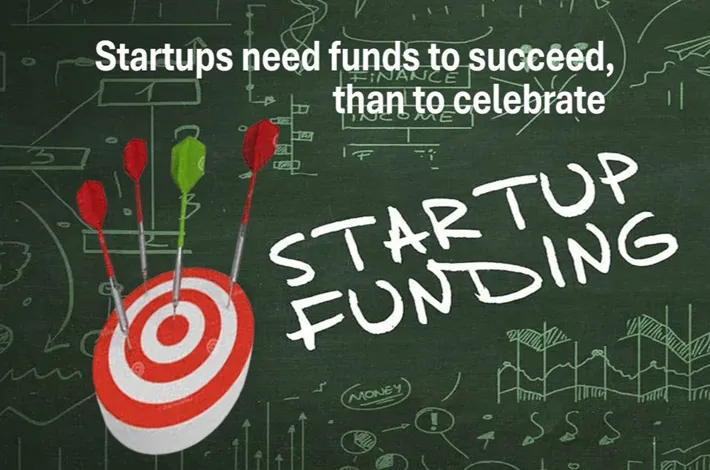
The reason for non achievement of real potential by Startups is apparent. More funds are chasing Startups after they meet success but not before. This power law of excessive preference to fund successful Startups is increasing their valuations to unsustainable levels. On the other hand, less funding is available to Startups which need funds for their experiments, progress, and breaking even periods. Several fundamentally solid ventures requiring funds to scaleup are starving. The funds, investors, and system are conveniently ignoring that funding precedes success than other way around.
Additionally, Indian Startups also need real and real-time handholding on product market fit, demand assessment, scaling up methods, maintaining runway, unit economics, achieving breakeven, and computing profitability. The numbers could be approximate than exact, but it is true that there is a scarcity of real Startups, real market fit products, real investors, and real support in the Indian Startup ecosystem. If pre-success funding is adequate along with guidance on unit economics, the real potential of Indian Startups may unleash.
Dr. Kishore Nuthalapati
The author is Regional Director of PRMIA, US for Hyderabad Chapter. He is serving as the CFO of BEKEM Infra Projects Pvt Ltd, Hyderabad. Views are personal and are not of any organizations he is or was associated with.