24 August, 2026 | 2:49 PM


A filmy kaleidoscope
21-06-2026 12:00:00 AM
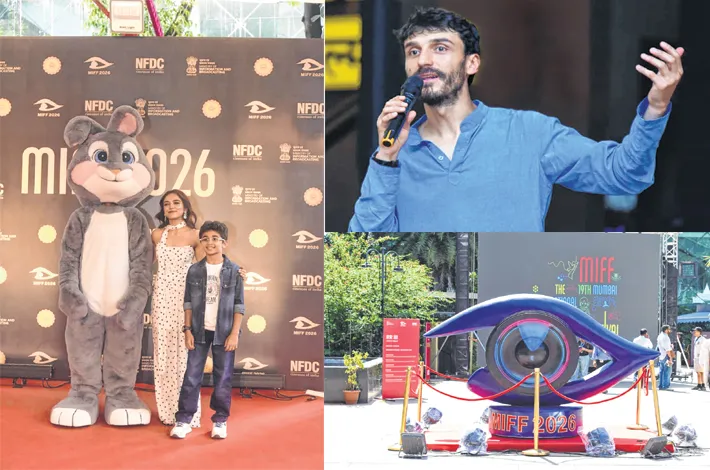
MIFF is a rollercoaster of aspects of filmmaking which had not been getting enough attention till now, but were brought together all under one roof at the NFDC
Kabir Singh Bhandari
The Mumbai International Film Festival (MIFF) 2026 has turned out to be a potpourri of documentaries, young talent, AI films, hidden gems and the future of cinema.
How WWII changed the future of film editing
Renowned documentary director Federico Atehortúa Arteaga hosted a deeply engaging masterclass titled ‘The Philosophy of Montage: Unveiling the Folds’. The interactive session completely changed how one thought about film editing. Federico explained that older, classical movies relied heavily on strict ‘cause and effect’ logic, where every action had a predictable reaction. However, after the real-world traumas of World War II, cinema changed. Filmmakers began focusing on ordinary people and abstract stories rather than perfect heroes. This shift completely freed film editing. Just like painting evolved from realistic portraits to free, abstract art like Jackson Pollock’s paintings, modern film editing has become poetic, dreamlike and entirely free from rigid rules.
That wasn’t the only section on film editing, though. Film editor Deepa Bhatia, who has films like Taare Zameen Par, My Name Is Khan, Rock On!!, Kai Po Che!, Raees, Student of the Year and Sachin: A Billion Dreams to her credit, shared valuable insights into the art and craft of film editing during a workshop titled Surviving the Cut. An editor must carefully and calmly watch the entire footage, almost in a meditative manner and free from distractions, to fully understand the material, she said.
However, what stuck out for me was when she spoke about an editor’s key responsibility: to “manipulate the idea of time” by condensing long periods into a few minutes of screen time through effective transitions. Citing the example of Rock On!!, she explained how the film’s editing maintained a sense of rawness in its opening sequences before gradually moving towards stillness in the concluding portions.
How OTT gave documentaries a new life
As part of the Indian Documentary Producers’ Association (IDPA) Open Forum at MIFF, a session on “Streaming Revolution: Documenting in the Age of OTT” brought together experts from the OTT, media and documentary sectors to discuss how streaming platforms are changing documentary filmmaking and creating new opportunities for filmmakers. The main points that came out of this discussion? The fact that OTT platforms have transformed documentary distribution by taking films beyond festivals, film societies and public broadcasters to wider audiences across India and the world.
The future of cinema
‘The AI Films’ showcase showed us a different perspective on the new phenomenon. What if AI is not replacing human creativity, but instead it simply gives filmmakers a powerful new tool to tell stories that would be difficult to make using traditional methods? A classic example of this was the mythology-based project, Kishkindha: Van Katha, by Aksht Verma, which draws on research across multiple Puranas to recreate the grand conflicts, politics and tragic journeys within the ancient Vanara Kingdom. All in all, MIFF sure is a rollercoaster of aspects of filmmaking which had not been getting enough attention till now, but were brought together all under one roof at the NFDC.