9 July, 2026 | 5:17 PM


‘Health ATM’ to ease patient burden, save time
14-04-2026 12:00:00 AM
KIRANMAI TUTIKA I AMARAVATI
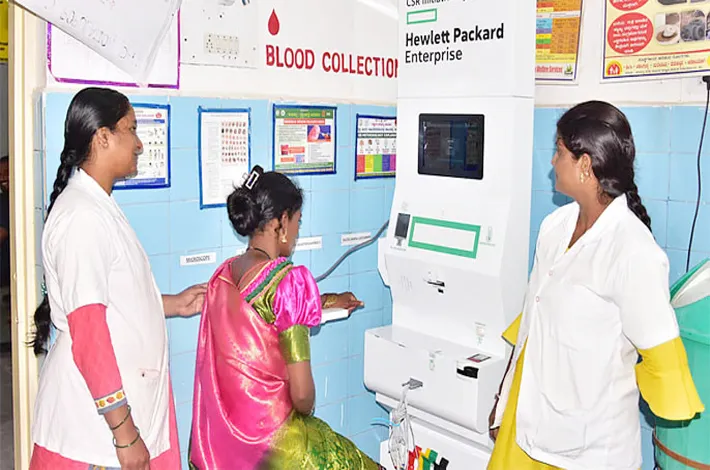
In a move aimed at transforming patient experience in public healthcare facilities, the Andhra Pradesh government is preparing to introduce “Health ATMs” across government hospitals, beginning with major urban centres such as Vijayawada, Visakhapatnam, Tirupati, Kakinada, Ongole and Nellore. The initiative, which is currently in the planning stage, is designed to drastically reduce long waiting hours for diagnostic tests and eliminate delays in receiving medical reports.
Officials in the Health Department said the system will help technology-driven diagnostic services to economically weaker sections. Once implemented, the Health ATMs are expected to offer nearly 120-130 types of medical tests within minutes, free of cost, significantly easing the burden on patients who currently spend hours, or even days, navigating hospital labs.
“We are focusing on reducing diagnostic delays, which are one of the biggest pain points in government hospitals. Health ATMs will ensure that patients get accurate reports within minutes, without having to visit multiple counters or return repeatedly. The proposal is under active consideration, and we plan to roll it out in a phased manner across key cities before expanding state-wide,” said Dr. Padma, Director of Health and Public welfare.
The Health ATMs will operate on cloud-based technology and are designed as compact, self-contained diagnostic kiosks. They can conduct around 60-65 primary health screenings, including blood pressure, ECG, oxygen saturation, body fat composition, and temperature, within minutes. In addition, advanced tests using blood samples will cover key health indicators such as blood glucose, haemoglobin levels, lipid profile, liver and kidney function, and thyroid parameters.
Specialised features in Health ATMs will include fetal Doppler support for pregnant women and dermatoscopic tools for early skin disease detection,
making them valuable for primary and secondary hospitals with limited diagnostics. The system will be linked to ABHA and NTR Vaidhya Seva, enabling secure digital storage of patient data accessible via ABHA ID. Test reports will be delivered instantly through SMS or WhatsApp, reducing repeat visits.
Trained staff will assist patients at each kiosk. Since each test cycle takes 25–45 minutes, multiple units may be installed in larger hospitals to prevent delays. The rollout will begin in major cities before expanding to district and area hospitals.