26 September, 2026 | 10:17 PM


Employee ownership & the startup flywheel
26-09-2026 12:00:00 AM
STARTUPS, ON SATURDAY
There are many stories that illustrate the point of this column. You can google for the Narayan Murthy’s driver who got stock options in Infosys or the designer who designed Facebook’s like button (the iconic thumbs-up). Silicon Valley first came up with the concept of employee equity in Startups to help them attract talent. This story has played out thousands of time in startup ecosystems, the world over.
In any startup, the Founders drive the vision and the decision making, investors provide the capital (and the network) and its most precious asset, the people, build the business. Together these three stakeholders determine the fate of the company. Investors buy their share with capital. When it comes to employees, well-established companies offer more stability, a predictable career path and a higher pay. So, startup employees are often offered shares to make up for lower salaries and higher risk.
How does the mechanics work? All of these ownership records are maintained record known as the CapTable. As the startup grows, the captable changes with more and more “owners” getting added to the table. This includes early investors, such as friends, family, business angels, and later investors, such as venture capital funds. Once stock options are issued to employees, a stock option pool or an ESOP pool is listed on the CapTable, representing the share of ownership reserved for employees.
In the beginning, Founders own 100% of the business and as a startup goes through several rounds of funding and grows, the ownership of Founders dilutes, ownership of investors grows and ESOP pools grow. A Series B company, will typically have the Founders owning 40%, employees 10% and the investors 50% of the company. A Series D or Series E company will have Founders owning 10%, investors 70% and employees owning 20% of the company.
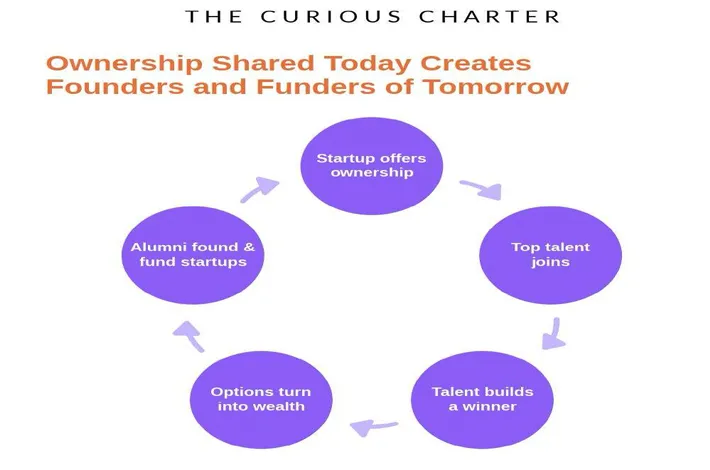
Now watch this flywheel spin! When a startup becomes a big success, these stock options turn into real wealth. The newly wealthy employees then do something remarkable. They start companies of their own and they also become angel investors and write investment cheques into other startups. Once the ecosystem has success stories, this virtuous cycle restarts, and it spins faster each time.
Silicon Valley has been running this loop for four to five decades now. It has gathered substantial momentum in India too. Infosys and ICICI Bank were pioneers of this concept in India. All the Unicorns in India have also taken this a step further. Alumni of very successful startups like Flipkart, have gone on to found scores, if not hundreds of startups Wealth that was shared by these successful companies came back to the ecosystem as they created new Founders and Funders.
That said, equity in the company is a precious asset for any entrepreneur. Ambitious founders know that talent is their key bottleneck, and that building a world class company requires a world class team. In a competitive talent market, startups can offer an excellent purpose and mission, but they can also offer a more tangible benefit i.e. ownership, in the form of stock options. That Ownership is a promise that needs to be perceived as fair, transparent and trustworthy.
Why it matters: Salaries pay the bills. Ownership creates alignment. Employees who get a slice of the business, think and behave like owners. When success comes, it creates a flywheel. It breeds a new generation of Founders and Funders.
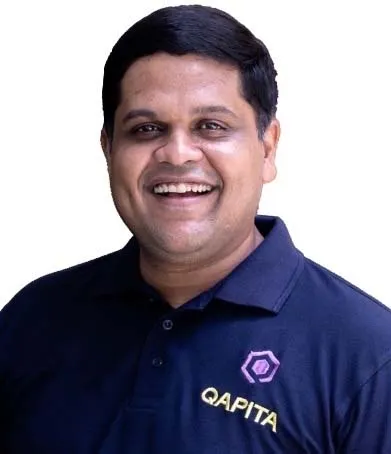
(Ravi Ravulaparthi is the CEO & Cofounder of Qapita)