22 September, 2026 | 6:27 PM


Drought looms over Telangana's Kharif
22-07-2026 12:00:00 AM
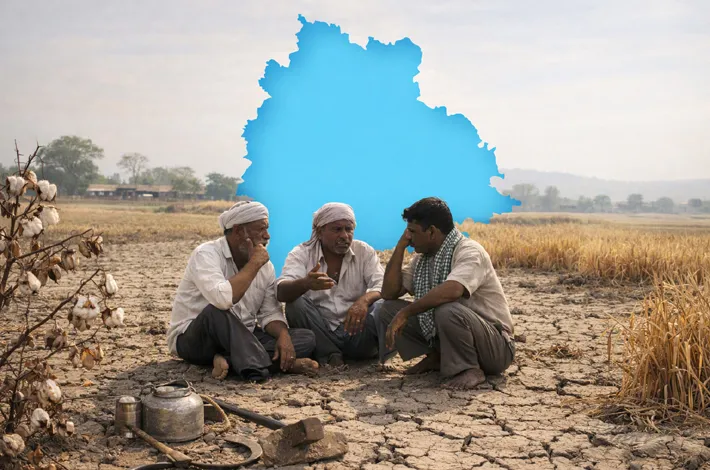
22 Telangana districts face severe rain deficit, crop losses rise, leaving tenant farmers in distress
The rainfall crisis has disrupted kharif operations across the state. Several farmers who sowed cotton in June were forced to re-sow after seeds failed to germinate due to lack of soil moisture
Metro India News | Hyderabad
Farmer organisations have urged the Telangana government to immediately declare mandals that recorded more than 33 per cent rainfall deficit as drought-affected and announce relief measures, as the 2026 kharif season faces uncertainty due to delayed rains, crop losses and rising cultivation costs.
The demand comes amid rainfall deficiency linked to the El Niño effect. According to India Meteorological Department (IMD) data released on July 15, Telangana received 158.7 mm rainfall against the normal 236.6 mm, recording a 33 per cent deficit. Of the 33 districts, 29 reported deficient rainfall, while 22 districts witnessed more than 33 per cent shortage. Hanamkonda recorded the worst rainfall deficiency, while only Nalgonda, Rangareddy, Mulugu and Nagarkurnool received near-normal rainfall.
Farmer groups said the situation has created drought-like conditions in several regions and demanded immediate declaration of affected mandals to ensure farmers receive relief. They said rainfall shortages of 20 to 59 per cent are considered deficit, while higher shortages are categorised as severe deficiency.
The rainfall crisis has disrupted kharif operations across the state. Several farmers who sowed cotton in June were forced to re-sow after seeds failed to germinate due to lack of soil moisture, increasing cultivation expenses. Farmers said standing crops remain weak due to moisture stress, with some transporting water through tankers to protect crops. Paddy transplantation has also slowed down as many farmers hesitate to invest without assured rainfall.
Farmer organisations alleged that despite warnings about possible drought conditions due to El Niño, the government failed to ensure supply of alternative crop seeds, procurement assurance at minimum support prices and implementation of a comprehensive crop insurance scheme.
They demanded drought declaration for rainfall-deficit mandals, rescheduling of crop loans, payment of pending compensation for previous crop losses, drinking water supply, fodder arrangements and crop insurance coverage for all farmers, including tenant and podu cultivators.
Farmer suicides reflect agrarian distress
The rainfall crisis has added to the distress among farming communities, with 97 farmer suicides reported in Telangana between January 1 and July 15, 2026, according to data compiled by farmer organisations.
Medak recorded the highest number of suicides with 20 cases, followed by Adilabad with nine, Nalgonda and Siddipet with seven each, and Khammam with five. Farmer groups said repeated crop failures, rising input costs, debt burden and delayed compensation were pushing farming families into financial distress.
Tenant farmers remain outside relief network
Tenant farmers continue to struggle due to lack of legal recognition and exclusion from government benefits. Surveys by Kisan Mitra and farmer organisations in Vikarabad, Hanamkonda, Medak and Yadadri Bhuvanagiri districts found that many tenant cultivators are facing crop losses and high lease payments without compensation.
In Vikarabad’s Jeevangi village, around 45 tenant farmers said they pay lease amounts of around Rs 25,000 per acre and have received no compensation despite repeated crop losses since 2023. Farmers in Hanamkonda also reported difficulties in purchasing fertilisers as OTP verification is linked to landowners’ mobile numbers. Surveys in Medak and Yadadri Bhuvanagiri districts found tenant farmers paying Rs 5,000 to Rs 7,000 per acre as lease amounts but remaining outside insurance and compensation benefits. Farmer organisations demanded legal recognition for tenant farmers, direct compensation for crop losses and inclusion of all cultivators under insurance schemes to prevent further agrarian distress in Telangana.