4 July, 2026 | 5:44 PM


Caste-wise data crucial for policy-making: Kancha Ilaiah
23-04-2026 12:00:00 AM
metro india news I hyderabad
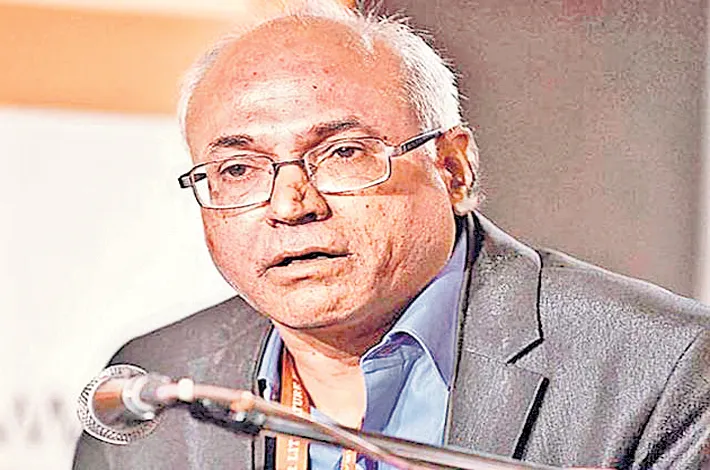
Caste-wise data is vital for policy-making and social justice, said Professor Kancha Ilaiah during a press meet on the SEEEPC Survey–2024 at the MCRHRD Institute’s Kautilya Hall in Jubilee Hills, Hyderabad on Wednesday. The meeting, organised under the Independent Expert Working Group, was attended by economist Praveen Chakravarty, where key socio-economic findings of the survey were discussed.
The SEEEPC Survey–2024 is considered a comprehensive study of the state’s socio-economic conditions, based on household-level data collection. Covering around 3.55 crore people from 75 lakh families, the survey examined education, employment, income, and living standards. Experts said the findings would help improve welfare schemes and support evidence-based policymaking across sectors.
According to the survey, Backward Classes (BC), Scheduled Castes (SC), and Scheduled Tribes (ST) together constitute 84.2% of the population. BCs account for 56.4%, SCs 17.4%, and STs 10.4%, while the OC (general category) population stands at 11.90%. A total of 242 castes were identified. The top 10 castes account for nearly 60% of the population, while the top 20 make up about 75%. Around 56 castes with populations above 50,000 together constitute 90% of the population. The Madiga community emerged as the largest caste, followed by Shaik (Muslim), Mudiraj, and Lambadi communities. Around 3.4% of respondents reported “No Caste,” indicating gradual social shifts.
The report categorised communities based on levels of backwardness. The most backward groups include SC Beda, BC Pichiguntla, Odde, ST Yerukala, and BC-E Muslims. Less backward groups include OC Kapu, Brahmins, Kamma, Komati, and Reddy communities. Communities such as BC Christians, Goldsmiths, Perika, Munnuru Kapu, Padmashali, and OC Muslims were found to be relatively less backward compared to the state average.
Among Particularly Vulnerable Tribal Groups, the Chenchu community has a population of 35,583, and about 25% of them do not have access to electricity, reflecting significant gaps in infrastructure.
Kancha Ilaiah said the survey could serve as a guiding framework for the 2027 Census. He explained that the committee, chaired by retired judge Sudarshan Reddy with himself as vice-chairman and nine members, conducted the exercise independently without funds. The report has been submitted to the government and will also be shared with senior Congress leaders Mallikarjun Kharge and Rahul Gandhi. He stressed that caste-wise data is essential for proportional representation, reducing inequalities in education and employment, and ensuring equal opportunities. He added that smaller communities must also be given adequate representation.
The data was first assessed by independent agencies, including the Centre for Economic and Social Studies, to generate graphs and statistical analysis. It was further examined by government experts and compiled into four volumes, which were presented before public representatives in the Legislative Assembly and Council. The main objective was to generate comprehensive data for inclusive development and enable evidence-based policymaking. The report was later analysed by the Independent Expert Working Group and reviewed by a Cabinet sub-committee. It has been uploaded on the Planning Department website and shared with all departments for feedback, with an extensive review currently underway before further government action.