23 September, 2026 | 3:31 PM


A key battle fought to secure the right to fly the Tiranga
24-01-2026 12:00:00 AM
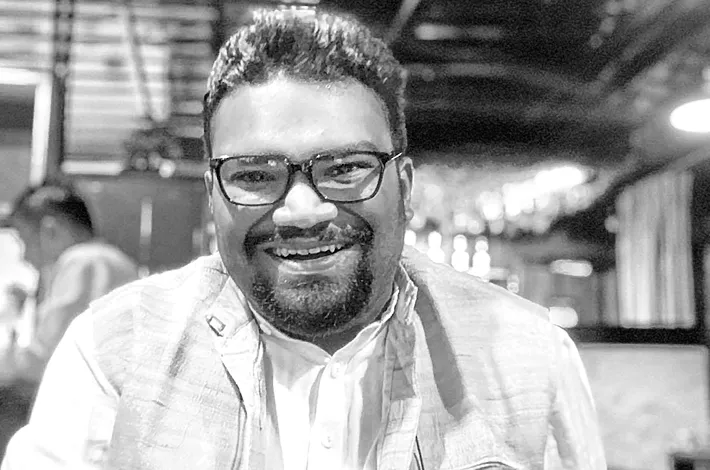
The coincidence of Jan 23 as both Netaji Subhas Chandra Bose’s birth anniversary and date of flag judgement adds a deeper layer of meaning
Every year on January 23, India commemorates the birth anniversary of Netaji Subhas Chandra Bose, a towering figure of courage and uncompromising nationalism. Less remembered, but equally significant for India’s democratic life, is that the same date marks a landmark judicial moment in 2004 when the Supreme Court affirmed the right of every Indian citizen to hoist the national flag—the Tiranga—on any day, provided it is done with dignity and respect. This ruling transformed the flag from a tightly controlled state emblem into a living symbol of personal liberty and collective pride. It was a quiet but profound expansion of citizenship, restoring to ordinary Indians a right that should never have been denied in the first place.
Before this judgement, the right to fly the national flag was not considered fundamental. The Flag Code of India, an executive document framed in the early years after Independence, imposed strict limitations on the display of the Tiranga. Its use was largely confined to government buildings and specific national days such as Independence Day, Republic Day, and Gandhi Jayanti. Private citizens were discouraged—and often prevented—from hoisting the flag at their homes, workplaces, or institutions.
The consequences of this restrictive approach were far from symbolic alone. The flag, which had once been carried into protests, prisons, and mass movements during the freedom struggle, was rendered distant from everyday life. Instead of being a unifying presence, it became a regulated object, accessible only with official sanction. Patriotism, in effect, was rationed. This dissonance between democratic aspiration and administrative control revealed a deeper discomfort with individual expressions of national identity.
It was this contradiction that prompted industrialist Naveen Jindal to challenge the prevailing orthodoxy. In 1992, Jindal hoisted the Tiranga at his factory premises in Raigarh, Chhattisgarh. Local authorities swiftly intervened, citing violations of the Flag Code. Rather than accepting the restriction, Jindal chose to contest it, asking a fundamental question: in an independent republic, why should citizens require permission to display their own national flag?
Jindal’s conviction was shaped by both principle and comparison. In many democracies across the world, national flags are freely displayed by citizens as everyday affirmations of belonging. To him, the Tiranga was not a fragile artefact requiring excessive protection but a resilient symbol meant to inspire unity across religion, class, and ideology. His insistence was never about casual or commercial use; it was about dignified visibility and constitutional entitlement.
The legal battle formally began in 1995, when Jindal approached the Delhi High Court. His argument was precise: the Flag Code did not have the force of law, as it was not enacted by Parliament, and, therefore, could not override fundamental rights guaranteed by the Constitution. More importantly, he contended that hoisting the national flag was a form of expression protected under Article 19(1)(a), which guarantees freedom of speech and expression.
The High Court accepted this reasoning, holding that executive instructions could not curtail constitutional freedoms. The central government appealed the decision, pushing the matter to the Supreme Court. What followed was nearly a decade of legal deliberation, marked by concerns about potential misuse of the flag and the need to preserve its sanctity. These anxieties reflected a long-standing fear: that loosening control would lead to disrespect. Yet, they also underestimated the public’s capacity for responsible patriotism. On January 23, 2004, the Supreme Court delivered a nuanced and historic judgement. It affirmed that the right to hoist the national flag is indeed a facet of freedom of expression under Article 19(1)(a). The act of flying the Tiranga, the Court observed, conveys allegiance, pride, and affection for the nation. At the same time, the Court clarified that the right was not absolute. Reasonable restrictions under Article 19(2)—relating to public order, decency, morality, and integrity of the nation—would continue to apply to prevent disrespect or misuse.
This balance was the ruling’s greatest strength. It neither trivialised the flag nor elevated it beyond democratic reach. Instead, it located national symbolism firmly within constitutional morality. The judgement also exposed an uncomfortable truth: more than five decades after Independence, Indians had needed judicial intervention to reclaim a basic expression of patriotism. That alone was an indictment of excessive state paternalism.
The impact of the verdict was immediate and enduring. The Flag Code was amended to reflect the Court’s ruling, easing restrictions and affirming citizens’ rights. Across the country, the Tiranga began appearing more frequently at homes, institutions, and public spaces—not as a mandated display, but as a voluntary expression of belonging. Patriotism became participatory rather than ceremonial.
Jindal’s role in this transformation stands out not merely because he was an industrialist, but because he pursued the issue as a civic cause rather than a personal grievance. Through the Flag Foundation of India, he has continued to advocate for greater awareness of citizens’ rights related to the national flag and has promoted January 23 as National Flag Day in recognition of the SC verdict. While this date has not yet been officially designated as such, the idea has gained symbolic resonance. The coincidence of January 23 as both Netaji Subhas Chandra Bose’s birth anniversary, observed as Parakram Diwas, and the date of the flag judgement adds a deeper layer of meaning. Both moments speak of courage—one in defying colonial rule, the other in questioning inherited constraints within a free nation. Together, they remind us that independence is not a static achievement but a continuous process of reclaiming rights and redefining citizenship.