22 September, 2026 | 3:28 AM


Where have teachers gone?
30-07-2026 12:00:00 AM
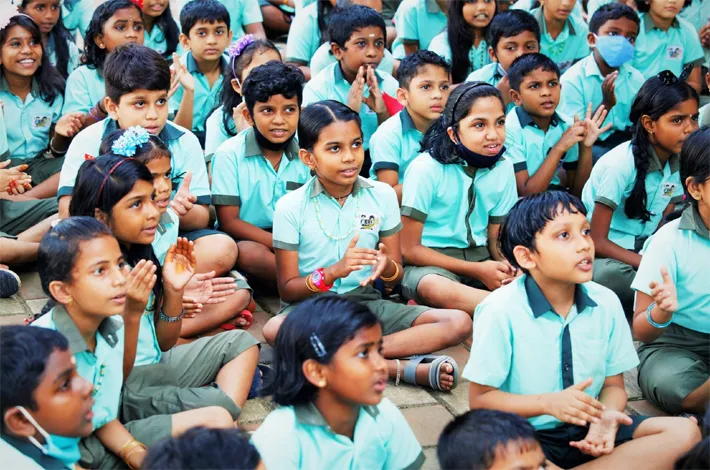
Telangana has nearly 11,000 budget private schools serving mainly middle- and lower-income families. Annual fees range from Rs. 5,000 to Rs. 60,000, with an average of about Rs. 20,000 per student. These schools educate a substantial share of the 62% of students enrolled in private institutions across the State
Hema singuluri & MAHESH AVADHUTHA I hyderabad
Many government schools continue to function with only a single teacher, while others remain understaffed because vacant posts have not been filled. Budget private schools, which shoulder a significant share of school education, face an equally serious challenge. Nearly 62% of students enrolled in private schools study in budget institutions, but their low-fee model makes it difficult to offer competitive salaries.
As a result, teachers with B.Ed. degrees, postgraduate qualifications and Teacher Eligibility Test (TET) certification prefer jobs in international schools or seek permanent positions in government institutions.
Representatives of private school managements say economic realities and a shortage of qualified teachers have created a difficult situation, particularly for budget schools.
The issue has prompted calls for surprise inspections by District Education Officers (DEOs), greater transparency in teacher recruitment, and structured training programmes for teachers who lack formal professional qualifications. While parents, educationists and school managements agree that the quality of teaching is central to student learning, they differ on how the problem should be addressed.
Pranathi from Miyapur, whose children study in Classes 5 and 10 at a private school in Hyderabad, said, "This is a genuine concern for every parent. We rely on a school's reputation and management. Schools should be more transparent about their hiring standards and ensure that all teachers meet the required qualifications. Regular training and evaluations should also be conducted so parents can be confident that their children are receiving quality education."
According to Sadula Madhusudan, State President of the Telangana Recognised Schools Managements Association (TRSMA), the shortage of qualified teachers is particularly acute in budget private schools, which operate on modest fee structures and therefore struggle to attract trained educators.
He said Telangana has nearly 11,000 budget private schools serving mainly middle- and lower-income families. Annual fees range from Rs. 5,000 to Rs. 60,000, with an average of about Rs. 20,000 per student. These schools educate a substantial share of the 62% of students enrolled in private institutions across the State.
"Budget schools cannot match the salaries offered by government or premium private schools, making recruitment difficult despite growing demand for private education," Madhusudan said.
Huge gap in early childhood education
Madhusudan said the shortage is most severe in pre-primary and lower primary classes. According to him, Telangana lacks a comprehensive government-backed training ecosystem for Early Childhood Care and Education (ECCE). As a result, schools often recruit candidates without formal teacher training and provide in-house orientation programmes.
He maintained that while formal qualifications are important, classroom competence develops through training and experience. Many teachers without B.Ed. degrees become effective educators through years of practical teaching and continuous mentoring. However, he clarified that senior secondary classes are generally handled by experienced and qualified teachers because academic performance and parental expectations leave little room for compromise.
He also argued that schools remain accountable to parents and respond quickly to complaints about teaching quality, replacing teachers when necessary to maintain academic standards and institutional credibility.
Offering a different perspective, former AP Teachers Federation president K. Venugopal said the presence of unqualified teachers in many private schools, particularly at the pre-primary and primary levels, is widely acknowledged.
He noted that while government school teachers must possess prescribed qualifications such as a B.Ed. degree and TET certification, enforcement of similar standards in the private sector remains inconsistent. Several schools appoint candidates without the required qualifications because low salaries discourage professionally trained teachers from joining budget institutions.
"Qualified teachers naturally seek better opportunities, either in government service or in well-funded private schools offering competitive salaries," Venugopal said, adding that financial constraints continue to influence recruitment in smaller institutions.
Education activist R. Venkat Reddy, National Convener of MV Foundation and a participant in the Telangana Education Commission consultations, stressed that compliance with the Right to Education (RTE) Act cannot be compromised.
He said private schools are expected to adhere to prescribed norms regarding teacher qualifications, regardless of operational challenges. Employing teachers without the required qualifications, he said, would amount to a violation of statutory provisions.
Venkat Reddy also expressed concern over reports that some institutions maintain qualified teachers on official records while classroom teaching is carried out by individuals who lack the required credentials. If such practices exist, he said, they warrant verification and corrective action by the authorities.
The debate highlights a broader challenge facing school education in Telangana: balancing affordability, accessibility and quality. While private school managements point to financial limitations and teacher shortages, education experts emphasise the need to uphold regulatory standards in the interest of students.
With parents increasingly relying on private schools for their children's education, stakeholders believe that periodic inspections, stronger regulatory oversight and expanded teacher training opportunities could help bridge the gap between practical constraints and the goal of ensuring quality education for every child.
The shortage of qualified teachers is particularly acute in budget private schools, which operate on modest fee structures and therefore struggle to attract trained educators.
-Sadula Madhusudan, State President, TRSMA
Government school teachers must possess prescribed qualifications such as a B.Ed. degree and TET certification, enforcement of similar standards in the private sector remains inconsistent
-K. Venugopal
Former AP Teachers Federation president
Right to Education (RTE) Act cannot be compromised
-R Venkat Reddy
National Convener, MV Foundation