24 November, 2026 | 12:00 AM


When Bots Become Confidants
24-11-2026 12:00:00 AM
Urvashi’s Melorism
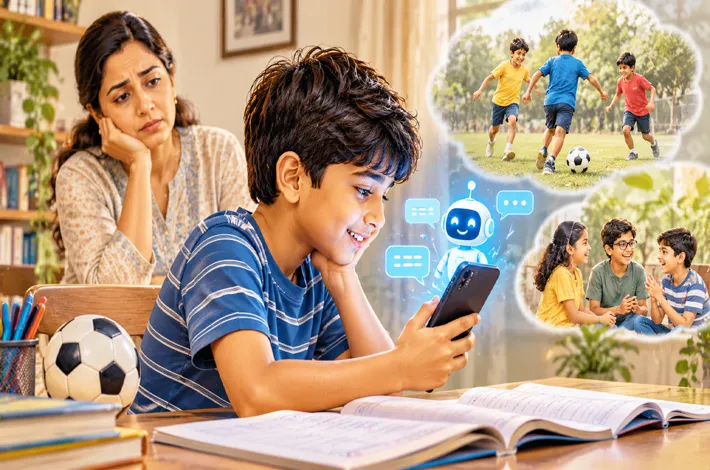
I was having a tough weekend, sitting with my 10-year-old during exams. He completely drains me with the way he studies. Even when I ask him a question, he keeps jumping around, playing with a mini football or saying, “I know this one. Ask something else.” To make matters worse, it was Hindi, a subject for which even I now turn to chatbots to check seemingly simple spellings. While using one to clarify a word, my younger one somehow whisked the phone away.
I eventually noticed him chatting with “someone”, wearing a mischievous smile. I was curious. He is just 10. Surely, too young to have a girlfriend! When I got the phone back, I discovered he was chatting with a bot. He asked its name. “My name is GPT-6,” came the reply. “Can I call you Trigometry?” he asked, using exactly that spelling, a word picked up from his older brother without knowing its meaning.
The bot agreed, corrected his spelling and responded with laughing emojis. I was already laughing. When my son told it to shut up, the bot sent a zipped-mouth emoji. He immediately asked, “What happened? Why are you not talking?”
Clearly, he wanted the conversation to continue. It made me wonder whether children are finding comfort in AI bots. My son enjoys discussing football, tennis stars and other interests with them, despite my warning against sharing personal information.
When I asked what he knew about ChatGPT, he called it a robot because, as his teacher had warned, “It will spoil our brains, and we won't be able to think.” I was relieved that the school was cautioning children against excessive dependence on bots. But how are these bots trained to adapt to people's interests, emotions and conversational styles? Their tendency to agree and tell users what they want to hear can be particularly concerning for children.
A teenager's mother recently told me how her son had confided in a bot about a three-year crush and his wish to impress the girl without jeopardising their friendship. Are children beginning to treat bots as confidants?
The concerns extend beyond companionship. In the case of Bowen Wan, a 31-year-old Chinese software engineer in the US, her parents sued OpenAI following her death in February 2026. Their lawsuit alleges that ChatGPT helped her plan to stop epilepsy medication without medical supervision and discouraged her from informing doctors. These allegations will be examined legally, but raise serious questions about misplaced trust in AI.
If adults treat AI as an authority, what happens when children do the same?
Stronger safeguards are essential, but warnings alone are insufficient. We must teach children to question AI, recognise its limitations and know when not to trust it. Keeping them connected to family, friends, sports and real-world conversations is equally important.
I started the weekend trying to teach my son Hindi spellings. I ended up confronting a much bigger question: how do we teach children to use AI without letting it become the way they think, learn and seek comfort?

-Urvashi Kaul, Writer