24 November, 2026 | 12:00 AM


The exhausting business of relaxation
24-11-2026 12:00:00 AM
The unasked Questions
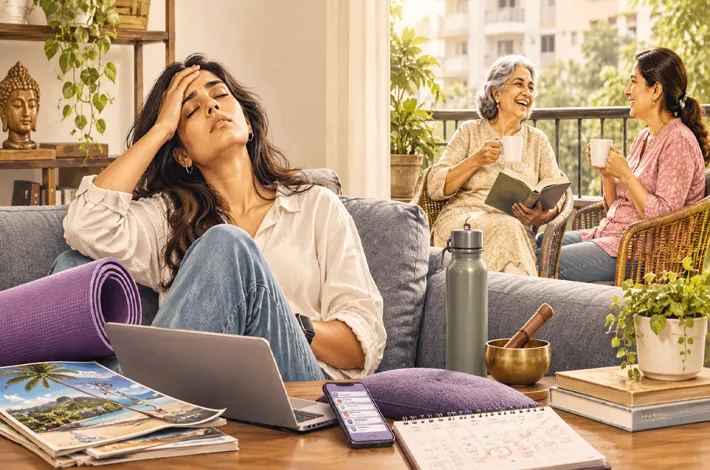
Something about the younger generation has been intriguing me lately. They seem to be perpetually exhausted. Work is stressful, socialising is tiring, family gatherings are overwhelming and weekends are meant for decompressing. Some even travel to exotic islands in Thailand to detox, only to return exhausted and announce that they need a few days to recover from their holiday!
I wonder when relaxation became such hard work.
We had a rather limited vocabulary for exhaustion. We were tired. Sometimes dead tired. We grumbled, complained, occasionally snapped at someone, slept well and got on with life. Today, being tired sounds terribly inadequate. One has to be burnt out, emotionally drained, overwhelmed or in desperate need of some me time.
Recently, I watched a young man flop into a chair, completely exhausted after spending time with visiting relatives. Meanwhile, his mother was clearing the plates and cleaning the kitchen. She had entertained the same guests, probably done much of the cooking and was now cleaning up after everyone. But it was the young man who needed to decompress! Apparently, talking to relatives is more exhausting than feeding them and cleaning up afterwards.
Then there was a young woman who complained that she had nobody to interact with in her neighbourhood. “They are not my kind of people,” she explained.
But why should everyone be our kind of people? Do we need to share the same political ideology, intellectual interests and understanding of artificial intelligence to exchange a few pleasantries? What happened to chatting with a neighbour while watering the plants, discussing the weather or sharing some harmless neighbourhood gossip?
We seem to have become terribly particular about whom we interact with. Having rejected everyone who doesn't meet our standards of compatibility, we miss out on everyday conversations and then complain about loneliness.
Today's workplaces are undoubtedly demanding. The endless meetings, messages, deadlines and notifications can be exhausting. And with conversations recorded and messages tracked, even the simple pleasure of cracking a stupid joke or indulging in harmless gossip seems to be disappearing. Where does one find those little moments of relief during a particularly demanding working day?
I remember juggling professional responsibilities, travel, household matters, family commitments and an active social life. I enjoyed much of it. The rest simply had to be done. I certainly got tired, but I don't remember feeling that I needed to visit a remote hill station to rejuvenate myself. A good night's sleep and a little time to myself were usually enough.
Our generation certainly had its share of pressures, and many people, particularly women, suffered in silence. It is good that mental health is now discussed openly. Burnout is real, and those experiencing it need understanding, support and sometimes professional help. But when every tiring day becomes burnout and every social obligation requires decompression, I think we are losing the ability to distinguish between ordinary fatigue and genuine burnout.
Meanwhile, an entire wellness industry seems to be thriving on our collective exhaustion. There are expensive retreats, detox packages, mindfulness workshops and carefully curated experiences promising to restore our inner peace. Even doing nothing has become an activity requiring planning, professional guidance and a substantial budget.
As for me, I would rather spend an evening with friends or neighbours, engage in inane talk with them, enjoy a long walk, attend a good concert uncritically, have a strong cup of coffee while doing nothing or simply curl up with a book.
And if I feel tired afterwards, I will just go to bed.
(A L Sharada
is a sociologist and
the former director of Population First)