14 October, 2026 | 1:17 AM


When the Nobel Prize meets Sanatana dharma
14-10-2026 12:00:00 AM
FROM TAMAS TO JYOTI :
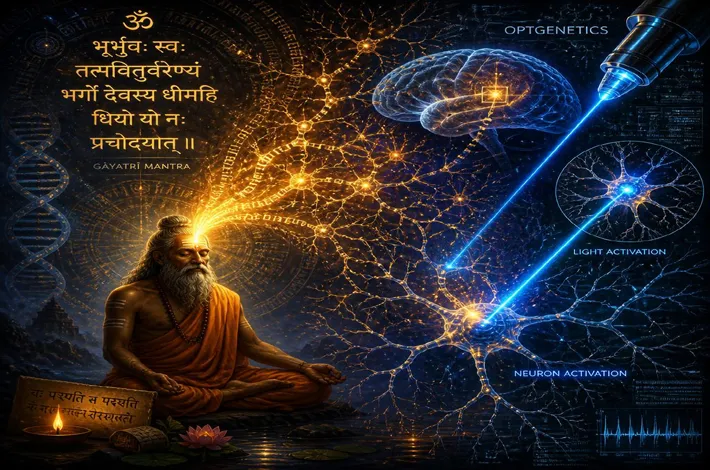
The 2026 Nobel Prize in Physiology or Medicine, awarded to Karl Deisseroth, Peter Hegemann and Georg Nagel for pioneering contributions to optogenetics, presents a fascinating parallel between modern neuroscience and ancient Hindu wisdom. Optogenetics enables scientists to activate or inhibit selected neurons using light-sensitive proteins called opsins. This breakthrough demonstrates how light can influence electrical activity in brain cells, opening new possibilities for understanding memory, emotions, behaviour and neurological disorders.
Interestingly, thousands of years ago, Hindu scriptures repeatedly celebrated Jyoti—light—as a symbol of knowledge, intelligence, consciousness and liberation.
The Bṛhadāraṇyaka Upaniṣad (1.3.28) declares: “Asato mā sad gamaya, Tamaso mā jyotir gamaya, Mṛtyor mā amṛtaṃ gamaya”—lead me from unreality to reality, darkness to light, and mortality to immortality. Here, darkness symbolizes ignorance, while light represents knowledge and transformation. Optogenetics demonstrates a fascinating physical parallel: light can change neuronal electrical activity through specialized proteins. While the Upaniṣad describes spiritual transformation, neuroscience reveals a molecular mechanism of cellular transformation.
The celebrated Gāyatrī Mantra, from the Ṛgveda (3.62.10), traditionally preceded by “Oṃ bhūr bhuvaḥ svaḥ,” proclaims: “Tat savitur vareṇyaṃ, Bhargo devasya dhīmahi, Dhiyo yo naḥ pracodayāt.” It invokes divine solar radiance to inspire human intellect. Modern neuroscience establishes that light influences brain function through biological clocks, sleep regulation and neural pathways. Optogenetics advances this relationship by enabling precise control of selected neurons. The ancient prayer associates light with intellectual awakening; modern science identifies specific biological pathways through which light influences the nervous system.
Another Vedic hymn, “Ud vayaṃ tamasas pari, Jyotiṣ paśyanta uttaram” (Ṛgveda 1.50.10), celebrates rising beyond darkness toward higher illumination. Science confirms that solar energy sustains photosynthesis and much of Earth’s biological activity. Remarkably, light-sensitive proteins investigated in green algae became foundational tools for optogenetics, connecting a natural response to sunlight with revolutionary brain research.
Śrī Kṛṣṇa declares in the Bhagavad Gītā (10.11): “Ajñānajaṃ tamaḥ nāśayāmi jñānadīpena bhāsvatā”—I dispel the darkness of ignorance with the shining lamp of knowledge. Neuroscience investigates how neural circuits support learning and memory, while the Gītā emphasizes that knowledge must ultimately lead to wisdom and righteous action.
The Kaṭha Upaniṣad (2.2.15) goes further: “Na tatra sūryo bhāti na candratārakaṃ… Tasya bhāsā sarvam idaṃ vibhāti.” It speaks of an ultimate radiance beyond sunlight, moonlight and fire—the light of supreme awareness. Modern neuroscience investigates the neural basis of consciousness, although subjective experience remains incompletely understood.
These comparisons do not suggest that ancient Rishis discovered opsins or neuronal stimulation. Their insights were philosophical, not molecular. Yet their recognition of light as a symbol of life, intelligence and consciousness offers an enduring framework for reflecting on scientific progress.
The Nobel Prize reveals how light can influence the brain; Sanātana Dharma asks how an illuminated mind should serve humanity. Science provides the mechanism, Dharma provides the moral direction.
Perhaps their meeting is best expressed through the timeless prayer: “Tamaso mā jyotir gamaya”—from darkness to light, from ignorance to knowledge, and from knowledge to wisdom.

(Dr. Boora Narsaiah Goud
is a former Member of Parliament,
Bhongir President - Dharmic Hindu Parishad)