25 September, 2026 | 3:43 PM


Tamil Nadu elections- who is setting the narrative?
26-02-2026 12:00:00 AM
DMK countered with economic data, dismissing debt concerns as misinformation. The party leaders highlighted Tamil Nadu's GDP growth from Rs 11 lakh crore in 2016 to Rs 35 lakh crore, a 202% increase, with a recent growth rate around 10%
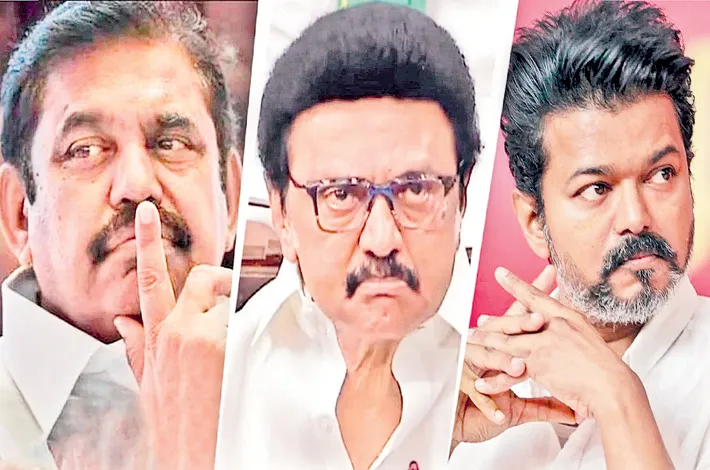
A private news channel recently hosted a fiery panel discussion that laid bare the intensifying battle lines ahead of the 2026 Tamil Nadu Assembly elections, as parties clashed over Chief Minister MK Stalin's framing of the polls as "Tamil Nadu versus the NDA." Held as an all party debate cum discussion, the session featured sharp exchanges among representatives from the ruling DMK, opposition AIADMK, BJP, and Congress ally, reflecting the high-stakes ideological, economic, and alliance-driven contest shaping the state's political future. With elections expected before May 10, 2026, the debate captured ongoing tensions over identity, governance, corruption, and federalism.
The debate opened with a highlight of a recent adresss by MK Stalin, where he positioned the election as a binary contest between Tamil Nadu's identity and the NDA. This framing, the moderator noted, raised the stakes around issues of regional autonomy, alignment, and resistance. He posed the core question to the panel: Where do parties stand in this "Tamil Nadu versus NDA" divide, and does it truly reflect voter priorities?
A BJP leader responded sharply, rejecting the narrative. He argued that Stalin's DMK (or the INDIA alliance) cannot claim to exclusively represent Tamil Nadu, framing it instead as "INDI versus India." He accused the DMK of misleading voters to distract from governance failures, particularly a ballooning state debt—from Rs 1.35 lakh crore in 2013 to Rs 9.5 lakh crore currently—trapping Tamil Nadu in a debt crisis. He questioned the DMK's commitment to Tamil identity, noting that the sole Tamil university in Thanjavur was established by MGR, not the DMK, and accused them of mere lip service to Tamil pride while evading national issues.
DMK countered with economic data, dismissing debt concerns as misinformation. The party leaders highlighted Tamil Nadu's GDP growth from Rs 11 lakh crore in 2016 to Rs 35 lakh crore, a 202% increase, with a recent growth rate around 10%—far surpassing prior periods. They emphasized evaluating debt via the debt-to-GDP ratio, which stood at 17% when DMK left office in 2011 (making Tamil Nadu the best-ruled state), rose to 30% under AIADMK, and was reduced to 26% under DMK. A DMK leader accused the BJP of hypocrisy on debt and representation, quipping that if DMK doesn't represent Tamils, BJP doesn't represent Hindus, Indians, or hold authority to label others anti-national.
AIADMK's Satyan defended the NDA alliance in Tamil Nadu, clarifying that AIADMK under EPS leads it, not BJP, despite national framing. He challenged the DMK on internal democracy and dynasty, questioning whether anyone loyal and hardworking could become DMK leader post-Stalin—contrasting it with EPS's openness in AIADMK. He further alleged DMK ministerial scrutiny, narcotics issues, deteriorating law and order, and mafia control.
A Congress leader elaborated on Stalin's framing: Tamil Nadu embodies secularism, social justice, and state autonomy, while the NDA opposes these values. She affirmed the INDIA alliance's strength under DMK leadership in the state (with Congress leading nationally), insisting talks on seat-sharing proceed smoothly despite opposition fishing for cracks. She dismissed concerns over alliances, noting no exits from DMK's side since 2018, unlike NDA partners. She argued BJP repeatedly fails by mixing religion and politics in a state where people are devout yet reject such blending—likening it to "showing a torch to the sun." On emerging players like TVK's Vijay, Congress's Lakshmi acknowledged his mass appeal and potential vote pull but called outcomes speculative. DMK dismissed threats, while opposition predicted DMK's end and dynasty's downfall.
The debate captured Tamil Nadu's high-stakes, data-driven, and ideologically charged politics—blending economic boasts, alliance manoeuvres, cultural pride, and sharp personal barbs—as parties gear up for 2026.