17 October, 2026 | 8:46 AM


Startups create Crorepati employees in a decade
17-10-2026 12:00:00 AM
STARTUPS, ON SATURDAY
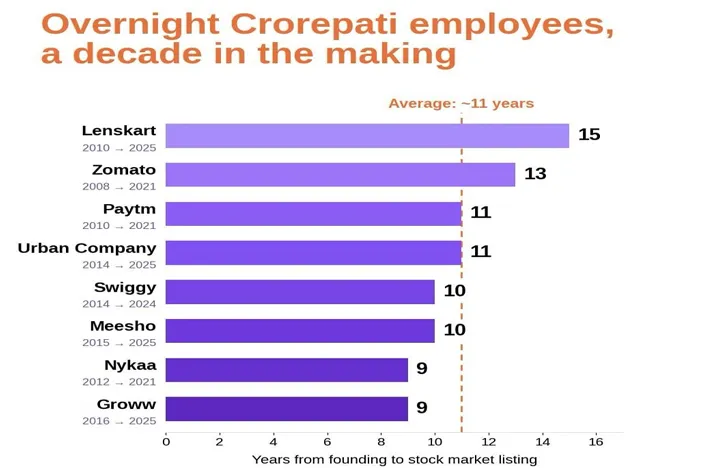
There has been a flurry of IPOs in the recent years in India. When successful startups get sold or get listed, the newspapers report hundreds of employees who become crorepatis overnight. It makes for very eye-catchy and feel-good headline. The reality is that many of these startups are created over a decade ago. Many of these employees have held on to their employee equity (via stock options or other similar instruments) over those years. The ‘value’ of all these options rising and falling with the fortunes of the startup and with every funding round. Over all these years, they are not able to spend a single rupee of these options.
Liquidity happens overnight; value creation happened over a decade.
Employee Ownership goes through these four steps:
First, the Grant: An offer letter than mentions stock option grant details – number of options, exercise (strike) price, and vesting schedule.
Second, the Vesting period: This is the period of time over which the employee earns those options. Usually a four period. Stay for four years and they are all yours, leave in a few months and you earn nothing. This is a tool for employee retention.
Third, Exercise: To eventually own shares and become a shareholder in the company, you pay the exercise price and convert your options into shares. There are many nuances here that many employees discover late. Taxation is one of the biggest areas that is not well understood. These rules are specific to each jurisdiction or tax domicile. In India, the gap between the share's fair value and your exercise price is taxed as income, at the moment of exercise, whether or not you can sell. In simple terms, you may have to pay taxes on money you cannot spend.
Fourth, Liquidity: A listed share in a public company can be sold at any time. A private share has no such market. An employee typically turns it into cash through one of three events. A buyback, when the company itself buys shares back. A secondary sale, when a new or existing investor buys from current shareholders. Or an exit, through a stock market listing or an acquisition. The key aspect to note is that none of these events are in the employee’s control.
Look at India's recent listings in the chart alongside. From founding to the listing bell took roughly eleven years on average. The good news is that the private market in India is maturing. Dozens of startups now run regular buybacks programs, rather than making their people wait for the IPO. When a liquidity programme is announced, the first question from employees is rarely about the valuation. It usually is, "How much can I sell, and how much will actually reach my bank account?"
A startup employee can ask a few pointed questions while joining a company or negotiating the remuneration package. Has the company run a buyback program before, and how often? If I leave the company, how long do I have to exercise my vested options? One more aspect, when a liquidity window opens, selling part of the shares is not disloyalty, it is prudence.
Why it matters: Employee Ownership creates wealth. Liquidity events make this real. These windows are infrequent in a startup’s lifecycle. Employers who offer transparent communications and put in the effort to create employee liquidity will attract better talent.
(Ravi Ravulaparthi is the CEO & Cofounder of Qapita)