17 October, 2026 | 12:51 AM


Journalism in Danger?
17-10-2026 12:00:00 AM
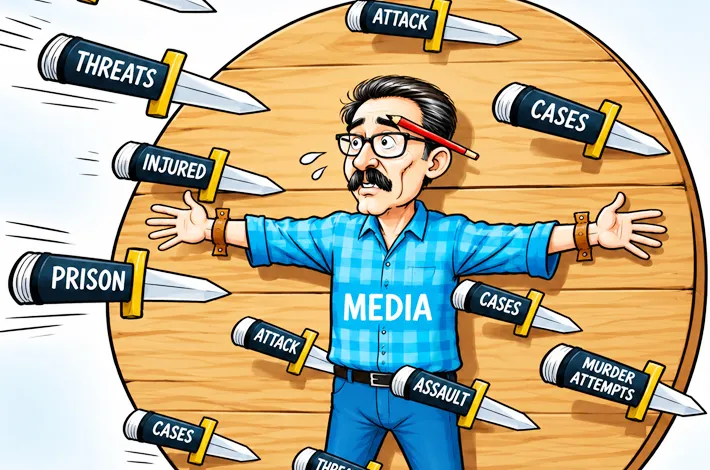
- Everyone Can’t be a Journalist!
- CJI Surya Kant’s Caution on Citizen Journalism
- A Necessary Reckoning with India’s Media Chaos
metro india news I hyderabad
Chief Justice of India Surya Kant’s recent observation in the Supreme Court — “If everyone starts becoming a journalist, it will create problems for every other person” — cuts to the heart of a deepening crisis in India’s information ecosystem. Delivered while hearing petitions seeking protection for freelancers, independent journalists, and content creators covering protests in Delhi, the remark was neither an assault on free speech nor a defence of institutional media. It was a blunt acknowledgment of practical reality.
The bench, also comprising Justice Joymalya Bagchi, noted the difficulty of demarcating legitimate reporters from others when Article 19(1)(a) allows every citizen to claim the journalist’s space. Justice Bagchi observed that even the Working Journalists Act recognises classes among journalists, and that layers of protection may differ for accredited professionals, freelancers, influencers, and reel-makers. The court was not deciding the definition of a journalist on the spot; it flagged the need for detailed examination.
There is substance in the CJI’s caution. Smartphones and cheap data have democratised reporting. Anyone can record, upload, and comment. This has produced genuine accountability: citizen videos have exposed excesses, forced official responses, and filled gaps left by traditional outlets. Independent YouTubers and digital creators now command audiences that often exceed those of legacy television channels. Platforms such as YouTube have become primary news sources for large sections of the population, with surveys showing high usage for news consumption alongside WhatsApp.
Still the same tools have flooded the public sphere with unverified claims, selective footage, paid content disguised as journalism, and coordinated campaigns that prioritise virality over verification. Distinguishing a professional reporter bound by editorial standards from an activist, influencer, or propagandist becomes harder when police, courts, and citizens must respond in real time. At protest sites, the insistence on Press Information Bureau accreditation by authorities may be bureaucratic,
Turn on Page 4
From Page 1
but the alternative — treating every phone-wielding individual as a protected journalist — risks operational paralysis and selective enforcement.
This explosion of “journalism” did not occur in a vacuum. Mainstream media’s failures over the past decade-plus created the vacuum. Trust in news in India has declined sharply. The Reuters Institute Digital News Report 2026 put overall trust at 39 percent, close to the global low of 37 percent. Earlier editions showed similar erosion, with partisan commercial broadcasters attracting active distrust. India’s ranking in the Reporters Without Borders World Press Freedom Index has hovered in the lower ranks — around 151 to 159 out of 180 in recent years — citing ownership concentration, political alignment, and use of legal tools against critical reporting.
Television news, in particular, shifted toward high-decibel confrontation, identity-driven framing, and TRP-driven sensationalism. Investigative depth and sustained scrutiny of power often gave way to alignment or self-censorship. Ownership patterns, advertising dependence, and regulatory pressures contributed. Print and digital legacy outlets faced revenue squeezes even as some maintained higher relative trust. The result was predictable: audiences migrated to independent voices and social platforms that promised authenticity, even when standards varied widely.
Independent creators filled genuine gaps — covering stories mainstream outlets underplayed and offering alternative perspectives. Some practice rigorous journalism; others mix analysis with advocacy or entertainment. The distinction matters. Professional journalism involves verification, right of reply, correction mechanisms, and institutional accountability. Citizen documentation and commentary fall under free speech, but equating the two for legal protection creates problems of scale and quality.
The Working Journalists and Other Newspaper Employees (Conditions of Service) and Miscellaneous Provisions Act, 1955, and related wage laws provided specialised protections for newspaper journalists. Recent labour codes, particularly the Occupational Safety, Health and Working Conditions Code notified in late 2025, absorbed and effectively diluted these sector-specific safeguards. Digital and freelance workers were already largely outside the old framework. The Act’s print-centric definitions never fully adapted to electronic or online media. Calls for reform — expanding coverage to digital journalists, freelancers, and clarifying definitions — have grown louder from journalists’ unions, still comprehensive updating has lagged.
Redefining press laws and journalist protections is overdue, but it must be precise rather than expansive. A workable approach would recognise tiers: accredited journalists with established media houses entitled to stronger workplace and access protections; verified independent journalists meeting clear professional criteria (editorial processes, transparency on funding, adherence to basic ethical codes); and ordinary citizens whose speech remains protected under Article 19 but without the operational privileges or immunities associated with the press. Self-regulatory bodies, clearer accreditation standards, and statutory recognition of digital media could help without creating a licensing regime that chills speech.
The dangers cut both ways. Overly restrictive definitions risk shielding authorities from scrutiny and stifling legitimate independent reporting. Unbounded claims of journalistic status invite abuse — harassment under the guise of coverage, fabrication for clicks, and erosion of public trust in all information sources. Misinformation thrives in ambiguity. Courts, police, and platforms already struggle with volume; without clearer boundaries, the problems compound.
India’s democracy requires robust scrutiny of power. It also requires a functional distinction between professional journalism and citizen expression. Mainstream media must recover credibility through independence, accuracy, and accountability rather than alignment or outrage. Independents must subject themselves to the same standards of verification they demand of others. Lawmakers and courts need to update frameworks written for a print era to the smartphone age without sacrificing either free speech or order.
CJI Surya Kant’s observation is not an end to the debate but a necessary starting point. Pretending that every citizen with a phone is a journalist solves nothing.