3 October, 2026 | 12:44 AM


Scientific minds beyond formal education
03-10-2026 12:00:00 AM
Science Corner
Great Minds, No Formal Degrees
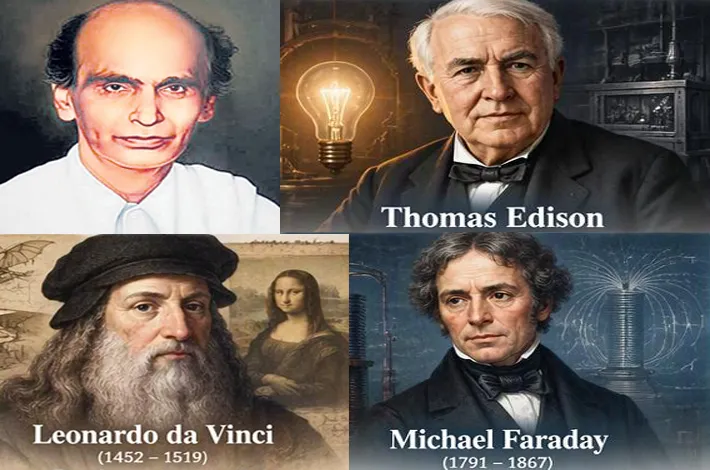
Sir C. V. Raman described GD Naidu (GDN) as “a man in a million,” praising his achievements as an educator, entrepreneur, engineer and humanitarian. His life demonstrates how curiosity, determination and self-learning can overcome limited formal education. Born in Tamil Nadu to a Telugu family, Naidu left school after the third grade and worked on his father’s farm while educating himself. As a teenager, he became fascinated by a Rudge-Whitworth motorcycle owned by a visiting British official. He later bought the same model, dismantled it and reassembled it to understand how it worked. This hands-on approach became the foundation of his remarkable career.
After working as a mechanic, Naidu established United Motor Service (UMS) and personally drove buses between Palani and Pollachi. His inventive abilities led him to develop numerous products and technologies. He made India’s first indigenous electric motor and designed an inexpensive two-seater petrol car. Although government restrictions prevented mass production, his work demonstrated India’s potential for technological self-reliance.
Naidu also developed the commercially successful “Rasant” electric shaver, patented in Europe and sold worldwide. Through Textool and Lakshmi Machine Works, he promoted indigenous manufacturing by producing components previously imported. His innovations included radios, calculators, voting machines, vending machines, juice extractors, machine tools and electrical devices.
His interests extended to agriculture, where he developed improved varieties of cotton, maize and papaya. He founded educational and welfare institutions, including India’s first polytechnic college, advocating shorter, practical engineering education. Often called the “Edison of India,” Naidu left a legacy of innovation, self-reliance and social service.
That reminds me of Thomas Edison, one of America's most productive inventors, who had little formal education who was taught by his mother. He developed practical inventions including the incandescent light bulb, phonograph (gramophone record), motion picture camera, and systems for electric power distribution. Edison had 1,093 U.S. patents and built vibrant businesses that transformed industries. Although he experienced failures, financial setbacks, and health challenges, he continued to experiment all his life, continuously pursuing new technologies from batteries to synthetic rubber.
Yet another such scientist was Michael Faraday, a widely known greatest experimentalist, was a bookbinder's apprentice to start with who was self-taught. His discoveries in electromagnetism and electrochemistry laid the scientific foundations for electric motors, generators, and modern electrical engineering. He introduced concepts such as electromagnetic induction and developed the laws of electrolysis. With limited mathematical training, ability to think visually and experiment rigorously he had groundbreaking scientific achievements to his credit. He also devoted time to public service and environmental investigations.
Leonardo da Vinci known for his masterpiece, the Mona Lisa, as a most celebrated work of art in history, personified the union of art, science, and engineering. Without a formal academic education, he filled notebooks with observations and designs extending from anatomy, botany, architecture, mechanics to flight. Much ahead of their invention, he conceptualized flying machines, advanced engineering devices, and numerous other inventions. Although many of his designs were not built during his lifetime, his creativity and observational skills continue to inspire scientists, engineers, and artists worldwide. How celebrated his life work is!!
The stories of these great human beings demonstrate that while formal education can be valuable, passion, continuous learning, creativity, and perseverance are often the true drivers of innovation. Their lives remind us that remarkable contributions can come from individuals who are willing to question, experiment, and pursue knowledge relentlessly, regardless of their educational background.
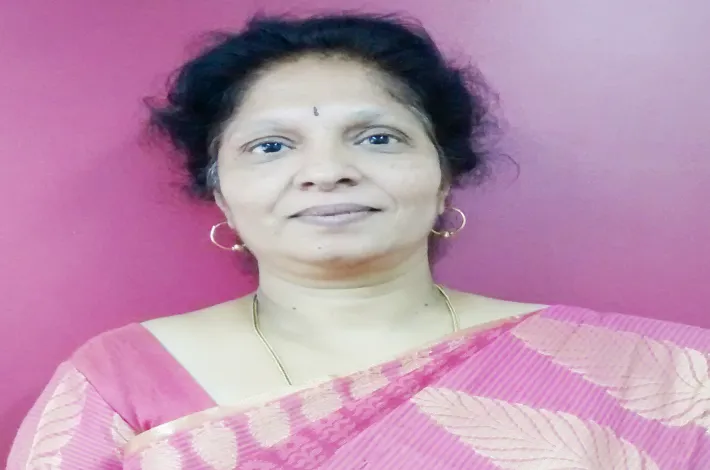
(Dr Swarnabala Ganti is a seasoned chemist,
regulatory affairs specialist and R&D scientist across India,
Iran, Japan, and Taiwan.
She is a researcher & a Consultant at Swaram Biochem)