1 August, 2026 | 12:40 AM


Rejoinder in Sabarimala review: Linking temple entrance and ‘dharma’
16-05-2026 12:00:00 AM
Metro India News | Hyderabad
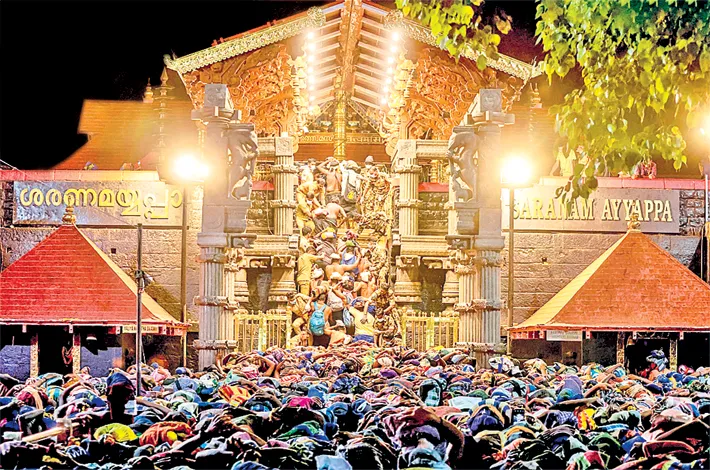
In a significant development in the ongoing Sabarimala review proceedings before a nine-judge Constitution Bench of the Supreme Court of India, Senior Advocate Nachiketa Joshi filed a detailed Rejoinder Submission on 14 May 2026 on behalf of Dr. Namburi Kanakadurga, a petitioner from the Tiruppan Alwar Ammal community (representing Scheduled Caste/Scheduled Tribe devotional traditions). The filing, in I.A. No. 69227 of 2026 within the review of the 2018 judgment, urges the Court to consider the broader historical, civilization and constitutional context of the right to worship.
The submissions argue that the transfer of power under the Indian Independence Act, 1947, was accompanied by solemn assurances protecting worship, culture, language, and civilization identity. These assurances, particularly the July 22, 1947 Partition Council Charter of Liberty, are presented not as mere political statements but as foundational limitations on constituent power, drawing on Sections 6 and 8 of the Independence Act.
The rejoinder extensively references the opinion of Justice Sikri in Kesavananda Bharati v. State of Kerala, particularly paragraphs 179–182, which analyze how the Constituent Assembly operated under the framework of the Independence Act and could limit future parliamentary powers. It connects this to the Cabinet Mission Statement and protections for minorities, Scheduled Castes, and Scheduled Tribes, including worship rights advanced through the temple entry movement.
Dharma, deity rights and “Rama Rajya”
A distinctive feature of the rejoinder is its emphasis on the Dharma-based understanding of worship rights. It argues that the right to worship under the Indian Constitution, read in light of the 1947 assurances and civilization traditions, carries corresponding duties to preserve the essential religious character of temples and Deity-specific practices — such as the Naishtika Brahmacharya tradition associated with Lord Ayyappa at Sabarimala.
The filing contends that the 1947 Charter of Liberty — reiterated by Lord Mountbatten before Pakistan’s Constituent Assembly on 14 August 1947 — has not been fully analyzed in Indian constitutional jurisprudence despite its direct link to the transfer of sovereignty. When read with Justice Sikri’s observations, it forms a coherent basis for viewing protections for worship traditions as constitutional conditions accompanying the birth of the Republic.
This intervention broadens the Sabarimala review beyond a narrow interpretation of Articles 25 and 26, inviting the Court to consider the continuity of Dharma traditions, historical Temple Entry rights for marginalized communities, and the civilization underpinnings of religious freedom in India. The nine-judge bench’s deliberations on these issues are expected to have far-reaching implications for the interpretation of religious rights, denominational autonomy, and the interplay between constitutional text and India’s ancient civilization ethos.