31 July, 2026 | 5:29 PM


Fuel price hike to hit common man hard
16-05-2026 12:00:00 AM
metro india news I hyderabad
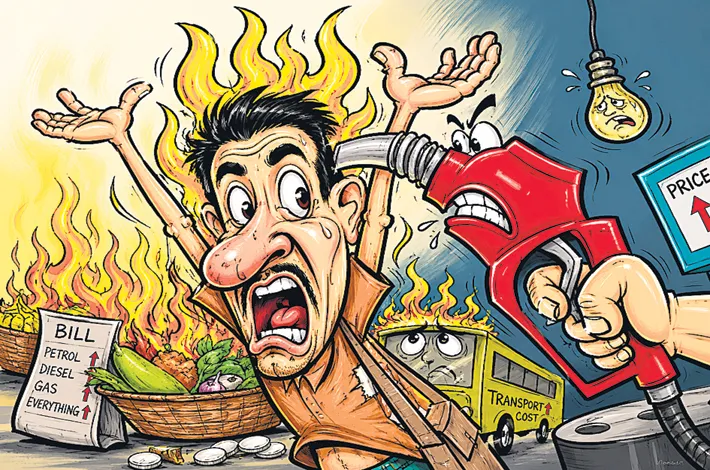
The recent increase in petrol and diesel prices has once again severely affected the daily lives of ordinary citizens, turning what was once a minor monthly expense into a major burden on family budgets. Every time vehicle owners fill fuel at petrol pumps, the additional amount they pay is directly impacting their livelihoods. Employees, middle-class families, farmers, and small traders are among the worst affected sections feeling the heat of the price hike.
Fuel price increases go far beyond vehicle owners. They influence every sector of the economy. Higher transportation costs lead to a rise in the prices of all essential commodities. From vegetables to construction materials, milk to fruits — prices across rural markets to urban supermarkets are expected to climb. While the Central Government attributes the rise to fluctuations in international crude oil prices and global geopolitical tensions, critics argue that when global prices fall, the benefit is not fully passed on to consumers, but any increase is quickly transferred to them.
Transport associations estimate that a Rs 3 per litre increase in diesel could add an extra burden of Rs 8,000 to Rs 15,000 per month on a single truck. Since fuel already accounts for around 40% of operating costs, transport companies are likely to hike freight charges by 5–12%. This increase will eventually be passed on to consumers. In cities, auto, cab, and private travel fares are also expected to rise.
Agriculture sector in distress
Farmers are deeply worried. Most agricultural operations — tractors, harvesters, water pumps, and crop transportation — rely heavily on diesel. With nearly 90 lakh tractors operating in the country and around 70% of farm machinery running on diesel, cultivation costs per acre could increase by Rs 300 to Rs 800.
Many farmers, especially in areas with unreliable power supply, depend on diesel pumps for irrigation. Farmer organizations warn that this will significantly raise input costs and reduce their profit margins, particularly for perishable crops like vegetables and fruits. Diesel price increases could push food inflation up by 1–2%. Vegetable and fruit prices may rise by 5–15% in the coming weeks. Dairy companies like Amul and Mother Dairy have already increased milk prices by Rs 2 per litre. Prices of rice, wheat, pulses, and edible oils are also expected to come under pressure.
The booming e-commerce and quick commerce sectors are also set to feel the pinch. With over 1.2 crore online deliveries happening daily, higher fuel costs will increase logistics expenses. Fuel and transportation form nearly 30% of operating costs for many food delivery platforms. Delivery charges may increase by Rs 5 to Rs 20 per order, and free delivery offers could be reduced. For an average middle-class family consuming 40–60 litres of petrol per month, the hike could mean an additional Rs 120–180 in fuel expenses alone.
When combined with rising costs of essentials, commuting, and deliveries, the total additional monthly burden on a typical household could range between Rs 500 and Rs 2,000. Experts warn that families with fixed incomes may be forced to cut down on non-essential spending and postpone travel plans. The sustained rise in fuel prices has sparked widespread concern about its long-term impact on inflation, economic growth, and the cost of living for ordinary Indians.