31 July, 2026 | 4:32 PM


Decoding Vijay Phenomenon
16-05-2026 12:00:00 AM
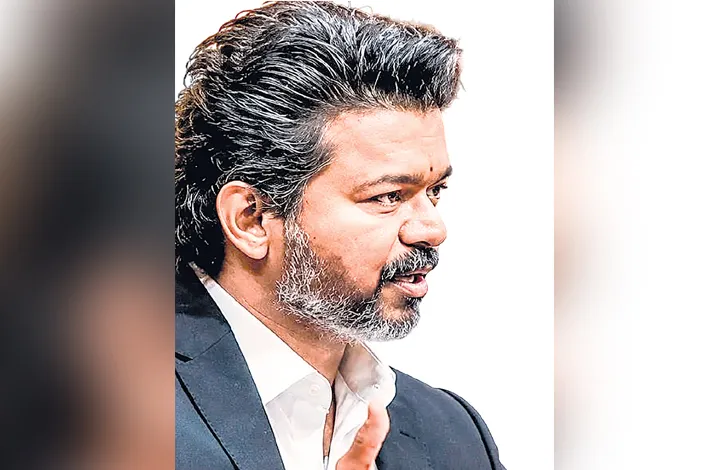
Outcome of the recent Tamil Nadu Assembly elections has sent shockwaves across the entire political establishment, from which it is yet to recover. What has happened is not merely a change of guard, a change of Government. The coming to power of Tamil Nadu Chief Minister C Joseph Vijay has signalled a huge political shift, a paradigm change in the State. Vijay's Tamizhaga Vettri Kazhagam (TVK) coming to power in Tamil Nadu is a social change, as well, pulling off one of the biggest ever political surprises in the country's electoral history.
The political establishment had no inkling, as Vijay Magic was quietly, steadily building up. Finally, the Vijay Wave swept across Tamil Nadu. His biggest achievement is his breaking the political stranglehold of Dravidian politics and parties, the DMK and the AIADMK, on Tamil Nadu; where national parties were compelled to enter the electoral fray only as Allies of either of the Dravidian parties.
Vijay's brand of unconventional politics defined his own political approach, his political methods, as well as his political messaging. No media backing for him, no crafty politics of social engineering, no grand alliances for him. It was his loyal band of Virtual Warriors, who led the electoral campaign charge on the social media platforms, managing to enter the homes and hearts of the people, which no political party's electioneering could do, in the past.
There was no need for him to rely on freebies or make tall claims. His image was already etched in the minds of the public, as they saw him in different roles in the films. Themes of confronting the authority in Vijay's films, the punch lines in his dialogues, helped him fashion for himself a People's Leader image, long before he established his political party in 2024. Among his key films, Thalaivaa in 2013 focused on power and accountability, forcing an ordinary man to become a leader; Kaththi in 2014, dealt with rural distress and fight for farmers' rights; Mersal in 2017, was on corruption in the medical field, tackling public health policies; and in Sarkar in 2018, Vijay fought for electoral reforms, voter rights and against corrupt government systems. This screen persona seems to persist, colouring his political persona, as Vijay takes charge of the State.
Political pundits were lost in a maze of intriguing questions, to which they had no ready answers. Where is Vijay's organization? Where are the cadres? How will Vijay translate sympathy for him into votes? Where are the booth-level committees? Where is he getting money from? What is his political ideology?
The answers were there for all to see, even as the political pundits continued to remain in denial mode. Vijay's fans, going to see his films, for a change, chose on the election day to go to the polling booths, as well, to cast their vote for Vijay. His fans turned into his cadres, constituting his booth-level committees. Each fan ensured his or her family voted for Whistle, the election symbol of Vijay's Tamizhaga Vettri Kazhagam.
Vijay shows ideological clarity. Standing for equality, secularism and social justice, Vijay does not have to wear his political ideology on his sleeves. Steering clear of polarization and hate politics, he does articulate what he believes in, what he stands for. Vijay does not have to position himself as Anti-BJP, or as a crusader against Hindutva Ideology.
More positively, his emphasis is on his beliefs. For instance, Citizenship (Amendment) Act (CAA) was passed in 2019. In March 2024, when the CAA Rules were Notified, Vijay opposed the CAA. Calling the law divisive, Vijay urged the Tamil Nadu Government not to implement it. His social base -- Muslims, Christians, Dalits, fisherfolk, weaker sections and women -- define his ideological position.
C Joseph Vijay ennum naan.... was enough to send his audience at the swearing in ceremony into a frenzy. Speaking soon after taking oath of office and secrecy, Vijay struck a chord, inspiring confidence in the ordinary people, inviting one and all to the launch of fresh governance, a new governance, in the State. This is a New Beginning. A New Era of Real, Secular, Social Justice, starts now, he declared, tapping on his wrist-watch, with dramatic effect!
Tamil Nadu economy is in the red, with debt pegged at around Rs 10 lakh crore.
While governance issues need to be addressed, Vijay senses what is hurting the common people the most. The law and order situation; women's safety; saving youth from drug-culture, before Tamil Nadu turns into another Punjab; healthcare; rations; drinking water availability; condition of roads; bus services. These are all the areas where people have basic concerns, where Vijay can make them feel palpable change.
Struggling initially to cross the magic halfway-mark at 118, finally Vijay convincingly won the floor test, with 144 votes in his favour, in the 234-member Tamil Nadu Assembly. This is proof of his widening appeal and acceptability. Political stability is no longer an issue, with the breakaway AIADMK group of 25 MLAs pledging support to TVK Government.
Vijay's spectacular storming on to the Tamil Nadu political centrestage has hardly any match, precedent, or parallel. Certainly, Vijay's political ascendancy is in no way comparable with the political trajectories of the likes of M G Ramachandran in Tamil Nadu in 1972-77, of N T Rama Rao in the Undivided Andhra Pradesh in 1982-83, or of Arvind Kejriwal in Delhi in 2012.
MGR traversed a long way in over two decades, starting his political journey in the Congress, before moving to the DMK in 1953 and nearly 20 years later, setting up the All-India Anna DMK (AIADMK) in 1972. AIADMK won a parliamentary by-election from Dindigul in 1973, before MGR stormed to power in 1977, winning the Tamil Nadu Assembly elections.
Similarly, N T Rama Rao enjoyed an iconic, larger-than-life image for decades, having performed roles of Lord Ram and Lord Krishna, permeating the conscience of the people. At the age of 60 years, he turned to politics. NTR got the fullest backing of a media house, giving him a headstart. At that point in time, there was a political context, as well, of the Congress frequently changing the State Chief Ministers. Added to it was the public outcry over the then AICC General Secretary Rajiv Gandhi openly pulling up the then State Chief Minister T Anjaiah. All of these snowballed into a major controversy, handing in to NTR the issue of self-respect of Telugu people.
Arvind Kejriwal spearheaded the India Against Corruption (IAC) Movement in 2011, with Anna Hazare undertaking fast-unto-death in the Capital, demanding Jan Lok Pal Bill. With the movement capturing the imagination of the people, Kejriwal moved in to quickly capitalize on its gains by launching the Aam Admi Party (AAP) in 2012, going on to end the 15-year-long rule of Congress leader Sheila Dikshit as Delhi Chief Minister, in 2013.
Launching his TVK in 2024, Vijay stormed to power two years later in 2026 without the support from the political system, like the media, or the advantages of a popular sentiment or movement aiding its political growth and advancement.
The essential political message of Vijay is the consolidation of the forces of secularism, social equality and social justice. In these troubled times of polarization and hate politics, this political message is not without its larger significance for several other States.
Vijay has made a promising start. But he requires greater tact and a larger political perspective to sustain this political momentum he has generated. How will Vijay fare is still a million-dollar question. It's not known whether or not Vijay succeeds; but certainly he deserves a chance to carry out his experiment.
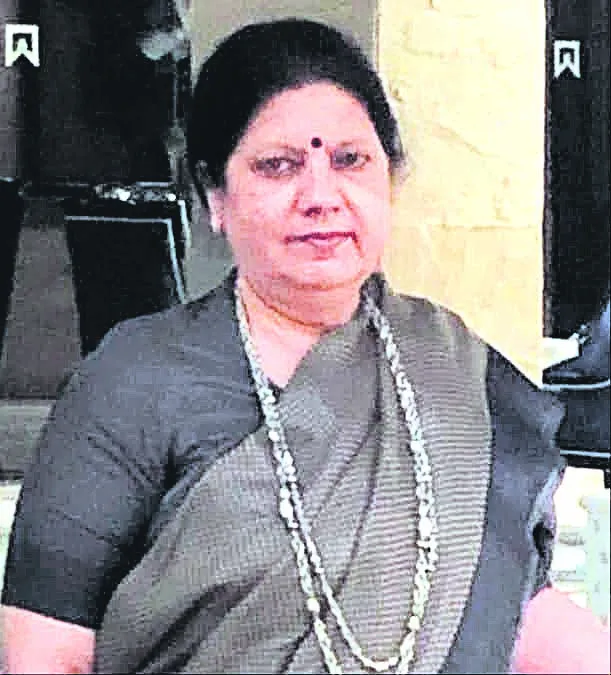
Anita Saluja
(Writer is Delhi-based senior journalist, analyst and political commentator. Views are personal.)