29 October, 2026 | 1:05 AM


Protect TATAs
29-10-2026 12:00:00 AM
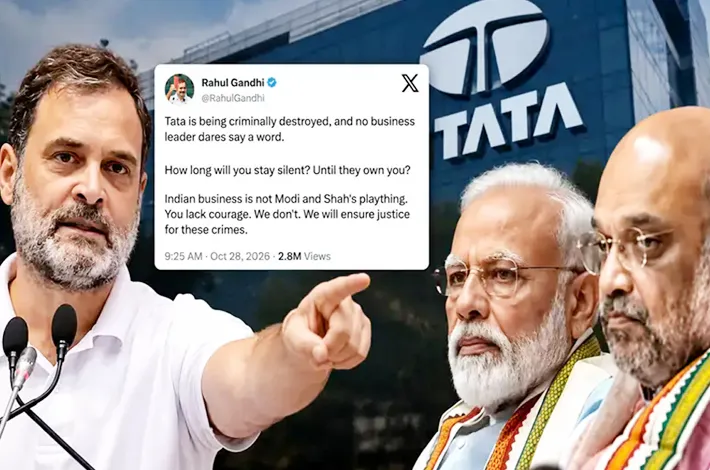
Leader of Opposition says Tata is being ‘criminally destroyed’
metro india news I new delhi
Lok Sabha Leader of Opposition on Wednesday accused the business leaders of remaining silent over the ongoing rift between Tata Trusts chairman and the board of Tata Sons. He went on to state: Tata is being ‘criminally destroyed’.
“Tata is being criminally destroyed, and no business leader dares say a word. How long will you stay silent? Until they own you? Indian business is not Modi and Shah’s plaything. You lack courage. We don’t. We will ensure justice for these crimes,” Gandhi said in a post on X.
It is for the first time in known history that the Tata Group is embroiled in controversy. The problems started after the demise of Ratan Tata’s death in October 2024. Noel Tata became chairman of Tata Trusts. Ever since, the Tata Group is facing one of the most serious governance battles and with each passing day, the rift between Tata Trusts Chairman Noel Tata and board of Tata Sons is widening.
The dispute has raised fundamental questions about who exercises effective control over one of India’s most prominent business groups.
The conflict intensified in September 2026, when the Tata Sons board approved a fresh five-year term for Chairman N Chandrasekaran and moved towards pursuing a stock market listing. Noel Tata opposed both decisions, arguing that they conflicted with the position taken by Tata Trusts and raised questions about the board’s authority and decision-making process.
Venu Srinivasan and Vijay Singh, both trustees of Tata Trusts, had approached the Charity Commissioner raising governance issues in Tata Trusts. Tata Sons AGM was postponed due to lack of quorum.
Tata Trusts collectively hold approximately 66 per cent of Tata Sons, giving them a majority ownership stake and substantial influence over the group’s governance. After Noel Tata became the chairman, differences emerged over trustee appointments, board representation, and the group’s future direction.
Major Contention
A major point of contention is whether Tata Sons should remain privately held or list its shares on the stock exchanges. In March 2024, the Tata Sons board unanimously supported keeping the company unlisted. The two principal Tata Trusts subsequently reaffirmed that position in resolutions passed in 2025.
The Reserve Bank of India (RBI)’s September 2026 decision to reject Tata Sons’ application to surrender its registration brought the issue back into focus. The company’s classification as an upper-layer non-banking financial company has regulatory implications, including a potential listing requirement. Noel Tata argued that the RBI communication did not explicitly mandate a listing and that the company should explore alternative solutions.
The dispute has also centred on Chandrasekaran’s reappointment. Tata Trusts, led by Noel Tata, questioned the validity of the board’s decision, particularly the chairman’s casting vote after Noel Tata opposed the proposal while fellow Trusts nominee Venu Srinivasan supported it.
The Trusts maintained that the reappointment required the support of their nominees on the Tata Sons board, as stipulated in the company’s Articles of Association. Tata Sons, however, argued that the decision was valid because it had secured a majority vote.
Business concerns have further widened the rift. Noel Tata has questioned the growing losses at unlisted ventures such as Air India and Tata Digital, along with the group’s capital allocation and executive pay. Differences among trustees have also led to formal complaints and public exchanges, intensifying the crisis.
The dispute has now grown beyond differences over business strategy. At its core are questions about who should control the Tata Group, how much authority the board should exercise, and the role of Tata Trusts, which hold the majority stake in Tata Sons.