11 July, 2026 | 7:57 AM


Project Jaladhara turns Annamayya into water-secure district
21-02-2026 12:00:00 AM
Metro India News | AMARAVATI
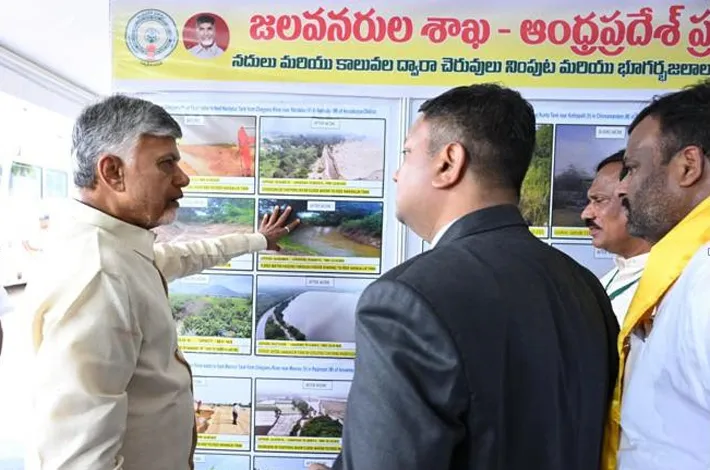
In a significant turnaround for drought-hit Rayalaseema, Andhra Pradesh’s Annamayya district has emerged as a model for sustainable water management and rural economic growth through the district administration’s flagship initiative, Project Jaladhara, which has dramatically improved groundwater levels and agricultural productivity within a short span.
At the core of the project is the interlinking of surplus and deficit basins within the district, a decentralised adaptation of the broader river-linking concept pursued by the Union and State governments. By integrating scientific planning with traditional community knowledge of ancient water channels, the administration coordinated efforts between the Water Resources Department and the District Water Management Agency to revive defunct water systems and redirect surplus flows to drought-prone areas.
Under sub-basin-based planning, several major tanks were interconnected, enabling diversion of 3.9 TMC of surplus water to deficit regions across Rayachoty, Madanapalle, Lakkireddipalle, Thambalapalle, Rajampet and Nandalur mandals. Historic tanks such as Pullampet tank and Konamma Cheruvu received water after nearly five decades, bringing relief and celebration to local communities. Nearly 90 per cent of the district has benefited from the initiative, barring a few rain-shadow pockets.
Large-scale water conservation works executed through employment guarantee schemes played a crucial role in the transformation. Of nearly 6,000 defunct feeder channels, 4,000 have been restored, while work is underway on 1,700 more. Authorities rejuvenated 532 local streams, excavated 310 feeder channels, constructed 214 farm ponds, developed 102 trenches, restored 3,089 tanks, and ensured 962 minor irrigation tanks reached full capacity. Rainfall from recent cyclones was scientifically captured and diverted to recharge groundwater systems, preventing runoff losses.
The impact has been striking. Surface water storage increased from 13.15 TMC in August 2025 to 48.86 TMC by December 2025, while groundwater levels rose sharply, improving by nearly 8.7 metres, far higher than the Rayalaseema regional average of 3.6 metres. Groundwater is now available at depths of just 3-8 metres across most parts of the district, reviving over 20,000 defunct borewells. Consequently, Annamayya district’s groundwater ranking in the state jumped from 25th place to second without constructing any new irrigation project.
Satellite imagery from the Andhra Pradesh Space Applications Centre indicates a significant ecological revival, with moderate vegetation expanding by 5.12 lakh acres, water bodies increasing by 3,927 acres, and dense forest cover expanding by 400 acres.
Improved groundwater availability has also reduced agricultural electricity consumption by 30-40 per cent, saving an estimated 12.54 lakh units of power daily from 1.25 lakh pump sets and generating savings of nearly ₹95.71 crore for the state between August and November 2025.
Enhanced water availability has driven rapid economic gains. Horticulture cultivation expanded to 85,760 hectares, an increase of 20,000 hectares within a year, generating an additional Gross Value Added (GVA) of ₹1,634 crore by December 2025. Under livelihood initiatives, distribution of 10,000 milch animals to farmers has increased milk production by one lakh litres per day, contributing an estimated ₹100–120 crore annually to the local economy.
Overall, Project Jaladhara is projected to boost the district economy by ₹1,100–1,170 crore this year through growth in horticulture, animal husbandry, fisheries and energy savings.