24 August, 2026 | 5:06 AM


Paperless Cabinet rolls out mega welfare package
03-07-2026 12:00:00 AM
■ Teachers to Get Midday Meals
■ 6,278 Posts Cleared for TIMS Hospitals
■ Rs 7,345-Crore Musi Phase-I Gets Nod
■ Cabinet Clears Musi Riverfront Phase-I
■ Navodaya, KV Campuses Get Land
metro india news I hyderabad
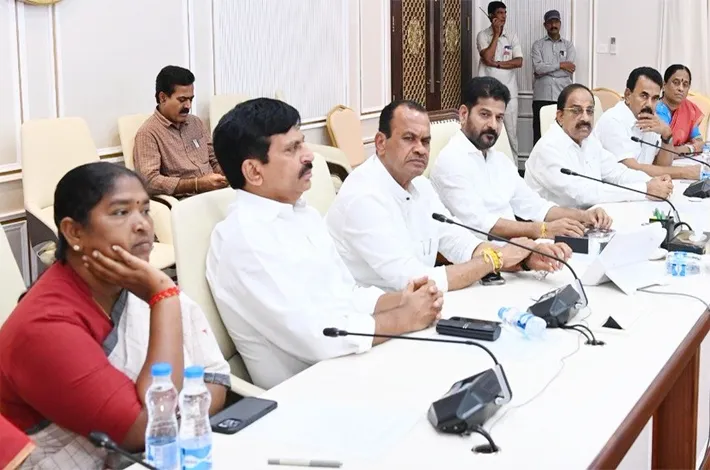
The Telangana Cabinet, chaired by Chief Minister A Revanth Reddy, held its first ever paperless meeting on Thursday and took a series of significant decisions aimed at strengthening welfare delivery, expanding public healthcare, improving educational infrastructure and accelerating key development projects across the State. The decisions were announced by Information and Public Relations Minister Ponguleti Srinivas Reddy after the Cabinet meeting.
In a major welfare initiative, the Cabinet approved extending the State's school nutrition programme to teachers, lecturers and non teaching staff in government schools and junior colleges. Along with students receiving breakfast, milk and mid day meals, nearly 1.5 lakh teachers, lecturers and employees will also be covered under the programme. The government said the move is intended to improve accountability and ensure better quality and monitoring of nutritional standards in educational institutions.
The Cabinet also approved a large scale recruitment drive for newly established Telangana Institute of Medical Sciences (TIMS) super speciality hospitals at Sanathnagar, LB Nagar and Alwal, besides the Warangal Super Speciality Hospital. A total of 6,278 posts were sanctioned, including 1,494 regular posts, 549 contract based posts and 4,235 outsourcing positions. The government aims to develop these hospitals on the lines of NIMS to provide advanced healthcare services. The Chief Minister also directed that patients availing treatment in these hospitals should be eligible for Letters of Credit under the Chief Minister's Relief Fund.
Giving a major boost to urban infrastructure, the Cabinet granted administrative approval for Phase I of the Musi Riverfront Development Project at an estimated cost of Rs 7,345.12 crore. The first phase will cover about 21 kilometres, stretching from the confluence points of the Himayat Sagar and Osman Sagar streams up to Bapughat. The Cabinet also approved creation of 147 new posts for the project's implementation and maintenance, along with deputation of personnel from other departments wherever required.
The Cabinet further approved the allocation of 50 acres in Bollikunta village of Warangal district and 10 acres in Karkalpahad village of Rangareddy district to the Telangana State Warehousing Corporation at market rates for construction of essential commodities warehouses.
To strengthen educational infrastructure, the Cabinet allocated 20.18 acres in Peddayipally village of Mahabubnagar district and 19.12 acres in Kodad of Suryapet district for establishment of Jawahar Navodaya Vidyalayas. It also approved allocation of five acres of government land in Chalgal village of Jagtial district for setting up a Kendriya Vidyalaya.
State to implement, challenge NREGS law
One of the key issues discussed was the implementation of the Centre's new law VB-G RAM G (Viksit Bharat – Guarantee for Rozgar & Aajeevika Mission) replacing the Mahatma Gandhi National Rural Employment Guarantee Scheme (MGNREGS). The Cabinet expressed strong reservations over the legislation, stating that it had been enacted without adequately consulting the States and that several of its provisions impose an additional financial burden on State governments, contrary to the spirit of cooperative federalism.
The Cabinet recalled that the Telangana Assembly had earlier passed a resolution urging the Centre not to alter the existing employment guarantee scheme, which has provided livelihood security to rural workers. While expressing its continued opposition, the Cabinet noted that most States had already decided to implement the new law. Considering the need to ensure uninterrupted employment for MGNREGS workers, it approved issuing a notification to implement the legislation in Telangana with effect from July 1, 2026. At the same time, the State decided to challenge the new provisions before the Supreme Court and raise the issue in Parliament.