25 August, 2026 | 7:34 AM


Not just heat, but a slow-burning economic crisis
28-06-2026 12:00:00 AM
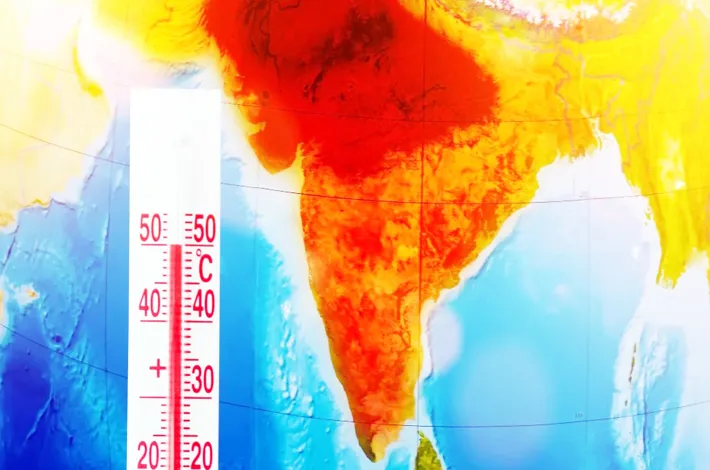
Heat waves no longer merely a weather event
Metro India News | Hyderabad :
When summer arrives, scorching temperatures, oppressive humidity and relentless sunshine are often accepted as part of life. Most people believe that a few precautions are enough to cope with the season. However, the reality confronting India today is far more serious. The repeated warnings issued by the India Meteorological Department (IMD) and the National Disaster Management Authority (NDMA) make it abundantly clear: heat waves are no longer just a climatic phenomenon.They are a public health emergency, a livelihood crisis and increasingly, an economic challenge that threatens productivity, labour efficiency and long-term growth.
Global institutions such as the International Labour Organization (ILO) and the World Bank increasingly view extreme heat as an economic risk rather than merely an environmental issue. If labour productivity declines, economic output inevitably suffers.The agricultural sector is particularly vulnerable. Farmers and farm workers have no choice but to work outdoors. Yet rising temperatures are forcing changes in work schedules, increasing irrigation demands and, in some regions, affecting crop yields. The result is a rise in cultivation costs and greater uncertainty for farming communities.
Urban centers face an additional layer of complexity. As temperatures rise, households increasingly depend on air-conditioners and cooling appliances. Electricity demand surges. This places significant pressure on power infrastructure while increasing generation and distribution costs.In such circumstances, governments cannot limit their response to issuing advisories alone. Providing shaded spaces, drinking water facilities and rest shelters at bus stations, railway terminals, markets and labor hubs is not merely a welfare measure; it is an economic necessity that helps reduce productivity losses and health-related expenditures.
The recommendation by the 16th Finance Commission to consider heat waves as a notified disaster reflects this growing recognition. Formal recognition would enable governments to mobilize resources more effectively and invest in preventive measures rather than merely responding to emergencies.Equally important is the role of early warning systems. Timely information enables farmers, workers and small business owners to adjust their schedules and minimize risks. Information, in this context, becomes a powerful tool of economic protection.
Building Resilience Before Temperatures Rise Further
While heat waves cannot be eliminated, their impact can certainly be mitigated. Governments, local bodies and civil society must work together to build climate resilience.Large-scale afforestation is one of the most effective and affordable interventions. Studies show that a mature tree can reduce surrounding temperatures by several degrees. Protecting lakes, ponds and water bodies, promoting rainwater harvesting, encouraging rooftop gardens and adopting cool-roof technologies can significantly reduce the urban heat island effect.
Work schedules in agriculture, construction and other labor-intensive sectors must be adapted to evolving climatic realities. Public spaces should be equipped with shaded shelters, drinking water facilities and rest zones, particularly in areas frequented by vulnerable populations. The answer to rising temperatures is not merely more air-conditioners. It is more trees, more green spaces and a development model that works in harmony with nature rather than against it.India's battle against heat waves will be won by protecting livelihoods, strengthening resilience and recognizing that what appears to be an environmental challenge is also an economic one
— Malladi Venkata Gopala Krishna
Senior Journalist