25 August, 2026 | 7:10 AM


Lalita Iyer Musings Marriage or Tolling of the Bell
28-06-2026 12:00:00 AM
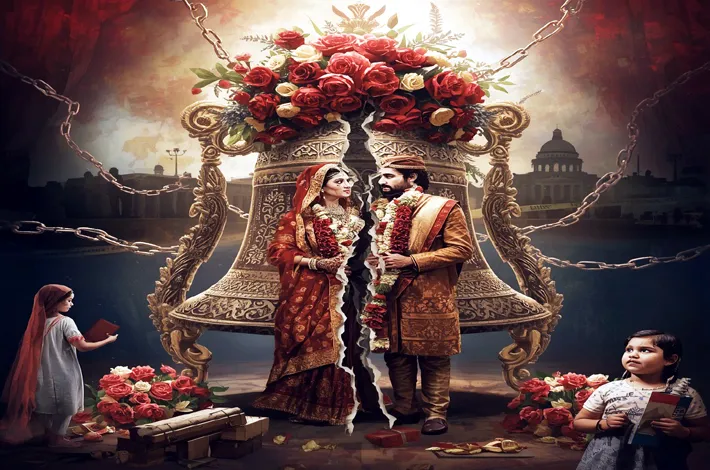
Just the other day, I attended an extremely posh and well-attended engagement party. Or perhaps it would be more accurate to call it crowded. A young couple, their friends, designer outfits, well-heeled guests, a live band specially invited from Mumbai, overflowing food counters, and waiters eager to clear plates before people had even finished eating. It was a celebration filled with joy and excitement.
Soon, I will attend the equally lavish wedding, and I will sincerely pray for the young couple to remain happy in their marriage. I have great affection for the groom and wish them only the best.
But are these the times we live in, or have young minds become increasingly fickle? In today's here-today-gone-tomorrow culture, marriages often seem to end as quickly as they begin. Yet, the money spent on extravagant weddings continues to grow. The celebrations may last for days, but for some couples, the relationship itself barely survives. Decisions to separate—or, in shocking cases, even to kill—are made long after the festivities have ended.
Much of the responsibility, I believe, lies with parents. In an attempt to keep up with social expectations, many are willing to spend their lifetime savings on lavish ceremonies. The bride and groom often want destination weddings, grand themes, and unique celebrations, leaving parents to bear the financial burden. Weddings have become a blend of entertainment, culture, and social display rather than a simple celebration of commitment.
With everything moving at such speed, faith in the institution of marriage itself appears to be sinking into quicksand. Recent headlines only deepen those concerns. Disturbing reports have emerged of newly married women allegedly killing their husbands during their honeymoon. In another shocking case, a young woman allegedly pushed her fiancé off a cliff after discovering he wore a wig. Investigations later revealed another man was involved, and both are now accusing each other.
These crimes appear to reflect not only criminal intent but also the immaturity of youth, with those involved believing they could escape justice. Yet the emotional destruction left behind is immense, and the question of "why" often remains unanswered.
As if these tragic incidents were not enough, they have now reached the courts, turning into high-profile legal battles. Siya Goyal's family has hired Advocate Aashuutosh Srivastava, known for handling complex cases, while Ketan's family has engaged veteran public prosecutor Ujjwal Nikam to represent them.
While these incidents involve young adults making decisions to marry and then to separate—or worse—I also want to draw attention to child marriages, where truly innocent children are trapped in marriage with societal approval.
Governments at both the Centre and the state level, along with several NGOs, have worked for years to reduce child marriage. Their efforts have produced encouraging results, and the numbers have declined significantly.
However, the practice still continues in some communities. In certain cases, child marriages are conducted as part of ceremonies following a death in the family, with girls as young as 10 or 12 being married. Another reason often cited is the belief that delaying marriage for education makes it harder and more expensive to find a suitable groom.
According to reports, child marriage in India occurs when a girl is married before the age of 18 or a boy before 21. Although the prevalence has fallen to around 23%, India still accounts for nearly one-third of the world's child marriages. Poverty, traditional gender norms, and low levels of education remain the key driving factors.
Under the Prohibition of Child Marriage Act, adults involved in conducting underage marriages can face up to two years of rigorous imprisonment and a fine of ₹1 lakh. In addition, under the Bharatiya Nyaya Sanhita and the POCSO Act, any sexual relationship between a man and his minor wife is treated as aggravated penetrative sexual assault.
To further curb child marriages, the Maharashtra government is considering making the dates of birth of both the bride and groom mandatory on wedding invitation cards. The proposal also seeks to hold printing presses, event organisers, and wedding halls accountable, following a framework similar to that adopted in Rajasthan.
Ironically, Rajasthan remains among the states with the highest incidence of child marriages, alongside West Bengal, Bihar, Uttar Pradesh, and Jharkhand. Telangana ranks eighth.
Perhaps it is time to truly believe that while marriages may be made in heaven, the decisions to break them—or even to destroy them—are made here on earth.

– Lalita Iyer
Senior Journalist