6 November, 2026 | 12:33 AM


SIR: Beyond politics, a fight for democracy
06-11-2026 12:00:00 AM
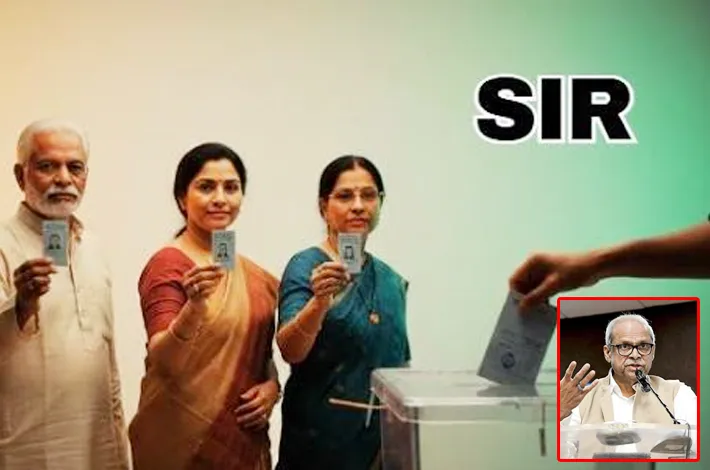
Political commentator and public intellectual Parakala Prabhakar argued that the controversy surrounding SIR goes far beyond the question of electoral manipulation or the political interests
Metro India News | Hyderabad
The debate over the Special Intensive Revision (SIR) of electoral rolls has emerged as a major national political and democratic issue. With five states scheduled to go to the polls in the coming year, an important question confronts the opposition parties, civil society organizations and citizens: Should these states proceed with elections using the electoral rolls prepared through the SIR exercise, despite the serious allegations of mass deletions, procedural irregularities and disenfranchisement? Or should the process be challenged and reconsidered before elections are conducted?
Political commentator and public intellectual Parakala Prabhakar argued that the controversy surrounding SIR goes far beyond the question of electoral manipulation or the political interests of particular parties. Prabhakar began by distinguishing between two related but different forms of electoral malpractice: what he described as vote chori and voter chori.
Vote chori refers to the alleged manipulation or theft of votes after citizens have cast them, whereas voter chori refers to the disenfranchisement of eligible citizens by removing their names from electoral rolls. According to him, India is now confronted with both problems. While allegations of vote manipulation existed even before the SIR exercise, the new revision process has introduced another serious concern: the systematic exclusion of eligible voters.
The controversy has intensified following reports of large-scale deletions in several states. In Uttar Pradesh's Pilibhit district, for instance, approximately 13,150 voters were reportedly removed and replaced by other names. Similar concerns have emerged from Uttarakhand and West Bengal.
In West Bengal, several lakh deletions have reportedly been carried out through electoral registration officers, often without adequate notice to the affected voters or compliance with established procedures. Prabhakar pointed out that such deletions, particularly when conducted through computer-based processes without informing citizens, undermine the fundamental principle that every eligible citizen must have an opportunity to exercise their franchise.
He cited the position taken by the Uttar Pradesh Chief Minister, who has expressed concern about the deletion of a large number of Hindu voters. Prabhakar argued that such opposition remains inadequate if it is motivated primarily by the belief that voters belonging to one's own political or religious constituency are being removed.
Someone else may object because Muslim voters are being deleted, while another political leader may be concerned about the removal of Adivasi voters. This narrow, constituency-based approach, he argued, is precisely what the anti-SIR movement must overcome. A citizen's right to vote cannot depend on whether their vote is politically useful to a particular party or candidate.
He cited public hearings conducted in Hyderabad as an example of how such mobilization can work. At these hearings, hundreds of people reportedly came forward to explain that their names had been deleted despite their continued residence in the same localities. Some had been classified as dead, while others were recorded as having permanently shifted. In reality, they had lived in those neighborhoods for decades, raised families there and continued to reside at the same addresses.
He further challenged the government's argument that SIR is necessary to prevent foreigners, dead persons, duplicate entries and ghost voters from influencing elections. If the government maintains that electoral rolls before 2025 were seriously compromised by such entries, then an obvious question arises: Were the governments and legislatures elected in 2014, 2019 and 2024 also elected on the basis of defective electoral rolls? Was the 2024 parliamentary mandate similarly compromised? Were previous governments elected by foreigners or dead voters?
Towards the end of the discussion, Prabhakar warned against the possibility of the government making limited concessions, such as sacrificing an individual official or withdrawing a particular decision, and presenting these as major victories. He expressed concern that the opposition and civil society might celebrate such developments and abandon the larger struggle.
Ultimately, the question is not simply whether the opposition can win the next election. It is whether every eligible Indian citizen will retain the right to participate in deciding who governs the country. That, Prabhakar argued, is the larger democratic battle, and it cannot be settled through limited corrections or temporary political victories.