24 August, 2026 | 6:02 AM


Kharif crop acreage falls 23% across India
30-06-2026 12:00:00 AM
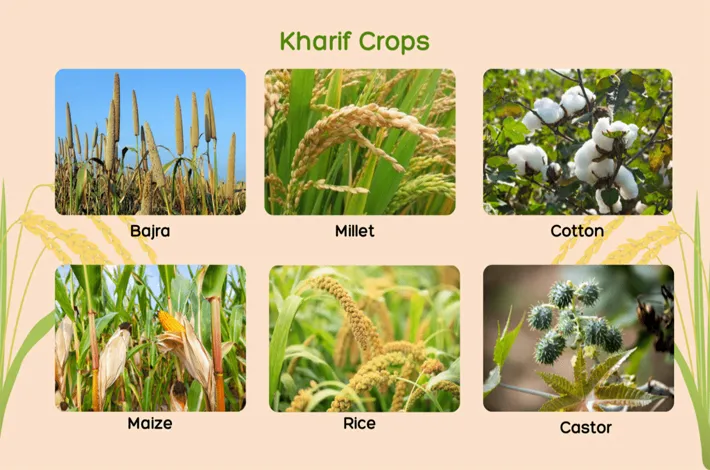
India’s kharif crop acreage has declined sharply this season, with total sowing area falling 23% year-on-year to 18.3 million hectares, according to data released by the Ministry of Agriculture and Farmers Welfare.
The decline reflects delayed sowing across major crop categories due to uneven monsoon progress and inadequate rainfall in several key agricultural regions. The contraction has been broad-based, affecting paddy, coarse cereals, pulses, oilseeds and cotton. 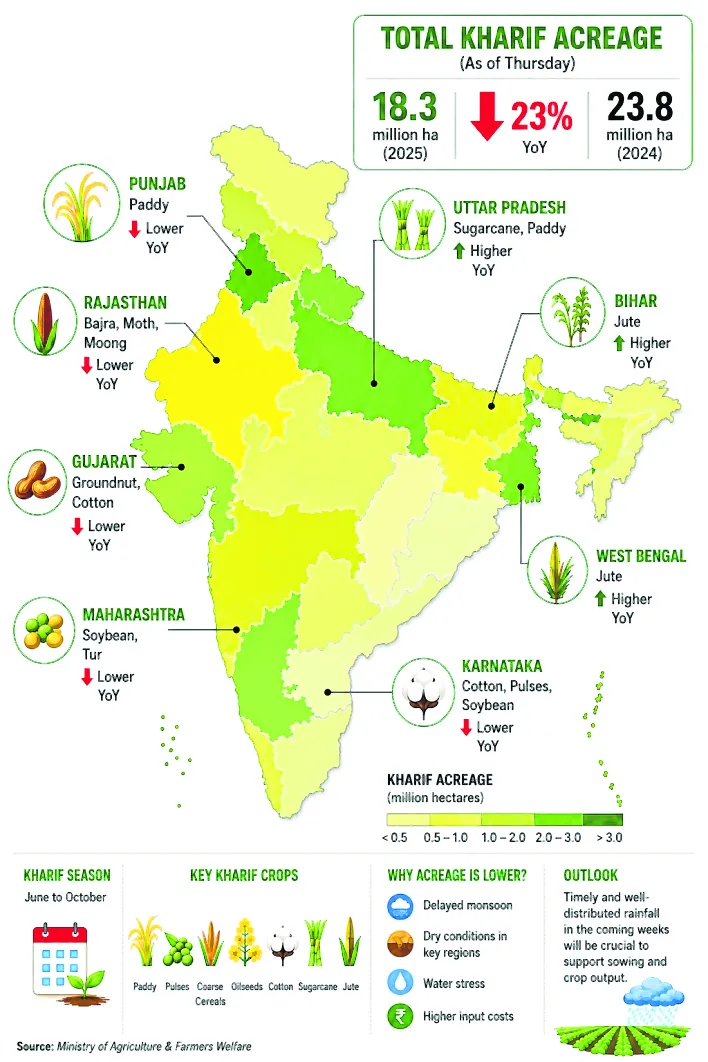
Paddy, the country’s most important kharif crop by acreage and output, saw sowing fall to 2.58 million hectares, compared with 3.44 million hectares during the corresponding period last year. This decline is significant as paddy plays a crucial role in India’s food security and inflation management.
Among coarse cereals, acreage declined to 3.18 million hectares from 3.61 million hectares a year ago.
Bajra and maize registered notable declines in sowing, though jowar emerged as an exception with higher acreage. The slowdown in sowing across coarse cereals comes despite strong policy support for millets and other “Shri Anna” crops. Pulses recorded one of the steepest declines, with total acreage dropping 31% to 1.49 million hectares.
Tur sowing plunged to 356,000 hectares from 845,000 hectares, while urad acreage fell sharply to 107,000 hectares from 251,000 hectares. Lower sowing of pulses could raise concerns over future domestic supplies and price stability.
Oilseeds witnessed the sharpest fall, with acreage nearly halving to 1.70 million hectares from 3.64 million hectares. Soybean sowing dropped to 692,000 hectares, while groundnut acreage fell to 887,000 hectares, indicating weaker planting activity across key producing states.Cotton acreage also declined significantly to 2.97 million hectares from 4.54 million hectares.
In contrast, sugarcane and jute posted modest gains, offering limited support to overall agricultural activity. Market participants are closely monitoring monsoon progress, as improved rainfall in the coming weeks could accelerate sowing and narrow the acreage gap.