24 August, 2026 | 10:09 AM


AP intensifies fight against Malaria
30-06-2026 12:00:00 AM
To strengthen prevention efforts, the government has proposed a 188 per cent increase in budget allocation, amounting to Rs 59 crore, for vector-borne disease control. The Minister also ordered the immediate distribution of 5,99,624 long-lasting insecticide-treated mosquito nets
- Govt control of seasonal diseases, with Health Minister directing village-wise action plans and early detection in tribal and vulnerable districts
- Malaria cases declined with 2,682 cases detected from 12.99 lakh tests (January–June 21) versus 3,786 cases from 12.61 lakh tests during same period last year
- Govt proposes 188% increase in funding for vector-borne disease control and orders distribution of nearly 6 lakh insecticide-treated mosquito nets in tribal areas
- Authorities directed to strengthen surveillance, ensure timely reporting, improve water safety, conduct regular inspections in schools and hostels
Metro India News | AMARAVATI
The Andhra Pradesh government has stepped up its efforts to contain seasonal and vector-borne diseases, with Health Minister Satya Kumar Yadav directing officials to prepare village-wise action plans for malaria control in tribal regions and strengthen surveillance across vulnerable districts.
Chairing a review meeting at the Visakhapatnam Collectorate with health officials from Alluri Sitarama Raju, Visakhapatnam, Parvathipuram Manyam, Srikakulam, Vizianagaram, Anakapalli, Eluru and Polavaram districts, the Minister stressed the need for early detection, rapid treatment and coordinated preventive measures to curb the spread of malaria and other seasonal diseases.
The Minister instructed district administrations to deploy additional male health workers to malaria-prone villages by reallocating staff from other areas. He also directed officials to prepare detailed action plans for each affected village based on previous disease incidence and ensure uninterrupted field-level monitoring.
Officials informed the Minister that malaria cases have declined compared to last year despite an increase in testing. Between January and June 21 this year, 12.99 lakh malaria diagnostic tests were conducted across eight districts, resulting in 2,682 positive cases, compared to 3,786 cases detected from 12.61 lakh tests during the corresponding period last year. The Minister, however, directed officials not to hesitate in testing anyone displaying suspected symptoms, stating that increased surveillance would enable timely intervention.
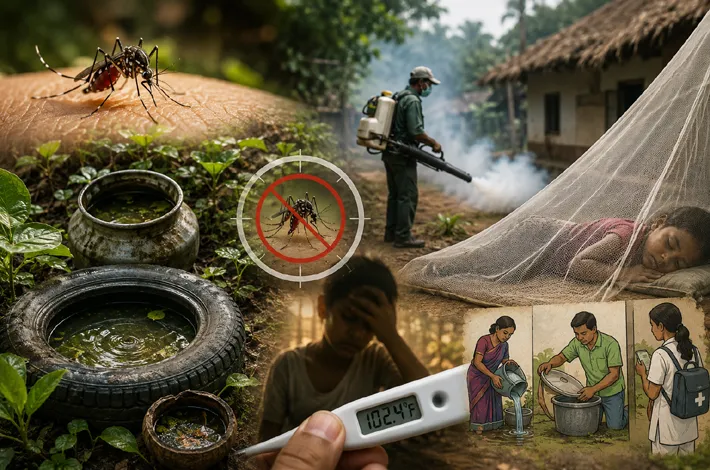
To strengthen prevention efforts, the government has proposed a 188 per cent increase in budget allocation, amounting to Rs 59 crore, for vector-borne disease control. The Minister also ordered the immediate distribution of 5,99,624 long-lasting insecticide-treated mosquito nets in tribal areas under the second phase of the programme.
Special emphasis was laid on educational institutions and student hostels in vulnerable regions. The Minister directed joint inspection committees comprising officials from the Health, Panchayat Raj, Municipal Administration, Education and Social Welfare departments to conduct regular inspections, intensify indoor residual spraying, anti-larval operations, fogging and fever surveys, and ensure strict implementation of the Friday Dry Day campaign to eliminate mosquito breeding sources.
The Minister also instructed ANMs and ASHA workers to strengthen grassroots surveillance, ensure timely reporting through the AWARE monitoring system, promote chlorination of drinking water sources and encourage people to seek treatment only at government health facilities. He further directed officials to fill vacancies in tribal health institutions on priority under the government’s zero-vacancy recruitment drive.