24 August, 2026 | 10:21 AM


Andre Malraux, Indira Magical Bonding
30-06-2026 12:00:00 AM
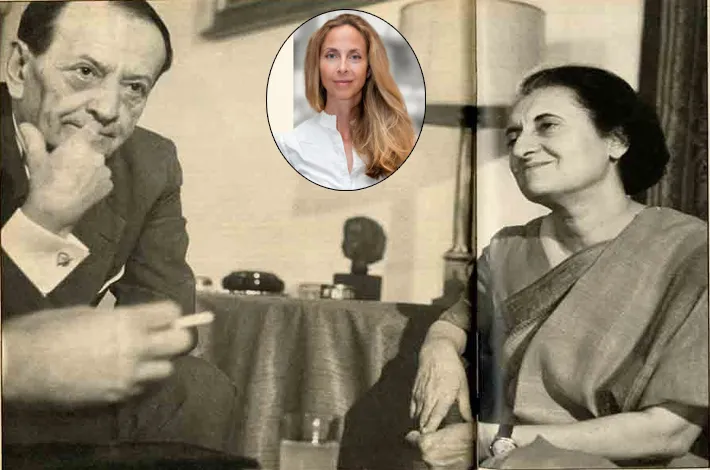
Andrè Malraux, renowned writer and Minister for Culture in General de Gaulle Government in France and a great friend of India, was closely associated with Indira Gandhi. Whenever Indira Gandhi visited Paris, she made it a point to meet Andrè Malraux. Interestingly, Indira Gandhi would instruct the Ministry of External Affairs that in all important speeches, half should be in English and half in French, a language in which she was adept. Especially in the run-up to the Bangladesh Liberation War in 1971, Andrè Malraux stood firmly with Indira Gandhi and supported her moral stand on the need to end the genocide in the erstwhile East Pakistan, ultimately resulting in the Liberation of Bangladesh on December 16, 1971.
Indira Gandhi honoured Andrè Malraux with Jawaharlal Nehru Award for International Understanding, for his contributions to global unity and cultural exchange. In November, 1974, Malraux travelled to New Delhi to receive the prestigious Jawaharlal Nehru Award for International Understanding directly from the hands of Indira Gandhi.
Walking in the footsteps of her grandfather Andre Malraux, Cèline Malraux was in India recently. Marking 50th death anniversary year of Andrè Malraux (died November 23, 1976), Cèline Malraux's India visit from June 18 to June 23, was meant in the main to trace her grandfather's great fascination for India.
Surprisingly, in India and in the Indian establishment, Cèline Malraux's visit passed off without any fanfare. Given Malraux's fascination for India, the land of Mahatma Gandhi, and his close personal association with, and his standing by, Indira Gandhi when she took a moral position on the gruesome genocide in erstwhile East Pakistan and subsequent Liberation of Bangladesh on December 16, 1971, surprisingly nothing was done even to befittingly commemorate the 50th death anniversary year of Andrè Malraux, or to befittingly receive his grand-daughter Cèline Malraux.
For Cèline, the Andrè Malraux Marg near French Ambassador residence in the Chanakyapuri diplomatic enclave in the Capital, became a pivot for a new initiative, a new series of conversations called Malraux Marg Talks.
France Ambassador to India Thierry Mathou said, "I look forward to hosting Malraux Marg Talks, a new series of conversations." The Ambassador of France acknowledged he was honoured to welcome Céline Malraux, as French Embassy marks 50 years of the passing of many-faceted intellectual André Malraux. Deeply inspired by India and Asia, Malraux saw culture as vital to human dignity and freedom.
As Culture Minister in General de Gaulle Cabinet, Andrè Malraux visited India in 1958. Nehru saw an opportunity for opening a line of communication with General de Gaulle. Nehru was keen on engagement with Andrè Malraux on the situation in Algiers and the Pondicherry question.
On the other hand, Andrè Malraux's conversations with Nehru focused more on the ideological struggles of the newly-formed nation and spiritual foundations of India. Malraux was keen to understand from Nehru what he considered his biggest challenge. Nehru was quick to point out that it was creating a just State by just means. Nehru went on to add, the other, and more difficult challenge, was creating Secular State in a religious country.
For Andrè Malraux, India was the land of Mahatma Gandhi. Though, he never met Gandhiji, Malraux seemed to go along with Gandhian values and vision.
In his many conversations with Nehru, Malraux would focus on Gandhi's moral struggles and the nature of Satyagraha. Malraux references to Communism were not unfriendly, but he rejected it as it was practised. In a way, he rejected modern Capitalism, as well as Communism. Largely, Andrè Malraux saw India as the only country, which could supply that spiritual foundation that would hold the world together.
Venkat Parsa is a senior journalist