16 September, 2026 | 3:31 AM


India–US trade deal awaiting tariff framework
17-03-2026 12:00:00 AM
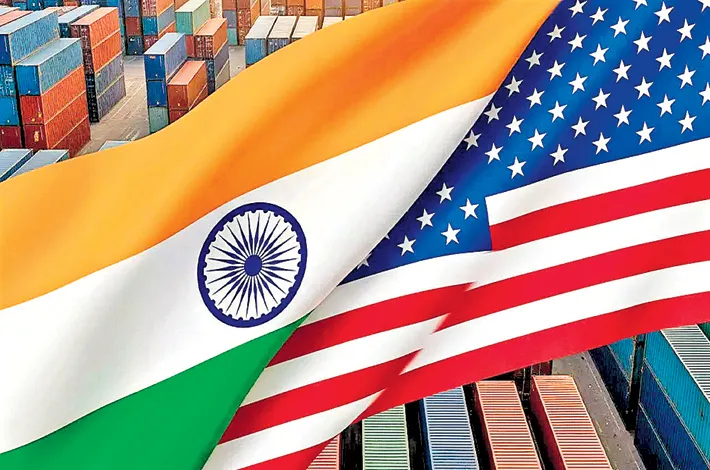
The interim trade agreement between India and the United States will be signed only after Washington finalises its new global tariff architecture, a senior government official said on Monday, indicating that the delay is due to evolving tariff policies rather than any disagreement between the two countries.
According to the official, the trade pact had earlier been expected to be signed in March. However, changes in the US tariff structure following a Supreme Court ruling on tariffs imposed under the International Emergency Economic Powers Act (IEEPA) altered the situation. The court ruling effectively nullified the earlier sweeping tariffs introduced by US President Donald Trump, forcing the US administration to adopt a temporary tariff arrangement.
Subsequently, the US imposed a 10 per cent tariff on all countries for a period of 150 days beginning February 24 under provisions related to balance-of-payments concerns. Because of this temporary arrangement, negotiators from both countries decided to postpone their meeting that was scheduled to finalise the legal text of the agreement.
Officials explained that the agreement must align with the final tariff structure to ensure India retains a competitive advantage in the US market. When the framework for the first phase of the bilateral trade agreement was announced last month, the US had agreed to reduce tariffs on Indian goods to 18 per cent. At that time, the rate was considered favourable for India compared with competing exporters such as China, Vietnam and Thailand.
The official said the US government is currently working to develop a new global tariff architecture. Once that structure is finalised, it will provide clarity for countries negotiating trade agreements with the United States. Only after that process is completed will both sides proceed with the formal signing of the India–US trade pact.
Despite the delay, officials emphasised that negotiations between the two sides are continuing and that the broad framework of the deal has already been agreed upon. The current discussions are focused mainly on ironing out technical and legal details, including non-tariff barriers and issues linked to Section 232 tariffs.
The tariff rate of 18 per cent for Indian exports may also change depending on the final tariff structure adopted by the United States. Officials indicated that if tariffs for competing countries are set higher, India could retain the current advantage. However, if tariffs for other countries are reduced, the rate for India could also be revised accordingly.
Meanwhile, the United States Trade Representative has launched two separate Section 301 investigations covering several economies, including India. One probe relates to policies linked to forced labour in supply chains, while the other examines industrial and trade practices. Indian officials said these investigations take time and may eventually be addressed once the bilateral trade agreement is signed.
Commerce Secretary Rajesh Agarwal stated that India remains engaged with the US to finalise a mutually beneficial trade agreement. Officials added that the current period is being used to resolve outstanding issues so that the agreement can be signed smoothly once the new tariff framework is established.