31 October, 2026 | 12:48 AM


India urgently needs unified digital infrastructure
31-10-2026 12:00:00 AM
The Path to Unified Governance
Resolving these systemic inefficiencies requires a deliberate shift toward administrative integration:
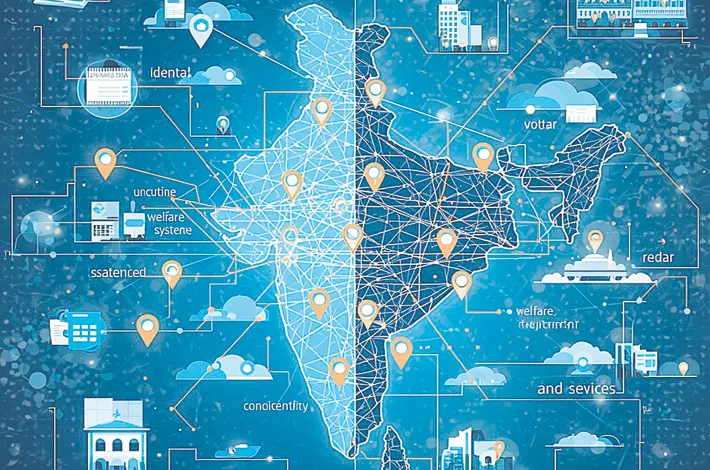
■ A Common Electoral Roll: The ECI and SECs must share a single, hierarchical voter database. By mapping voters down to their exact geographic ward, a single combined database can dynamically generate correct voter lists for any election—local, state, or federal—while cutting data cleaning costs.
■ A Civil Registry as the Single Source of Truth: Rather than trying to bypass birth and death registration, a modernised National Population Register (NPR) must be dynamically linked to the point of birth. A single, hylifelong National Civil Identity should automatically trigger voting rights at age 18 and streamline welfare eligibility without requiring new cards.
■ Geo-spatial Addressing: India must adopt a digital address system. Assigning a standardised, alpha-numeric geo-code to every physical housing structure—using satellite mapping capabilities like ISRO’s Bhuvan—will instantly solve the address deficit in rural and urban areas alike.
Opting for various measures will enhance credibility of some of our constitutional institutions. India’s administrative machinery faces a paradox: it possesses world-class digital public infrastructure, yet its citizens remain trapped in a maze of fragmented identities, redundant databases, and archaic address systems.
The primary barrier to efficient governance is no longer technological capability, but the structural silos maintained by regulatory and welfare departments. To truly unlock the potential of a modern digital state, India must transition from a system of multiple, functional identities to a unified, geo-spatially mapped civic infrastructure.
The Illusion of Identity
A citizen routinely navigates life using a plethora of documents: Electoral Photo Identity Cards (EPIC), PAN Cards, ration cards, passports, bank passbooks, and driving licenses. Each of these documents successfully proves specific attributes—tax compliance, food security eligibility, or authorisation to drive. None, however, serve as conclusive proof of Indian citizenship.
This institutional gap forces citizens into complex, corruption-prone bureaucratic processes to secure domicile, nationality, and citizenship certificates for basic opportunities like higher education enrolment or public sector employment.
When Aadhaar was introduced, it promised to resolve the identity crisis by standardising names, biometrics, and dates of birth. Yet, subsequent legal clarifications explicitly de-linked Aadhaar from citizenship and permanent residential proof. Instead of consolidating identity, the state permitted the proliferation of department-specific identity cards. Every welfare scheme prefers to launch its own card to distribute individual or family benefits, increasing administrative costs and building data silos that prevent a holistic view of socio-economic progress.
The Address Infrastructure Deficit
While India has leapfrogged into the digital age with virtual communication handles, emails, and UPI keys, its physical address infrastructure stays deeply unscientific. Many rural settlements, even some urban ones too, rehabilitation colonies, and villages lack formal street names or systematic house numbers.
Governance, logistics, emergency services, and credit verification still rely on descriptive landmarks rather than precise coordinates. In an era of internet accessibility, keeping a vague address system severely limits economic mobility and public service delivery
Redundancy in the Electoral Machinery
The consequences of this database fragmentation are most clear in the country's electoral systems. Currently, the Election Commission of India (ECI) supervises parliamentary and legislative assembly/council elections, while independent State Election Commissions (SECs) conduct urban and rural local body polls.
Every election cycle triggers a massive, resource intensive exercise of revising electoral rolls. Voters frequently find themselves registered for assembly elections but missing from local municipal or panchayat rolls due to mismatched ward boundaries. Furthermore, specialised elections—such as graduate or teachers’ constituencies for Legislative Councils—require entirely fresh enumeration exercises every single time.
It defies administrative logic to support separate databases when technology can easily harmonise them. Because every Parliamentary Constituency is built out of Legislative Assembly segments, similarly urban and rural local body wards can be systematically mapped and nested within this existing hierarchy.
(S K Joshi served as Chief Secretary of Telangana from Feb 2018 to December 2019)