13 September, 2026 | 4:31 AM


India, Finland discuss skills and workforce mobility
06-03-2026 12:00:00 AM
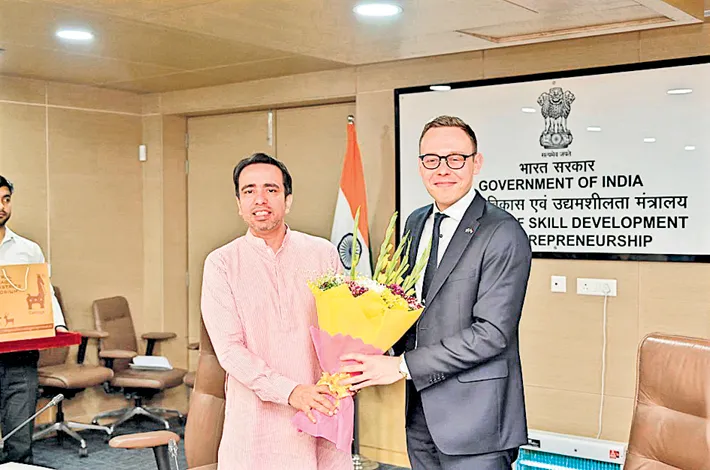
The discussions also focused on enhancing cooperation between vocational education and training institutions in both countries
India and Finland on Thursday held discussions on expanding cooperation in skill development, vocational education and workforce mobility during a bilateral meeting between Union Minister for Skill Development and Entrepreneurship Jayant Chaudhary and Finland’s Minister of Employment Matias Marttinen in New Delhi.
The meeting took place a day after Finland’s President Alexander Stubb began a four-day visit to India aimed at strengthening bilateral cooperation across sectors such as trade, investment and critical technologies.
During the talks, the two ministers highlighted the growing alignment between India and Finland in building resilient and future-ready talent ecosystems. They discussed ways to deepen collaboration among educational institutions, industries and training systems to strengthen vocational education and create pathways for skilled workforce mobility.
Jayant Chaudhary said India’s demographic advantage combined with Finland’s technological expertise and vocational training excellence provides a natural foundation for stronger cooperation in the skills sector. He noted that discussions focused on building practical connections between training systems, expanding institutional partnerships and creating opportunities for skilled Indian youth to access global employment while maintaining high training standards.
Matias Marttinen emphasised that Finland values its expanding partnership with India in vocational education and workforce development. He acknowledged the contribution of skilled Indian professionals working across various sectors in Finland and strengthening its workforce.
The ministers also recognised the strong complementarities between India’s expanding skill development ecosystem and Finland’s labour market requirements. Key sectors identified for potential collaboration include healthcare, construction, green technologies and advanced manufacturing.
Both sides stressed the importance of establishing structured and mutually beneficial mobility frameworks that allow skilled professionals to work abroad while ensuring proper training standards, certification systems and worker welfare.
The discussions also focused on enhancing cooperation between vocational education and training institutions in both countries, encouraging knowledge exchange and promoting industry-led skill development initiatives.
Additional areas explored included capacity building for trainers, integrating language training to support international employment opportunities and developing pathways that allow students to combine vocational training with academic qualifications.
Officials said both countries are also considering mechanisms to improve recognition of vocational qualifications and facilitate smoother mobility of skilled professionals in sectors facing labour shortages.
The ministers agreed to continue dialogue through institutional partnerships to identify priority sectors and practical areas of cooperation in the future.