15 October, 2026 | 12:47 AM


IMF flags emerging threats to the global economy
15-10-2026 12:00:00 AM
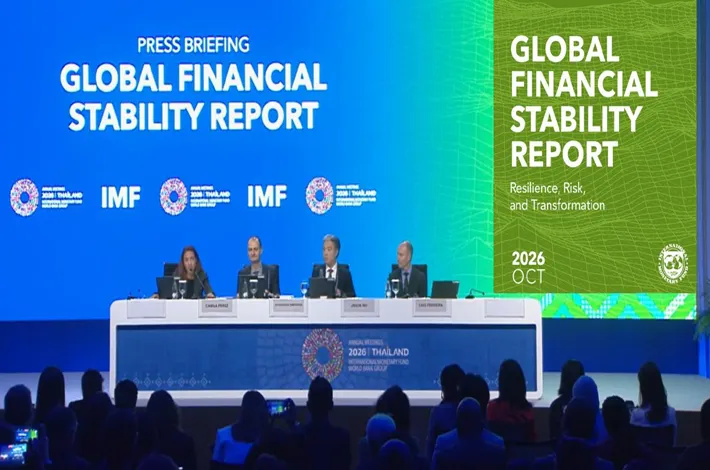
Resilience, Risk and Transformation have been the core themes of the Global Financial Stability Report released on 13th October 2026 by the International Monetary Fund (IMF) at Thailand. Highlighting that resilience is not safety, the April to September 2026 half-yearly report finds that strong corporate earnings, improving growth, and investments in Artificial Intelligence (AI) have supported growth implying that the asset prices may have fallen significantly in the absence of the support.
IMF warns that an initial shock can become systemic when leverage, concentrated exposures, liquidity mismatches, and interconnected institutions turn market losses into forced selling, funding shortages, and reduced credit provision. The report highlighted three major triggers viz., AI driven investment, rising sovereign bond yields, and cyber threats each of which and collectively which may cause serious consequences.
The IMF warns that inadequate monetisation or weak returns from AI investments could trigger significant corrections in equity and debt valuations, despite leading AI companies potentially remaining profitable. Heavy AI investment is absorbing capital and increasing borrowing. AI-driven global investment-grade corporate bond issuance rose from below 1% in 2024 to 10% currently. Leveraged equity positions and retail investments through leveraged exchange-traded funds (ETFs) heighten forced-selling risks, potentially triggering an asset-price crash. Circular financing among AI-related businesses could amplify consequences if weaker participants face distress.
Sovereign bond risks have intensified as energy inflation, fiscal deficits and rising public debt push yields higher. Short-term government borrowing increases refinancing risks, while disorderly yield increases reduce bond valuations, weaken collateral coverage and raise borrowing costs, potentially triggering disruptive liquidations. Cyber risks are also mounting as financial institutions depend on interconnected platforms, real-time settlements, cloud services and concentrated technology providers. A major attack could simultaneously disrupt multiple operations and undermine confidence across institutions.
The IMF highlights declining Common Equity Tier 1 (CET1) capital ratios, from 13% to 11.5%, despite remaining above regulatory minimums. Under stress scenarios, ratios fall below 7%, exposing weaknesses among banks representing 22% of global banking assets, up from 18% previously. Increasing bank funding to non-bank institutions creates transmission channels, while private-asset losses could become uncontrollable amid recession, market losses and broader funding stress.
Global private credit stands at $2 trillion. Loan amendments and extensions defer risk recognition, while additional borrowing and dividend recapitalizations transfer liquidity to investors instead of strengthening businesses. Of ten large business development companies examined, four, representing $90 billion in assets, had borrower commitments exceeding available liquidity buffers. Rising illiquid securities can force liquid-asset sales and losses. Hedge-fund positions, despite supporting liquidity and market functioning, can amplify volatility during settlement. Equity tokenization introduces legal, infrastructure and liquidity risks, with tokenized equities reportedly 1.5 times more volatile than traditional equivalents.
Having flagged the risks, IMF suggested to ensure sustainable public debt, preserve bank buffers to withstand risk, avoid excessive leverage, enhance transparency in borrowing disclosures, carry system-wide liquidity stress tests, and stronger cyber resilience.

(Dr. Kishore Nuthalapati
is Regional Director of PRMIA,
US, Hyderabad Chapter and CFO of
BEKEM Infra Projects Pvt Ltd.)