21 September, 2026 | 7:23 PM


ICESAIA-2026 ends with focus on space security
19-07-2026 12:00:00 AM
Metro India News | Hyderabad
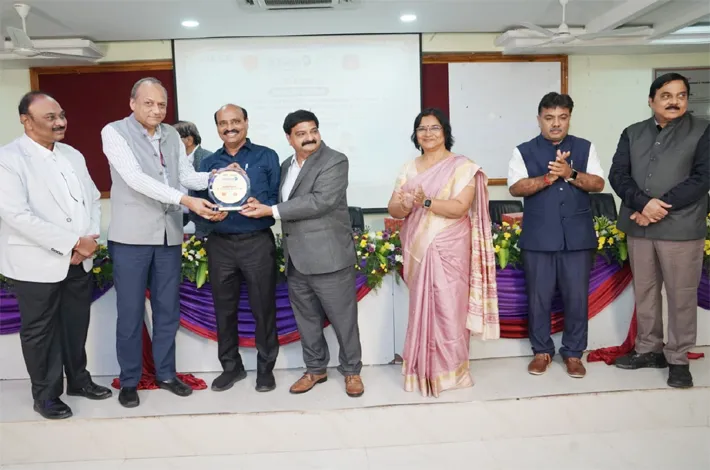
The three-day International Conference on Electronic Systems and Artificial Intelligence Applications (ICESAIA-2026) concluded at Methodist College of Engineering & Technology on Saturday with experts stressing the need for stronger indigenous space technologies and advanced space security systems.
Delivering the valedictory address, Dr. Anupam Sharma, Outstanding Scientist and Director, Directorate of Special Projects, DRDO, said growing satellite activity, cyber threats, high-power lasers and rendezvous and proximity operations have made space security a priority. He called for advanced Space Situational Awareness (SSA) systems to identify, track and assess satellite activities, and recommended using digital twin technology to simulate satellites before launch. He also urged reducing India's satellite development cycle from four to six years to 24 months.
Dr. Sharma said future space missions should adopt edge computing, photonics, neuromorphic sensing, self-healing satellite networks and cyber-secure architectures, adding that the goal is to secure space rather than dominate it.
Jointly organised by Methodist College of Engineering & Technology and Stanley College of Engineering & Technology for Women with IEEE Hyderabad Section support, the conference received 1,593 research papers from 11 countries. Of these, 162 papers were accepted after peer review, with 155 presented in 12 technical sessions. DRDO scientists, academicians and researchers from India and abroad attended the conference.