 12 September, 2026 | 7:06 PM


Govt holds 49% in VI, won’t interfere in management: Minister
28-02-2026 12:00:00 AM
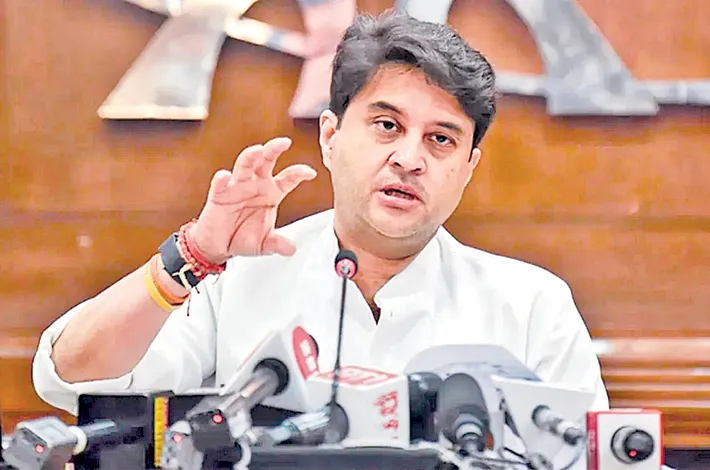
India's Communications Minister Jyotiraditya Scindia has emphasized that satellite communication (satcom) services are "mandatory" for ensuring comprehensive digital connectivity across the country, particularly in challenging terrains and during natural calamities where traditional infrastructure like optical fiber cables (OFC) or terrestrial backhaul cannot reach or remain operational. In a recent interview, Scindia highlighted the government's commitment to providing citizens with a full range of communication options beyond 4G, 5G, broadband, and VSAT systems.
"Satellite can go where no other technology can go," he stated, underscoring its critical role in remote areas and as a resilient backup during disasters when ground-based systems fail. The Department of Telecommunications (DoT) has already issued licenses to three major players: Starlink (SpaceX), Jio Satellite Communications (Reliance Jio), and Eutelsat OneWeb. These companies have received normative spectrum assignments to demonstrate compliance with India's stringent security protocols.
Scindia noted that all three are actively working on meeting these requirements. On the government side, the next key step involves finalizing satellite spectrum pricing. The Telecom Regulatory Authority of India (TRAI) has recently submitted its recommendations on the matter. The DoT is now synthesizing these inputs to arrive at a decision, with spectrum to be assigned administratively rather than through auction.
Once pricing is determined and the operators complete their compliance obligations, commercial operations are expected to commence "very soon thereafter."This development aligns with India's push for universal broadband access and positions satcom as a vital complement to terrestrial networks. While no exact launch date was specified, the convergence of these responsibilities—operators' security compliance and government's spectrum pricing—suggests services from Starlink, Jio, and OneWeb could roll out in the coming months, potentially transforming connectivity in underserved regions and enhancing disaster resilience nationwide.


