9 July, 2026 | 8:24 AM


FMCG firms likely to raise prices soon amid rising cost pressures
03-04-2026 12:00:00 AM
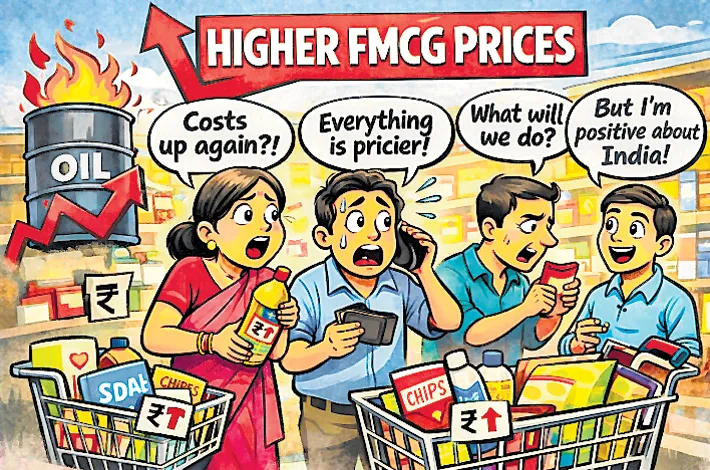
Companies likely to raise prices 3–4% in Q1FY27 as margins tighten after inventory buffers fade
Business Desk MUMBAI
India’s fast-moving consumer goods (FMCG) sector is preparing for a fresh round of price hikes in the first quarter of FY27, as rising crude oil prices and rupee depreciation sharply increase input cost pressures, according to a report by Nuvama Institutional Equities.
The report estimates that companies are likely to raise prices by 3–4% in Q1FY27 if inflation in raw materials persists at current levels. While the immediate impact on Q4FY26 earnings is expected to remain limited due to existing inventory buffers, companies are bracing for margin compression once these inventories are depleted, ANI reported on Thursday. Typically, FMCG firms maintain 30–45 days of raw material and finished goods inventory, delaying the full transmission of cost increases. Input cost pressures are most acute in segments such as paints, edible oils, soaps and detergents, where dependence on crude-linked derivatives is high. Packaging costs alone account for nearly 15–20% of total expenses and have risen sharply alongside crude oil prices, which are currently hovering near $100 per barrel.
This has increased the cost of key petrochemical inputs such as polypropylene and polyethylene used extensively in packaging. The paints industry has already initiated price corrections.
Companies such as Asian Paints and Berger Paints have begun calibrated hikes to offset rising costs. Nearly 40% of their raw materials are linked to crude derivatives, making them particularly sensitive to global oil price movements. Berger Paints implemented price increases in late March, while Asian Paints is expected to follow with steeper hikes by mid-April. Geopolitical risks remain a key concern. The ongoing conflict in West Asia could disrupt supply chains and impact companies like Dabur and Emami, which derive around 6% of their revenues from the region.
Rising freight, insurance and logistics costs are likely to add further pressure on margins across the sector. Unseasonal rains in northern and eastern India during March have dampened demand for summer-focused categories such as talcum powder, ice cream and cold beverages. Companies like Varun Beverages and United Breweries may see muted demand in Q4FY26 due to these weather disruptions. Despite these near-term challenges, the report notes that larger, organised players are likely to gain market share during inflationary cycles, as smaller players struggle to absorb rising costs, positioning the sector for consolidation in FY27.