27 October, 2026 | 12:55 AM


Export tailwinds lift Indian textile growth prospects
12-06-2026 12:00:00 AM
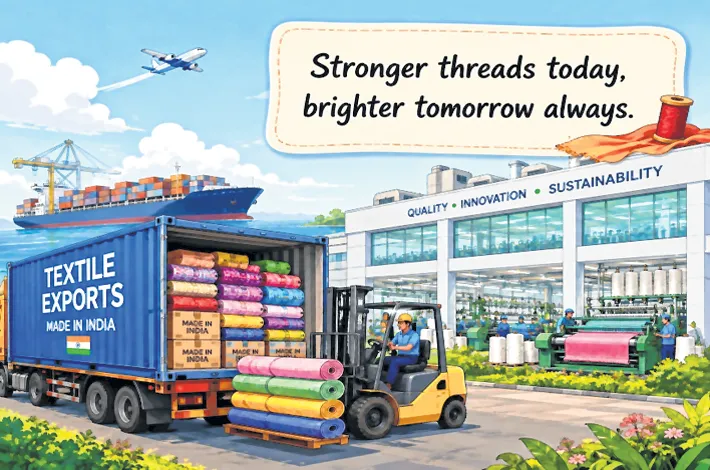
Improving global demand, easing tariff pressures and new trade agreements strengthen outlook for manufacturers and exporters
The Indian textile sector is showing signs of a broad-based recovery as easing tariff-related concerns in the United States, improving demand conditions and favourable trade agreements strengthen the industry's outlook, according to a report by Dolat Capital.
The brokerage said the sector has moved past its most challenging phase and is entering a period of renewed optimism. Improved demand visibility, better profitability and strategic policy support are expected to drive growth across the textile value chain in the coming quarters.
A key development has been the normalisation of US tariffs on Indian textile products. According to the report, tariffs that had climbed as high as 50% were reduced to 10% in late February 2026, bringing significant relief to exporters.
The report noted that the removal of reciprocal and penalty tariffs has helped restore normal trade flows and stabilise export volumes. Earlier, total duties on Indian garment exports had reportedly reached 65-69%, affecting competitiveness in one of India's largest export markets.
With tariff pressures easing, Indian textile exporters are witnessing a revival in demand from US buyers.
The report said the reduction in duties has restored India's competitiveness and released pent-up demand that had been delayed during the period of uncertainty. Industry fundamentals have also strengthened. Capacity consolidation in the spinning segment, improved cotton cost competitiveness and a sharp recovery in yarn spreads have supported profitability across the sector. Dolat Capital highlighted that recently signed and proposed free trade agreements with markets such as the UK, European Union and Australia could provide long-term structural benefits. These agreements are expected to improve market access and strengthen India's position in global textile supply chains.
The report added that international buyers are increasingly seeking to diversify sourcing away from countries such as Bangladesh and Cambodia, creating opportunities for Indian manufacturers.
Demand trends are also improving. The US market has remained resilient despite inflationary pressures and broader economic uncertainties. Meanwhile, demand for yarn has recovered strongly in both domestic and overseas markets.
Looking ahead, the brokerage believes the sector is well placed for sustainable growth, supported by healthy domestic demand, disciplined capital allocation and ongoing deleveraging efforts.