25 July, 2026 | 3:06 PM


EV bus rental sparks concerns
22-03-2026 12:00:00 AM
metro india news I hyderabad
Telangana’s policy of hiring electric vehicle (EV) buses for the RTC, instead of allowing the corporation to purchase them, is facing intense criticism from experts, social activists, and RTC employees. Concerns revolve around the financial burden, operational inefficiency, and potential benefits being skewed towards corporate companies.
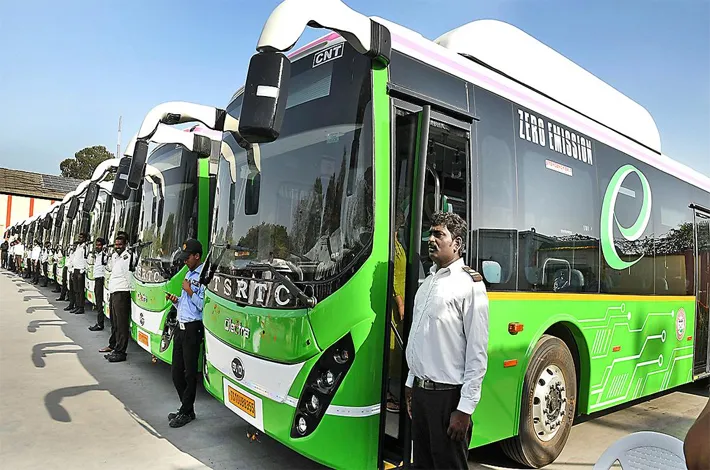
RTC has already deployed 500 EV buses across Hyderabad and other depots, with plans to introduce a total of 3,000 in the next three years, according to Chief Minister Revanth Reddy. Officials claim the new fleet will reduce pollution and modernize public transport, while around 3,500 diesel buses will be relocated to rural depots. The state highlights environmental protection and modernization as the key rationale behind this initiative.
Despite these claims, hiring EV buses instead of purchasing them has raised serious doubts. RTC currently pays Rs. 40.50 per kilometer for JBM buses and Rs. 60 per kilometer for Olectra buses. Over time, this recurring expenditure runs into crores of rupees, creating skepticism about whether the policy truly benefits RTC or simply serves corporate interests.
Analysts and transport experts argue that owning EV buses outright would be more cost-effective. The central government provides a grant of Rs. 36 lakh per bus, and RTC already has the infrastructure, manpower, and operational capacity to manage them independently. Drivers, conductors, engineers, and workshop staff are well-trained and ready for EV deployment, reducing the need for outsourcing.
By purchasing buses, RTC would make a one-time payment to manufacturers, including a reasonable profit margin, rather than paying recurring rental fees. This model ensures that the corporation retains full ownership and operational control.
Experts note that renting the buses repeatedly allows private companies to earn continuous profits, effectively turning public expenditure into long-term corporate gain.
RTC workers emphasize that the rental system limits the corporation’s autonomy and raises questions about financial prudence. They argue that the government’s current approach benefits corporate entities more than the public. Hiring staff through outsourced companies, setting up charging points using RTC funds, and paying rent for buses already financed through grants creates a cycle that continuously drains RTC’s resources.
The situation has been compared to a simple personal finance principle. If a person needs a car every day, it is more economical to purchase it than rent it daily. Similarly, RTC purchasing EV buses would be cheaper and more sustainable in the long term than paying recurring rental fees. Workers and social activists insist that the government should allow RTC to take ownership of the buses to save money and strengthen the corporation.
Additionally, ownership would improve operational efficiency, maintenance control, and long-term asset utilization. RTC leadership, including Vice Chairman Maramreddy Thomas Reddy, stresses that the corporation is fully capable of managing EV technology independently. They have formally requested the government to provide RTC the authority to purchase buses directly.
If the government revises the current hiring policy, RTC could purchase buses at lower costs using central grants, reduce operational expenses, and ensure sustainable public transport. Workers argue that the existing rental model represents a continuous financial drain, channeling public money into corporate profits rather than supporting RTC or improving services for citizens.
The debate has sparked widespread discussions among transport experts, environmentalists, and public representatives, all calling for a reassessment of the hiring policy. Allowing RTC to own EV buses would safeguard public funds, enhance long-term sustainability, and ensure that public transport modernization benefits the corporation and commuters, rather than private companies.
The RTC workforce is demanding urgent government intervention to end the current rental system and enable direct ownership. They maintain that revisiting the policy is essential for financial prudence, corporate accountability, and the future of sustainable urban transport in Telangana.