25 June, 2026 | 11:28 PM


How Vijay & TVK Shattered the Dravidian Duopoly
06-05-2026 12:00:00 AM
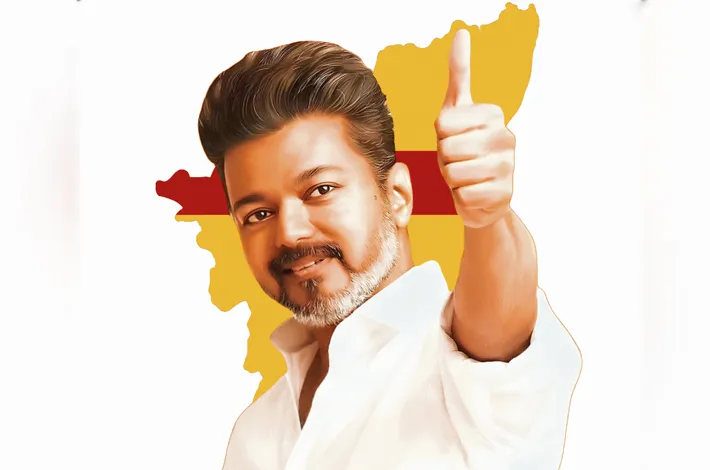
TN People create Vijayquake
vjm divakar
In a stunning verdict that has redrawn the political map of Tamil Nadu, actor Joseph Vijay’s Tamilaga Vettri Kazhagam (TVK) has emerged as the single largest party in the 2026 Assembly elections, securing 108 seats in the 234-member house. While short of an outright majority, the debutant party’s performance has positioned Vijay—affectionately called “Thalapathy”—as the frontrunner to become the state’s next Chief Minister, likely through post-poll alliances or support. The results mark not just a personal triumph for the superstar but a profound rupture in Tamil Nadu’s entrenched caste-religion-based political formula that had defined Dravidian politics for nearly six decades.
Vijay entered the fray with formidable disadvantages. He possessed no traditional caste base, no dominant religious constituency, and no long-standing organizational machinery. His party, launched in 2024 after he announced his retirement from films, contested all 234 seats independently. Still voters across the state embraced him. In a remarkable display of secular outreach, Vijay visited temples, mosques, dargahs, and churches, signaling an inclusive vision that transcended identity politics. He sharply criticized the BJP as “divisive” and “fascist,” ruling out any alliance with the party—a stance that resonated in a state historically wary of perceived northern cultural imposition.
This success stands in stark contrast to the strategies of the established Dravidian giants. The ruling DMK allegedly distributed around Rs 3,000 per voter, while the AIADMK offered Rs 2,000 along with household items like pressure cookers and frying pans. Reports indicate many voters accepted these inducements but still cast their ballots for TVK, underscoring the limits of transactional politics when deeper aspirations for change are at play.
The verdict reflects a powerful anti-incumbency wave, particularly among Gen Z and younger voters disillusioned with decades of DMK-AIADMK dominance, marked by allegations of corruption, family politics, and governance fatigue. Vijay’s campaign avoided the familiar playbook. He did not seek votes in the name of caste, religion, or regional identity. He addressed relatively few massive public rallies and largely shunned regular media interactions or press conferences. His appeal spread organically through his massive fan base, social media, and a carefully cultivated image of integrity and quiet determination. This low-key yet high-impact approach dismantled the might of two parties with roots stretching back generations.
Political observers are inevitably drawing parallels with cinema-to-politics legends like M.G. Ramachandran (MGR), N.T. Rama Rao (NTR), and J. Jayalalithaa.still, Vijay’s journey differs markedly. MGR built his political capital over years within the DMK ecosystem before launching the AIADMK. NTR capitalized on a vacuum against a dominant Congress in Andhra Pradesh, bolstered by his Kamma community support and influential media backing like Ramoji Rao. Vijay, by contrast, confronted a bipolar Dravidian stronghold head-on without such structural advantages, relying primarily on personal charisma, a message of clean governance, welfare promises (especially for women and youth), and a drug-free Tamil Nadu.
TVK’s surge has broken the caste-religion formula that long dictated Tamil Nadu politics. Traditional vote banks fragmented as voters prioritized change over loyalty. The party’s vote share hovered around 35% in a high-turnout election (approximately 85%), reflecting broad-based support that cut across demographics. Vijay himself won convincingly from Perambur and was leading or won in Tiruchirappalli East, further cementing his stature.
The implications extend beyond Tamil Nadu.
The result signals the potential for “outsider” leaders with clean images and mass appeal to disrupt established systems, especially when traditional parties appear exhausted. It also highlights the growing influence of youth voters who, fueled by social media and cinematic stardom, responded to Vijay’s narrative of renewal rather than patronage or polarizing rhetoric.
Challenges lie ahead. With 108 seats, TVK falls short of the 118 needed for a majority and will likely need to navigate alliance talks or secure external support to form the government. Governing a state with deep-rooted political expectations, complex social dynamics, and economic pressures will test Vijay’s administrative acumen. Critics question whether his lack of prior political experience and limited public oratory during the campaign could hinder effective governance. Supporters counter that his disciplined persona and focus on people-centric issues—jobs for youth, women’s aid, and social harmony—offer a fresh departure.
As celebrations erupted outside TVK headquarters and fans hailed “Muthalamaichar” (Chief Minister) Vijay, the actor-turned-politician stands at a historic crossroads. Tamil Nadu has not merely elected a new leader; it has endorsed a paradigm shift. By rejecting money, muscle, and monolithic identity appeals in favour of a relatively untested but hope-inspiring alternative, the state’s electorate has delivered a powerful message: politics can still be transformed by genuine public will, even against decades of institutional inertia.
Vijay’s ascent adds another glittering chapter to southern India’s storied tradition of film stars wielding political influence, but on distinctly modern terms—leveraging stardom without the old patronage networks. Whether he consolidates this mandate into stable governance will determine if this “blockbuster debut” becomes a long-running political saga or a one-term phenomenon. For now, Tamil Nadu savors the drama of its newest hero stepping into the spotlight not on screen, but in the corridors of power.