30 September, 2026 | 3:22 AM


El Niño and Agriculture: Strengthening the farming community
30-09-2026 12:00:00 AM
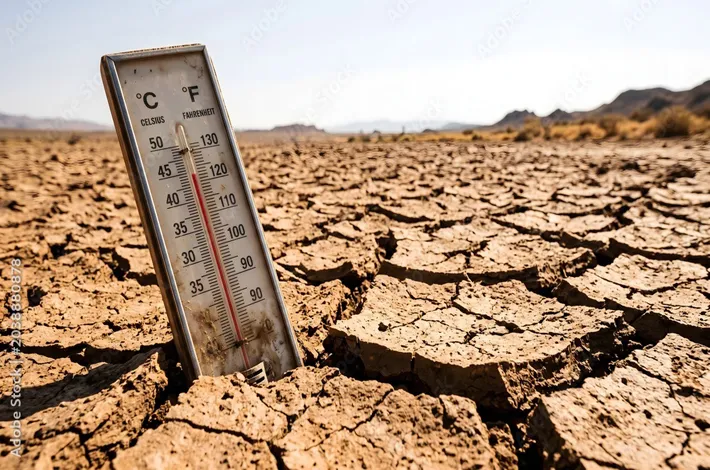
El Niño is a recurring climatic phenomenon that can have far-reaching consequences for agriculture, water resources, livelihoods and food security. The term “El Niño,” meaning “Little Boy” in Spanish, originated from observations by Peruvian fishermen of unusually warm Pacific Ocean waters around Christmas. During normal conditions, trade winds push warm surface water westward across the Pacific, while cold, nutrient-rich water rises near the surface along the South American coast. During El Niño, this pattern weakens, causing unusually warm waters in the central and eastern Pacific and influencing weather patterns across the globe.
For India, El Niño is particularly significant because of its potential to weaken the southwest monsoon. Reduced or erratic rainfall can result in delayed sowing, prolonged dry spells, heat waves and crop losses. Historical El Niño episodes, including those of 1972–73, 1982–83, 1997–98 and 2015–16, have been associated with severe droughts and other extreme weather events in different parts of the world. In India, El Niño events have not always produced uniform results; their effects vary across regions and seasons. Nevertheless, agriculture remains one of the sectors most vulnerable to climate variability.
The impact is especially severe for small and marginal farmers who often have limited access to irrigation, credit, insurance and climate-resilient technologies. Declining groundwater levels can further intensify the problem, as prolonged dry periods encourage greater groundwater extraction and threaten long-term water security.
Farmers should also be encouraged to adopt drought-tolerant and water-efficient crops, including sorghum, millets, pulses and castor, particularly in areas vulnerable to water shortages. Climate-resilient crop varieties and diversified cropping systems can reduce dependence on a single water-intensive crop. Improving irrigation efficiency is equally important. Drip and sprinkler irrigation can substantially reduce water losses compared with conventional flood irrigation.
Healthy soils are another important component of climate resilience. Farmyard manure, compost, green manure, crop residues, legumes and suitable biofertilizers can improve soil structure, nutrient availability and moisture retention. Practices such as alternate wetting and drying in rice cultivation and dry direct-seeding can also improve resource-use efficiency. Modern technology can strengthen climate adaptation. Drones can monitor crop health and identify areas requiring irrigation or plant protection.
Long-term resilience also requires investment in climate-resilient infrastructure and natural resources. Canal-top solar projects can generate electricity while reducing evaporation from irrigation canals. Expanding tree cover and green belts around agricultural landscapes can moderate temperatures, reduce soil erosion and improve moisture conservation. Ultimately, El Niño preparedness must move beyond short-term crisis management toward proactive, location-specific planning. Strong coordination among meteorological agencies, agricultural departments, researchers, extension workers and farmers is essential.
Crop insurance, climate information services, resilient irrigation systems and farmer education should form part of an integrated strategy. As climate variability increases, strengthening water security, promoting climate-smart agriculture and improving preparedness will be critical for protecting rural livelihoods. Systematic research and locally tailored solutions can help transform El Niño from a recurring agricultural threat into a manageable climate risk while supporting sustainable and resilient rural development.
(Dr. Adusumilli Narayana Rao is an agriculture scientist.)