4 October, 2026 | 12:57 AM


ECI must answer SIR questions: Prabhakar
04-10-2026 12:00:00 AM
Metro India News | Hyderabad
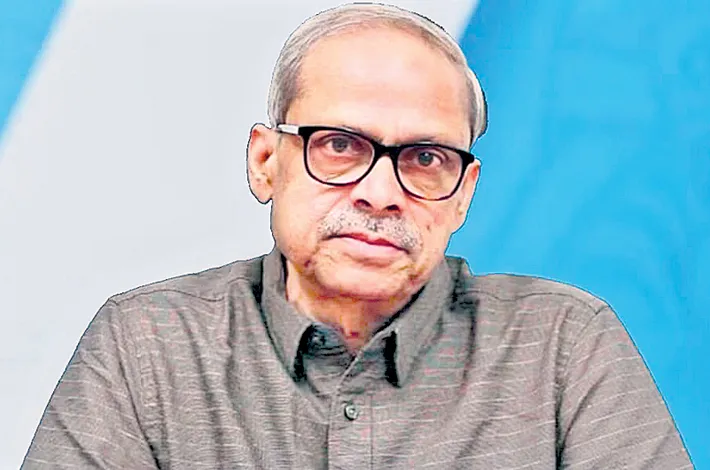
Eminent political analyst, author and columnist Dr. Parakala Prabhakar described the recent controversy surrounding the Election Commission of India (ECI) and the Special Intensive Revision (SIR) of electoral rolls as a matter of profound consequence for Indian democracy. Referring to an investigative report by The Indian Express, he called it an “earth-shaking investigation” and said the journalists who carried it out deserved credit for undertaking such work despite the risks involved. In his view, the ECI’s subsequent press statements failed to adequately address the specific questions raised by the investigation.
Speaking to a news portal, Prabhakar identified several issues that he believed required clear answers. Among them were questions concerning Form 6, the mechanism for adding voters to electoral rolls; cases in which electoral registration officers had reportedly verified voters but were unable to include them because of problems accessing the relevant software; and the authorization of Form 7 applications seeking the deletion of approximately 16 lakh voters in West Bengal.
The Election Commission and the principle of equality
Dr. Prabhakar questioned the argument that the Supreme Court had effectively endorsed SIR. According to Prabhakar, the Court's consideration of SIR did not give the ECI unlimited authority to alter other electoral procedures, including Form 6. He also pointed to what he described as an important limitation concerning citizenship: in his reading of the Court's directions, the ECI cannot itself determine that a person is not an Indian citizen and simply remove that person's name from the electoral roll.
From electoral revision to disenfranchisement
Prabhakar's central concern was what he described as the possibility of creating two categories of people in India: those who possess the franchise and those who do not. To illustrate the significance of disenfranchisement, he offered a thought experiment. In his view, people without voting rights would gradually become politically inconsequential. Even if individuals or organizations continued to assist them out of compassion or generosity, their collective political judgment would no longer influence elected representatives. Prabhakar argued that this would effectively place them outside India's political society.
The implications for previous elections
Another major concern raised by Prabhakar was the implication of declaring that electoral rolls are now being “cleaned up.” If the present electoral rolls are substantially defective, he argued, this inevitably raises questions about the quality of the rolls used in previous elections. He said that if millions of people who had previously appeared on electoral rolls were now being classified as ineligible or otherwise removed, two possibilities arose.
Either previous elections were conducted using substantially inaccurate electoral rolls, or large numbers of people who were previously legitimate voters were now being excluded. His concern was that once an election was over, both the victorious and losing political sides might have little incentive to continue pursuing the rights of deleted voters. As a result, he argued, these people could disappear not only from the electoral rolls but also from political consciousness.
Prabhakar went beyond criticism of individual Election Commissioners. He argued that replacing one commissioner with another would not address what he considered to be the deeper institutional problem. He called for the Election Commission to be completely reconstituted and for a new appointment mechanism involving multiple constitutional stakeholders. In his view, the process should not produce an Election Commission effectively controlled by the executive government through a simple two-to-one majority.
As an example, he referred to the 2024 Andhra Pradesh Assembly elections, where he claimed that voting continued in thousands of polling booths late into the night. Using the reported number of votes and booths, he attempted to calculate the average time available for each vote and questioned whether the reported figures were physically plausible.
The role of citizens in defending democracy
When asked whether there was any institutional avenue left, particularly through the courts, Prabhakar expressed skepticism. He said that he had great respect for the courts but did not place his hopes in them as the primary solution to the problem he described. His broader argument was that democracy should not be treated as a contest between political parties and the Election Commission. Ordinary citizens, he said, are the principal stakeholders in a republic and should not outsource the defense of democracy to political parties.
He concluded with an emphatic assessment of the historical moment: in his view, the distinction between what is ideal and what is practical had become unusually narrow. He argued that protecting India's democratic system required immediate public action, warning that postponing such action could have consequences for the country's democratic future.