22 September, 2026 | 1:13 AM


Demolishing Modi’s Vision: The Fall of Dharmendra Pradhan
30-07-2026 12:00:00 AM
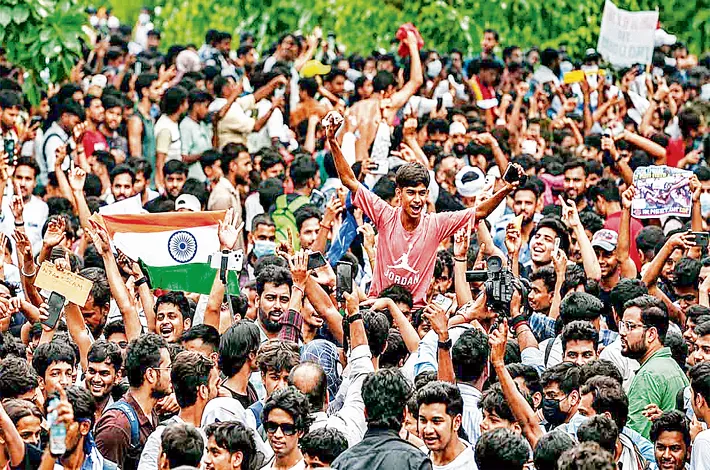
When the nation's bedrock rose against a broken education system
The destiny of a nation is inseparable from the strength of its youth. Prime Minister Narendra Modi has long projected a vision of an empowered generation capable of carrying India towards a developed future. Yet, the recent upheaval in New Delhi has revealed a contradiction — the government’s handling of the Education Ministry faced serious criticism for failing to protect the aspirations of the very youth who represent India’s future.
The Fall That Shook Delhi
The resignation of Union Education Minister Dharmendra Pradhan after weeks of student protests and public outrage is not merely the fall of a Cabinet member. It represents a moment when young citizens challenged a system they believed had compromised their dreams and ignored their concerns.
Jantar Mantar: The Crucible of Resistance
For weeks, Jantar Mantar became the centre of India’s youth resistance. What began as satire under the banner of the “Cockroach Janta Party (CJP)” soon transformed into a larger movement. The hunger strike led by educationist Sonam Wangchuk, the “Sansad Chalo” march and police action involving teargas and lathi charges reflected the depth of student anger. The youth, often dismissed as politically insignificant, proved that when united, they can challenge even powerful institutions and demand accountability.
The Pradhan Era: A Legacy of Decay
Dharmendra Pradhan’s tenure will be remembered for a period of growing concerns over India’s education system. Across schools, universities and national examinations, the credibility of institutions came under pressure.
Examination controversies, including allegations surrounding CBSE and the National Eligibility cum Entrance Test (NEET), damaged public confidence. NEET, the gateway to medical education for millions, became associated with allegations of paper leaks, unfair practices and examination failures.
NTA: From Authority to Anarchy
The National Testing Agency (NTA), created as a premier autonomous authority for conducting major examinations, faced severe criticism over its functioning. Questions were raised over transparency, examination management and accountability.
In higher education, concerns were also raised over Vice Chancellor appointments and the alleged politicisation of academic institutions, affecting academic independence and standards.
Denial and Suppression
Instead of addressing student grievances, the Ministry faced criticism for relying on denial and public relations campaigns. Protesters alleged that their concerns were ignored, while legal action against student activists further increased resentment.
The growing gap between government claims and the realities faced by students became a major challenge for the Education Ministry and the NDA government.
Modi’s Vision Undermined
Prime Minister Modi’s vision of Viksit Bharat — a developed India powered by its youth — depends on a strong and trustworthy education system. However, the crisis created a widening gap between that vision and the experiences of students.
Pradhan’s resignation represents not only a political setback but also a reminder of the urgent need to rebuild trust among India’s youth.
Beyond Resignation: The Call for Reform
Yet Pradhan’s exit offers only temporary relief. The problem runs deeper and demands structural overhaul. The NTA must be reformed or replaced with a truly autonomous body with credibility similar to the UPSC.
A stringent anti-leak law is essential, with fast-track courts empowered to take strict action against examination mafias and officials involved in malpractice. The government must also withdraw cases filed against protesting students and recognise their movement not as a threat but as a legitimate demand for justice.
Youth Power: Democracy’s Shield
The uprising at Jantar Mantar has sent an unmistakable message — when youth rise to defend their future, even powerful authorities must respond.
The challenge before the government is not merely to replace a minister but to restore faith in India’s academic foundations. The youth have spoken. History will judge whether this moment leads to genuine transformation or remains only another chapter in the long struggle for India’s educational future.

- Malladi Venkata Gopalakrishna
Senior Journalist & Media Researcher