12 July, 2026 | 1:12 AM


Caught in a cycle of cancel culture
11-04-2026 12:00:00 AM
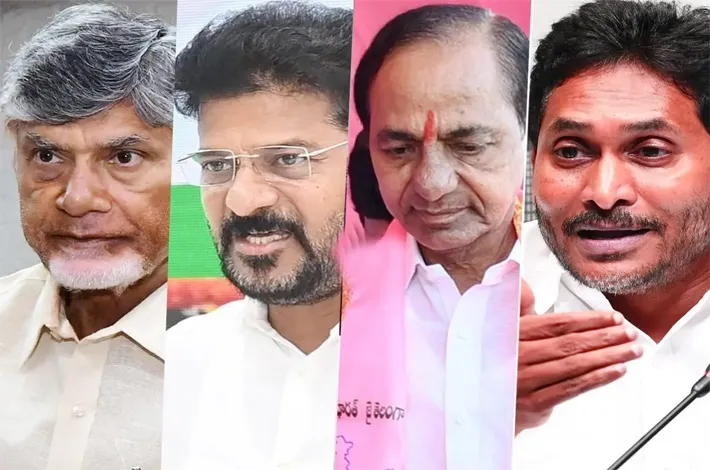
twin states, twin troubles
metro india news I hyderabad
In a striking irony, the NDA government led by Chief Minister N. Chandrababu Naidu in Andhra Pradesh has withdrawn the in-principle approval for allotting 4.15 acres of prime Andhra Pradesh State Road Transport Corporation (APSRTC) land in Vijayawada’s Governorpet area to the UAE-based Lulu Group International for a shopping mall. The decision, conveyed to the Andhra Pradesh High Court on April 8, 2026, followed public protests and multiple Public Interest Litigations (PILs) questioning transparency and public interest. The land, valued at hundreds of crores and originally slated for a 99-year lease, was allotted during the previous YSR Congress Party (YSRCP) regime under YS Jagan Mohan Reddy.
This move mirrors events from October 2019, when Jagan’s newly elected YSRCP government cancelled a 13.83-acre land allotment in Visakhapatnam to the same Lulu Group for a mall, convention centre and hotel—originally granted by the TDP regime. Lulu Group then publicly declared it would “never invest in Andhra Pradesh again,” citing unethical practices in the prior allocation. The project, estimated at Rs 2,200 crore, had already seen foundation-laying.
Such reciprocal cancellations are not isolated. They exemplify a deepening ‘cancel culture’ across Andhra Pradesh and Telangana, where incoming governments routinely scrap, stall or renegotiate projects, policies and land allotments initiated by predecessors. This pattern raises a critical question: in an era of competitive federalism, can investors trust any long-term commitment when regimes change every five years?
Andhra Pradesh: A legacy of reversals
The trend intensified after the 2014 bifurcation of united Andhra Pradesh. Jagan Mohan Reddy’s YSRCP government (2019-2024) launched a sweeping review of TDP-era initiatives. Within months of assuming power, it cancelled infrastructure projects worth nearly Rs 50,000 crore, many tied to the Amaravati capital region. These included a startup area project awarded to a Singapore consortium (Ascendas-Singbridge and Sembcorp) and a Rs 3,217-crore hydel power contract with Navayuga Engineering. Land allotments for SEZs and commercial projects were revoked, and power purchase agreements (PPAs) for solar and wind energy—signed under Naidu—faced renegotiation attempts, rattling renewable investors.
The most symbolic reversal was the Amaravati capital project itself. Naidu’s flagship vision for a world-class Greenfield capital was halted; the YSRCP shifted to a controversial three-capital model (executive in Visakhapatnam, legislative in Amaravati, judicial in Kurnool). Over 100 irrigation projects in Rayalaseema were reportedly stalled, and welfare schemes like Anna Canteens were paused. A sand-mining ban disrupted livelihoods in construction. Critics labelled it ‘revenge politics,’ arguing it dismantled Naidu’s development legacy.
The current TDP-led NDA government, elected in 2024, has promised continuity in some areas—such as not cancelling Jagan-era house sites for the poor—but the Vijayawada Lulu decision signals selective review amid public pressure. Naidu has prioritised reviving Amaravati and clearing stalled projects like Polavaram, which the YSRCP allegedly left in bureaucratic chaos.
Yet the Lulu rollback, justified on grounds of transparency, perpetuates the cycle.
Telangana: Stalling and rebranding
Across Telangana, the Congress government under Chief Minister A. Revanth Reddy (in power since December 2023) faces similar accusations from the Bharat Rashtra Samithi (BRS). BRS leaders claim the Congress has derailed at least eight major Hyderabad infrastructure initiatives, with no new projects launched in the first 25 months. Tenders for link roads issued under BRS were cancelled and reissued. Works worth Rs 1,070 crore in Siddipet—including tourism projects, outer ring roads, sports stadiums and agriculture colleges—were allegedly halted.
Larger projects like Metro Rail extensions, Musi River rejuvenation and the proposed Bharat Future City (rebranded from BRS-era Pharma City) have seen delays amid farmer protests and policy reviews. Congress, while in opposition, had opposed Pharma City on environmental and farmer grounds; in power, it pursues a similar vision but without full consultation, drawing fresh backlash. BRS alleges indecision and corruption have stalled progress, while Congress counters that BRS left incomplete or unviable projects.
Investor confidence at stake
If every new government treats predecessors’ agreements as disposable, why would any investor commit capital? Mega projects—malls, airports, irrigation, IT hubs—require decades for returns. Policy U-turns signal risk. Lulu Group’s 2019 exit from Andhra Pradesh was a public warning; foreign investors grew jittery over PPA reviews, fearing contract sanctity. Andhra Pradesh’s FDI inflows plunged post-2019, recording just $1.27 billion between October 2019 and June 2025—ranking 14th among Indian states and lagging southern peers. Telangana, by contrast, attracted significant realty and IT investments in the same period, partly capitalising on AP’s instability.
Global investors seek predictability. Singapore’s exit from Amaravati and Lulu’s vow highlight reputational damage. Domestic firms face uncertainty too—Navayuga lost multiple contracts. Economists note that such reversals erode “ease of doing business” gains, pushing capital to states like Gujarat or Tamil Nadu with perceived continuity.
Why Now, Not in the Past?
Pre-2014 united Andhra Pradesh saw alternations between TDP and Congress, yet major projects like Hyderabad’s HITEC City (pioneered by Naidu in the 1990s) enjoyed broad continuity under subsequent Chief Minister Y.S. Rajasekhara Reddy. Focus remained on growth—IT incentives, single-window clearances—rather than legacy destruction. Bifurcation changed dynamics. The birth of new states bred intense regional rivalries, strong personality-driven parties (YSRCP, BRS) and heightened political stakes. Amaravati became a flashpoint; welfare populism clashed with infrastructure ambitions. Without institutional guardrails—such as bipartisan oversight bodies or legally ironclad MoUs—governments weaponise reviews for electoral narratives.
This cancel culture risks turning competitive federalism into self-defeating politics. Investors will hesitate, jobs will suffer, and growth will stagnate. Both states boast rich resources and talent; they need policy stability to harness them. Solutions could include cross-party consensus on flagship projects, independent expert panels for mega allocations, or central guidelines protecting investor agreements. Naidu’s current push to restore confidence through sector policies is welcome, but it must extend beyond rhetoric to institutional reform.
Ultimately, development is not a zero-sum game between parties. In the Telugu states, successive governments have shown that short-term political gains can yield long-term economic pain. Unless this cycle breaks, the question remains: will any investor dare to bet on a future that may be cancelled tomorrow? The Lulu saga—twice over—serves as a cautionary tale.