8 September, 2026 | 4:36 PM


Can “equal AI” help reduce frauds?
16-02-2026 12:00:00 AM
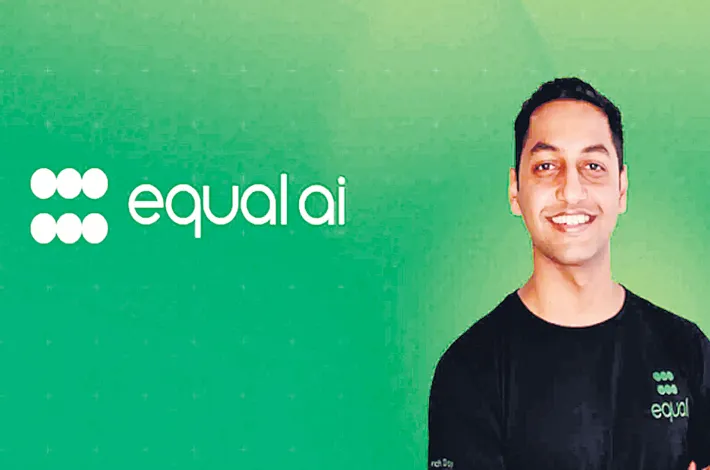
Keshav Reddy, the founder of Equal AI and a third-generation entrepreneur from the prominent GVK family, recently discussed his journey, the challenges of building a tech startup in India, and the transformative potential of AI in a candid interview with a private news channel. Coming from a family renowned for building physical infrastructure—such as major Indian airports like those in Bangalore and Mumbai—Keshav has shifted focus to digital infrastructure.
He described this transition as "the beauty" of entrepreneurship: the core skills remain the same, whether constructing physical assets or digital ones. Keshav is no stranger to founding companies; Equal AI marks his fourth venture, with his previous three startups sold during his college years. He views Equal AI as potentially the most exciting project of his lifetime—an AI assistant tailored specifically for India.
Keshav’s earlier success with Equal (equal.in) established it as India's largest consent-based data-sharing platform and account aggregator, part of the India Stack ecosystem (similar to UPI). Over 90 million Indians use it annually to share a billion data packets, simplifying processes like loan applications by securely and digitally fetching bank statements or income details with user consent.
This foundation in data handling paved the way for the consumer-facing Equal AI launch in October 2025. Equal AI addresses one of India's biggest everyday frustrations: phone spam and unwanted calls. Unlike traditional caller ID apps like Truecaller, which identify callers before pickup, Equal AI acts as an intelligent call assistant. For unknown calls, the AI answers on the user's behalf, engages in conversation to determine the caller's identity and purpose, gathers necessary details (such as delivery information), and then summarizes the intent to the user: "This person is calling for this purpose—would you like to answer?"
If irrelevant or potentially fraudulent, it handles or blocks the call seamlessly. The AI supports multiple Indian languages, accents, contexts (including names, addresses, and buildings), and switches fluidly to make interactions feel natural and realistic. Keshav highlighted rapid improvements in AI models that enhance the assistant's performance weekly.
With 100,000 monthly active users shortly after launch—before heavy marketing—the app has seen enthusiastic reception, including from elderly users who appreciate the screening against scams and "digital arrests." The tool proactively flags fraud patterns, offering protection beyond reactive user reports.
On the business side, Equal AI is available as a free Android app (with iOS forthcoming) and plans a pro tier for advanced features. Revenue will increasingly come from businesses paying for task completion (e.g., processing deliveries or bookings) facilitated by the AI, positioning it as a helpful intermediary rather than a pure consumer tool.
Keshav addressed broader AI implications, acknowledging the fast pace of developments—like those from Anthropic—where businesses risk obsolescence overnight. He emphasized adaptation: his 100-person team now uses AI co-pilots for coding, shifting focus to reviews and faster innovation. While some tasks (voicemail, certain call centre roles) may become redundant, he sees AI democratizing assistance—most Indians lack executive assistants, but now everyone can have one.
He views AI as enabling more output in overburdened fields like healthcare and law, predicting net job creation through new opportunities, though warning of a societal crisis for those unable to adapt. Keshav remains "paranoid" about staying ahead in this dynamic space, driven by obsession to leapfrog competitors.
He envisions Equal AI evolving into India's largest consumer AI company, handling any task users need, building on India's massive scale and untapped AI adoption (over a billion people yet to use it meaningfully). Unlike text-heavy Western LLMs, India's AI will be voice-first and assistant-native to suit preferences for calls over typing.