14 November, 2026 | 12:01 AM


Building a monument to equality
14-11-2026 12:00:00 AM
Metro India News | Hyderabad
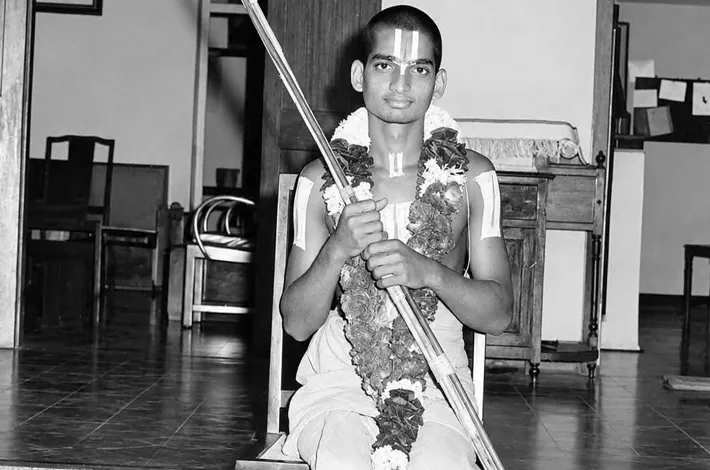
The seer referred to as Jeeyar is Sri Tridandi Srimannarayana Ramanuja Chinna Jeeyar Swami (Chinna Jeeyar). He is a guru, yogi ascetic, and a recipient of the prestigious Padma Bhushan award (2023). He is a prominent spiritual leader of the Thenkalai Sri Vaishnava tradition, which propagates the Vishishtadvaita philosophy of the 11th-century social reformer Ramanujacharya.
The Statue of Equality (Samatha Murthi) complex at Muchintal was inaugurated by him near Hyderabad. "Equality" is foundational. Dedicated to the nation on February 5, 2022, the Statue of Equality explains teachings on human dignity, universal access to spirituality, and the eradication of social, cultural, and economic discrimination.
The Statue of Union Texas USA is a 90-foot-tall bronze (Panchaloha) statue of Lord Hanuman, envisioned and designed by Sri Chinna Jeeyar Swamy. It was unveiled and consecrated in a grand ceremony in August 2024. It is the tallest statue of Lord Hanuman outside India and ranks among the tallest statues in the United States. Researching Ramanujacharya reveals fascinating historical connections, including accounts of him visiting the Orugallu (Warangal) kingdom during the reign of Prataparudra and praying at the ancient Pancharayala (Sri Krishna) Temple in Shayampet near Warangal a thousand years ago.
A monumental creation
Rising 216 feet high and crafted from Panchaloha (a traditional five-metal alloy), the statue of Sri Ramanujacharya sits majestically atop a 54-foot-tall base building called the Bhadravedi, surrounded by replicas of the 108 Divya Desams (sacred Vaishnava temples). Sri Chinna Jeeyar conceptualized this entire project and personally guided every stage of its design. After the formation of Telangana as a separate state, not a single one of the 108 sacred Divya Desams, the holiest shrines in the Vaishnava tradition, was located within the state. Devotees had to travel across the country, particularly throughout South India, to visit them.
He answered this void with extraordinary foresight. Rather than merely building a single temple, Swamiji envisioned bringing the spiritual splendour of all 108 Divya Desams from across India into one sacred campus. According to official project records, Chief Architect D.N.V. Prasad Sthapathi and his team conducted nearly six months of intensive research, concluding in December 2014.
The team physically visited over 90 Divya Desams (98 according to project records) and captured approximately 12,000 photographs. After each visit, they prepared detailed sketches of the deities and studied the architectural grandeur of the Vimanas in consultation with local authorities and sacred texts (Agama and Shilpa Shastras).
D.N.V. Prasad Sthapathi did this under the direct supervision of Sri Chinna Jeeyar. Standing 54 feet (16 meters) tall across three floors, the base houses a 6,000-square-meter ground floor depicting Ramanujacharya’s life and philosophy. The 27,870-square-meter second floor is dedicated to daily worship, while the 1,365-square-meter third floor houses a Vedic digital library, research centre, and a planetarium-shaped Omnimax theatre.
Inside the Bhadravedi meditation hall resides a 54-inch (1.4-meter) idol made of 120 kilograms of pure gold, commemorating the 120 years Sri Ramanujacharya lived on earth. Starting with a clay model sculpted under Swamiji’s direct watch during his 2014 Chaturmasya Deeksha in Shamshabad and finalized in February 2015, the design was 3D-scanned for digital refinement. Swamiji scrutinized every detail—the facial expressions, serene posture, monastic robes, and spiritual aura of the great Acharya.
While other monumental statues in India, such as the Statue of Unity (Rs 2,989 crore) and the Statue of Oneness (Rs 2,141 crore), were built using government and public sector funds, Sri Chinna Jeeyar Swamy accomplished this Rs 1,000-crore complex (with Rs 216 crore spent on the main statue) entirely through devotee donations without any government funding.
-Madabhushi Sridhar
(The writer is the author of the book Ramanuja Margam in Telugu)